
Livraison le jour même ou le lendemain

Qualité garantie

Débloquez vos offres de bienvenue: Livraison GRATUITE | Jusqu'à -80 % | 30 jours d'essai gratuits à JoyPlus
Téléchargez l'application
An OBD2 automotive diagnostic tool can read fault codes, display real-time data, and access multiple control units. However, not all devices sold under the "diagnostic scanner" label offer the same level of access. A basic reader may suffice to understand the origin of a check engine light, while a workshop will need full-system diagnostics, active tests, and, in some cases, ECU coding functions.
The goal is therefore to select functions that are genuinely compatible with your vehicle, without paying for options you cannot use.
Many devices are limited to OBD2 faults related to the engine and emissions. They may not communicate with the ABS, SRS airbags, transmission, electric parking brake, climate control, or body control modules.
Look for the "all systems" mention or consult the detailed list of supported control units. A simple car fault code reader will never replace a scanner capable of interrogating the vehicle's various electronic modules.
A product sheet may display 15, 28, or 40 service functions. However, car service reset, injector coding, DPF regeneration, throttle body adaptation, or key programming depend on the make, model, year, and sometimes the installed control unit.
Before ordering, provide the 17-character VIN, the engine type, and the desired function. This verification is particularly important for recent vehicles, models equipped with FCA secure access, or operations related to the immobilizer.
Some scanners include an update period, while others announce lifetime access to basic functions or the entire software. You need to look precisely at:
The 16-pin OBD2 connector is common on European passenger cars, but its presence does not guarantee access to all functions. Older vehicles may use different protocols, while some recent models communicate via CAN FD.
The DoIP protocol transmits diagnostic data via Ethernet. It concerns, among others, certain BMW, Volvo, Jaguar, and Land Rover vehicles, depending on their generation. If you own multiple cars or work on recent models, support for these protocols can extend the useful life of the device.
A bidirectional tool does not just read data: it can send a command to the control unit to activate, depending on the vehicle, a fan, pump, relay, injector, lock, window, or even the air conditioning clutch.
The active automotive test allows you to differentiate between a wiring, command, or component problem. However, it does not provide an automatic diagnosis of the fault. You must follow the manufacturer's procedures, maintain a stable voltage, and avoid any activation whose consequences you do not control.
For wiring faults, an OBD2 scanner is not always sufficient. An automotive circuit analyzer can measure voltage, polarity, continuity, resistance, and certain signals.
The V200 Pro, for example, is designed for low-voltage circuits from 6 to 30 V depending on its modes, with a break locator announced for circuits up to 42 V DC. It must never be plugged into a 230 V household outlet. For a 12 or 24 V vehicle, always check the measurement range and power supply mode before starting.
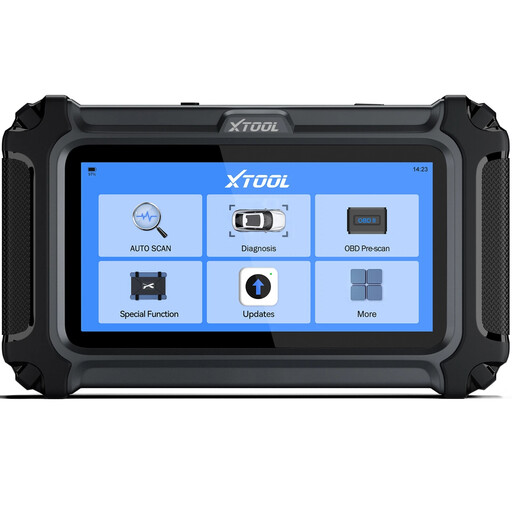
Why this choice fits this profile: it is aimed at drivers who want to read faults from the engine, transmission, ABS, and SRS, with a dedicated interface and the ability to generate PDF reports.
The sheet specifies that service functions vary by VIN. Software updates are announced without an annual subscription. The diagnosis remains wired, avoiding potential Bluetooth issues.
13.8 cm touchscreen, live data display, EPB functions, ABS bleed, oil reset, and announced CAN FD compatibility.
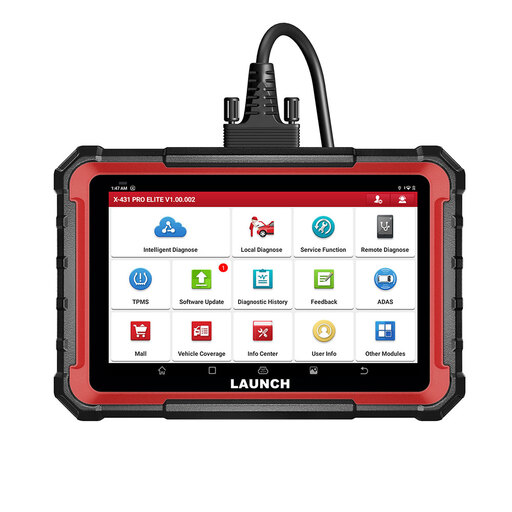
Why this choice fits this profile: its 20.3 cm tablet, VCI, and comprehensive diagnostic functions are aimed at workshops and mobile technicians working on multiple brands.
The sheet distinguishes available functions by make and year. Free updates are included for two years, allowing you to anticipate the cost of use.
CAN FD and DoIP protocols, bidirectional control, ECU coding, PMI function depending on the vehicle, and announced support for add-on modules.
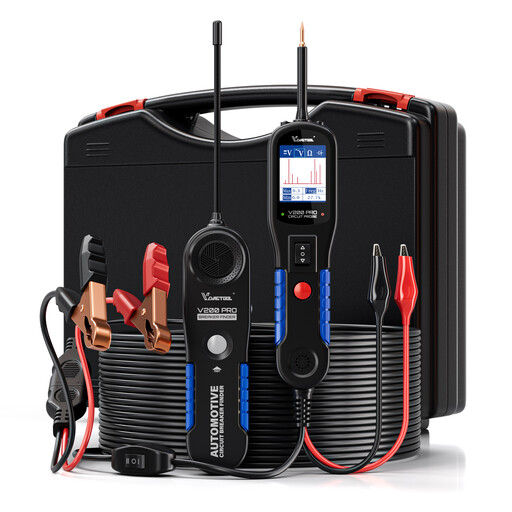
Why this choice fits this profile: it complements an OBD2 scanner when you need to locate a break, short circuit, bad ground, or polarity issue.
It does not claim to replace a diagnostic scanner: its use is focused on low-voltage circuits. This specialization avoids choosing an unsuitable scanner for an electrical fault.
AC/DC voltage test, resistance, diode, continuity, polarity, component activation, and break locator with an announced 6.1 m extension.
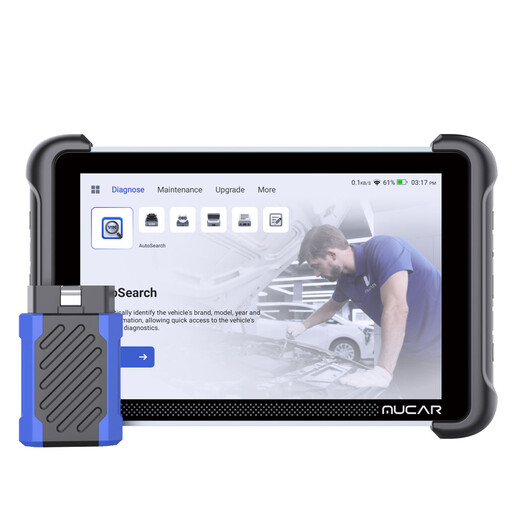
Why this choice fits this profile: it is aimed at users looking for a complete tablet with ECU coding, bidirectional control, and support for several modern protocols.
The sheet specifies that tests, coding, and service functions depend on the vehicle. The presence of CAN FD and DoIP should therefore not be interpreted as total compatibility.
20.3 cm screen, 34 announced service functions, updates without subscription according to the sheet, and support for add-on modules.
We have compiled an updated selection of products to compare functions, protocols, and compatibility with your vehicle.
The OBD2 standard applies to many vehicles marketed since 1996, but coverage varies by make, year, and protocol used. In France, European vehicles may also require an EOBD selection or proprietary communication. Consult the compatibility list and check the VIN before purchase.
Models like the KINGBOLEN Ediag Elite or certain XTOOLs work with an Android or iOS app. You therefore need a compatible phone, a stable Bluetooth connection, and often an internet connection for activation or software download. A standalone tablet avoids this dependency.
No. Clearing a code may temporarily turn off a warning light, but the fault will reappear if its cause is not repaired. Note the codes, freeze frame data, and live parameters before any deletion. For brakes, airbags, high voltage, or the immobilizer, intervention must follow the manufacturer's procedures.