
Livraison le jour même ou le lendemain

Qualité garantie

Débloquez vos offres de bienvenue: Livraison GRATUITE | Jusqu'à -80 % | 30 jours d'essai gratuits à JoyPlus
Téléchargez l'application
An engine warning light, a replaced battery or a DPF regeneration can quickly result in a trip to the garage. To keep costs down and better understand what is happening under the bonnet, an OBD2 car diagnostic tool can be extremely useful, whether you are a private owner or an independent mechanic. The key is choosing a device that is genuinely suited to the make, model and type of work you intend to carry out.
Many code readers are limited to the engine control unit. They can read or clear certain codes linked to the engine warning light, but may not be able to access the gearbox, ABS, airbags, air conditioning or other electronic modules.
If you are looking for all-systems diagnostics, check that the product description explicitly mentions access to the control units available on the vehicle. A long list of compatible makes does not mean that every function will be accessible on every model.
An oil-service reset, injector coding, ABS bleeding, SAS steering-angle calibration or BMS battery reset depends on the vehicle, its year, engine and the version of its control units.
A reliable multi-make diagnostic scanner should specify which functions are actually supported after the vehicle has been identified. If you need a specific operation, tell the seller the make, model and engine before placing your order.
A scanner may seem inexpensive to buy, then become costly if its updates require an annual subscription. Conversely, free lifetime updates can significantly reduce the cost of ownership. However, you should check exactly what this promise covers: vehicle coverage, special functions and any secure access to manufacturers’ systems.
Some protocols also require separate registration, such as FCA AutoAuth, or a specific physical device for certain Renault vehicles. These charges and accessories may not be included with the device.
A basic reader generally limits itself to reading fault codes and live data. An automotive bidirectional tool goes further: it can send certain commands to the control unit to check how a component responds.
Depending on the vehicle, an ECU active test could, for example, operate a fan, injector, ABS hydraulic pump, EVAP purge valve or electric window motor. This function makes fault-finding easier, but it must be used carefully and in accordance with the manufacturer’s procedures.
For newer vehicles, check support for protocols such as CAN FD and DoIP, if these standards apply to the vehicles you work on. For makes equipped with a secure gateway, separate authorisation may be required.
A car diagnostic scanner intended for a garage or fleet should also offer:
The most sought-after functions include service resets, EPB reset, DPF regeneration, throttle-body adaptation, injector coding, BMS battery reset and ABS bleeding.
Do not rely solely on the number of functions advertised. A list of 15 or 34 services does not guarantee that these operations will be available for your vehicle. Also check whether updates are free for life across the entire software package or only for some functions.
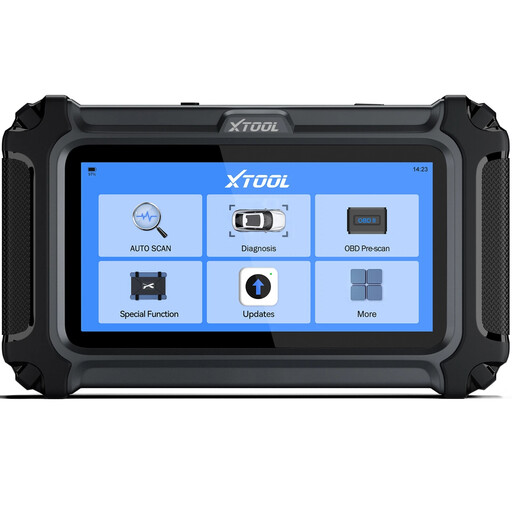
Why it suits this user profile : With its 5.45-inch touchscreen, guided menus and AutoVIN function, it is aimed at owners starting to carry out diagnostics at home. It covers the engine, transmission, ABS and airbags, while also offering several servicing functions.
The product description states that functions vary by vehicle and recommends checking by VIN for specific requirements. Software updates are advertised without an annual subscription.
Reading and clearing codes, four live-data graphs, PDF reports, EPB, TPMS and BMS functions, plus DPF regeneration depending on vehicle compatibility.
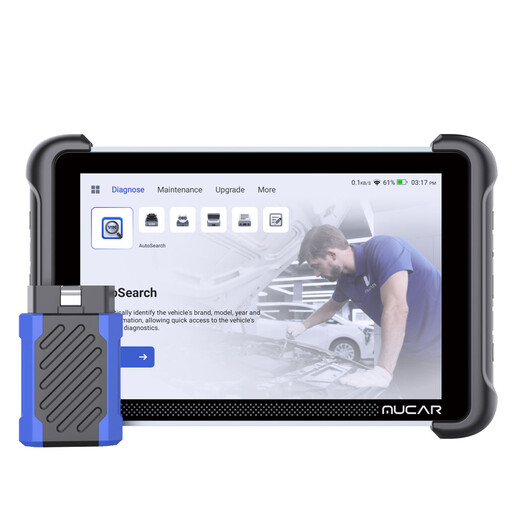
Why it suits this user profile : Its 8-inch tablet, magnetic VCI interface and advanced functions are designed for users who want to work on several makes or equip an independent workshop.
The product description advertises free lifetime updates, as well as support for CAN FD and DoIP. Secure access for certain manufacturers may nevertheless require a separate procedure.
ECU coding, bidirectional controls, more than 34 advertised services, reports and compatibility with certain accessories such as TPMS tools and oscilloscopes.
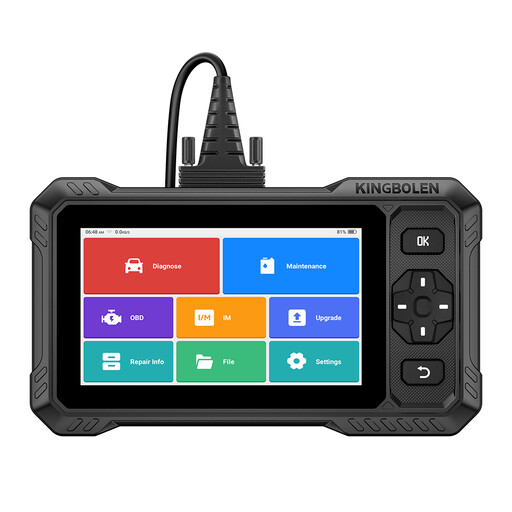
Why it suits this user profile : Its standalone design, 6.2-inch screen and access to available systems make it suitable for garages, fleet managers and enthusiasts who regularly work on vehicles.
The product description distinguishes between compatible functions and those that depend on the model. It also reminds users that clearing a code will not fix the fault if it reappears.
More than 3,000 advertised active tests, 15 service functions, CAN FD support, touchscreen and buttons that can be used while wearing gloves.
We have selected a complete, real-time updated range of products that meet these demanding selection criteria and European safety requirements.
An OBD2 scanner does not replace mechanical safety precautions or the manufacturer’s procedures. To work on brakes, airbags or a high-voltage system, contact a qualified professional and use the appropriate equipment.
No. The OBD2 port, accessible control units and servicing functions vary according to the vehicle’s make, model, engine and equipment. Check the coverage list and confirm compatibility before buying.
It depends on the updates and associated services. Some of the models featured here advertise free lifetime updates. Manufacturer authorisations, such as FCA AutoAuth, may nevertheless require separate registration or payment.
Clearing the code may make it disappear in certain circumstances, but it does not resolve the cause of the fault. If the fault reappears, you need to find and repair the source of the problem before considering the work complete.