
Livraison le jour même ou le lendemain

Qualité garantie

Débloquez vos offres de bienvenue: Livraison GRATUITE | Jusqu'à -80 % | 30 jours d'essai gratuits à JoyPlus
Téléchargez l'application
A check-engine light, a replaced battery, or an electronic parking brake that needs resetting can quickly lead to a visit to the garage. Yet a simple OBD2 fault-code reader is not always enough to identify the source of a problem. For a hands-on car owner, independent mechanic, or workshop, choosing an OBD2 car diagnostic scanner should first and foremost depend on its actual compatibility with the vehicle and the functions it offers.
Many devices advertise “OBD2” compatibility without specifying that they may be limited to the engine control unit. They can read and clear an engine-related code, but may be unable to access the ABS, airbags, transmission, air conditioning, or various body-control modules.
If you want a complete overview of the vehicle, look specifically for full-system diagnosis or “full system diagnosis.” This function nevertheless depends on the make, year, model, and ECU version.
“28 resets,” “4,000 active tests,” or “ECU coding” are marketing claims: they do not mean that all these functions will be available for your car. A BMS reset, injector coding, DPF regeneration, or ABS pump test requires vehicle-specific menus.
Before ordering, check compatibility using the VIN, particularly if you own a Renault, Dacia, Peugeot, Citroën, BMW, Volkswagen, or a recent Stellantis Group model.
Modern vehicles use new communication networks. CAN FD support can be useful on certain recent General Motors models, while DoIP is relevant to several vehicles communicating over Ethernet, including certain BMW, Volvo, Jaguar, and Land Rover models.
Another frequently overlooked point is that access to FCA or Renault secure gateways may require authentication, a subscription, or a separate accessory. Any potential additional cost should be included in your budget from the outset.
AutoVIN can automatically recognise the vehicle identification number and speed up access to the diagnostic menu. However, this feature is not consistently available on older vehicles or certain configurations. Manual vehicle selection should therefore remain available.
For a car registered in France, check in particular:
A bidirectional scanner does more than receive data. It can send a command to the ECU to activate certain components, such as a fan, relay, pump, injector, window regulator, windscreen wiper, or air-conditioning clutch.
These active tests must be performed with caution and only when authorised by the vehicle. Availability varies by model. They can help distinguish a component failure from a wiring or communication issue, but they are not, on their own, sufficient to determine the root cause of a fault.
Common functions include service reset, oil-light reset, EPB, BMS, SAS, and TPMS resets. More advanced operations, such as ECU coding, transmission relearning, or injector programming, require highly specific compatibility.
Also compare the duration of the update coverage. Some devices advertise free lifetime updates, while others include only a limited period. Once that period expires, basic functions may remain available, but access to new software or newer vehicles may become chargeable.
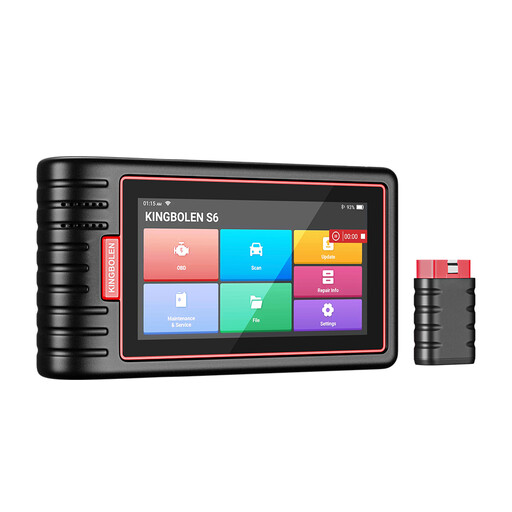
Why it suits this profile: a tablet with Bluetooth connectivity, AutoVIN, and diagnostics for the available systems, designed for routine work at home.
The product listing states that it can access the ECM, ABS, SRS, TCM, and ESP systems, along with 28 service functions depending on the vehicle.
Advertised CAN FD support and free lifetime updates for supported functions and software.
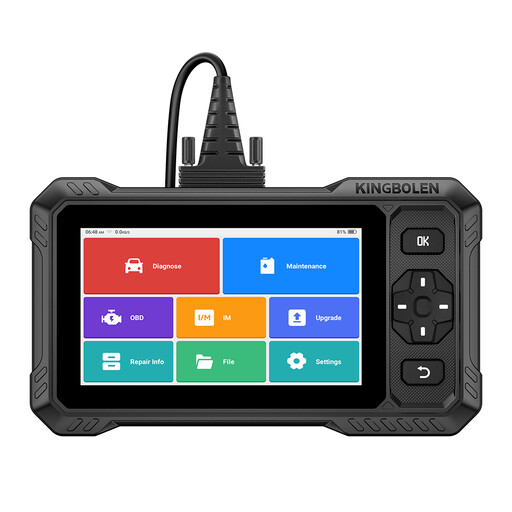
Why it suits this profile: designed for garages and enthusiasts who want to combine multi-brand diagnostics, active tests, and service functions.
The description specifies that active tests and the 15 resets depend on the vehicle’s make, year, and model.
Advertised support for CAN FD, FCA AutoAuth, and Renault SGW, with a subscription or accessory potentially required.
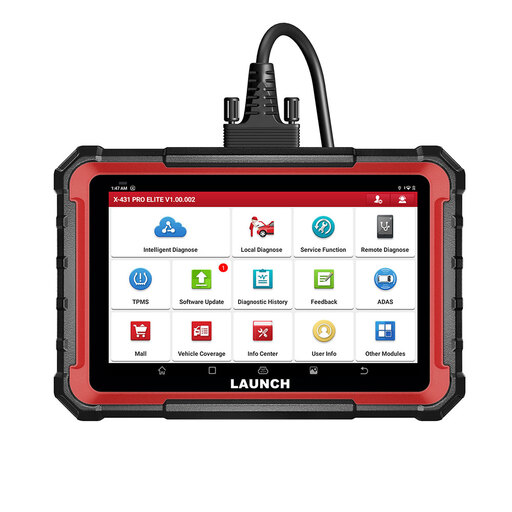
Why it suits this profile: this 8-inch tablet is designed for repeated operations and convenient report review in the workshop.
The advertised update period is two years, making ongoing operating costs easier to anticipate.
The product listing mentions CAN FD, DoIP, bidirectional tests, ECU coding, and more than 31 service functions, subject to compatibility.
Connect the tool with the engine switched off, then turn on the ignition and follow the manufacturer’s instructions. Before clearing a code, record the fault code, freeze-frame data, and live values. Clearing the warning light does not fix the underlying cause: if it comes back, mechanical or electrical work is still required.
For operations involving the brakes, airbags, AdBlue, DPF, or immobiliser, refer to the vehicle’s documentation. An incorrect procedure can immobilise the car or create a safety risk. Saved reports can also be useful when discussing an issue with a garage or before purchasing a used vehicle.
We have put together an up-to-date selection of products suited to a range of automotive maintenance and repair needs in France.
No. The OBD2 standard primarily applies to vehicles compatible with the corresponding protocols, generally from 1996 onwards for many models. Advanced functions vary according to the make, year, engine, and ECU. Check the VIN before buying if you need coding, an active test, or a specific reset.
An OBD2 fault-code reader is often limited to the engine control unit and emissions systems. A car diagnostic tool can access multiple systems, display live data, generate reports, and offer service functions. However, the level of coverage depends on the model and its database.
When advertised by the manufacturer, they apply to the software and functions listed in the product description. They do not necessarily cover subscriptions to secure gateways, accessories, or certain brand-specific services. Review the terms before completing your order.