
Livraison le jour même ou le lendemain

Qualité garantie

Débloquez vos offres de bienvenue: Livraison GRATUITE | Jusqu'à -80 % | 30 jours d'essai gratuits à JoyPlus
Téléchargez l'application
The check engine light comes on, and with it, the fear of a hefty repair bill from the mechanic. An OBD2 car diagnostic scanner promises to help you take back control and make significant savings. But be warned: the market is flooded with devices whose tempting promises too often lead to major disappointments. As a product expert for Joybuy, my mission is to guide you through this tech jungle. Here's how to avoid the common pitfalls and choose the tool you really need.
Too many buyers end up stuck with an unsuitable device or one that turns into a financial black hole. Here are the mistakes to avoid:
To make the right choice, focus on the features that truly matter. These will determine the power, versatility, and, ultimately, the value of your purchase.
A simple code reader only deals with the engine system. A high-performance multi-brand car diagnostic tool must offer all-system diagnostics. This means it can communicate with all of the vehicle's Electronic Control Units (ECUs):
Also, check for the presence of service functions, which are essential for routine maintenance. An oil reset or an EPB (Electronic Parking Brake) function will save you trips to the garage for simple operations.
This is THE feature that separates a gadget from a true professional tool. Bi-directional control (or active test) allows the scanner to send commands to a vehicle component to test its operation. For example, you can activate the fuel pump, run the windshield wipers, or open and close an EGR valve directly from the tool. This capability allows you to pinpoint a fault with certainty, without having to dismantle parts unnecessarily. For more advanced users, ECU coding allows you to adapt a new component or modify certain vehicle parameters.
The long-term cost is a key factor. Opting for a model with free lifetime updates is often the smartest move. The initial investment is a one-time expense, but you continuously benefit from new compatibilities and features.
Connectivity is also a convenience factor that shouldn't be overlooked. A Bluetooth OBD2 scanner connects wirelessly to your smartphone or tablet, giving you great freedom of movement around the vehicle, unlike much more restrictive wired models.
Rather than an endless catalogue, we've matched user profiles with tools that check all the right boxes, based on the objective criteria discussed above.
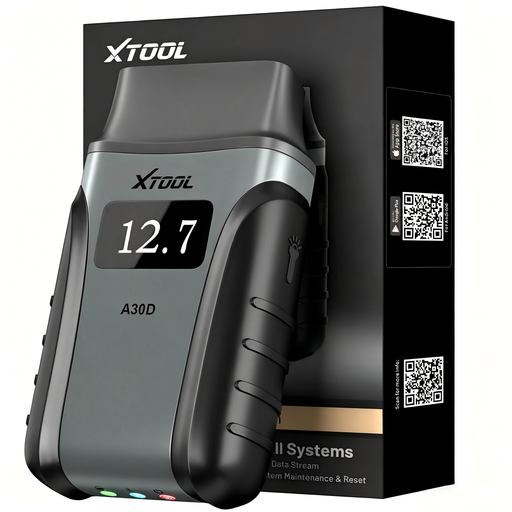
Why it's the right choice: Ideal for the enthusiast who wants to go beyond simple code reading. Its compact Bluetooth format, combined with bi-directional control and all-system diagnostics, offers advanced troubleshooting capabilities without breaking the bank.
It includes lifetime software updates, eliminating any risk of hidden fees or surprise subscriptions. Its bi-directional control and comprehensive diagnostics place it light-years ahead of simple code readers disguised as "pro" tools.
Bi-directional control allows you to actively test components (fuel pump, valves, etc.) for fast and accurate diagnosis. It also offers 19 of the most useful service functions.
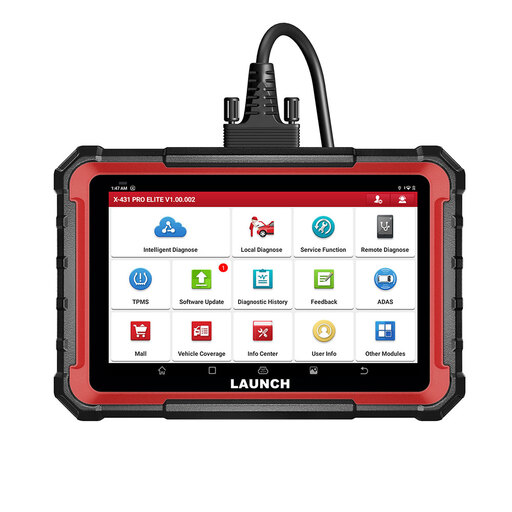
Why it's the right choice: For those who want to make absolutely no compromises. This 8-inch tablet offers professional-grade features, including ECU coding, support for recent protocols (CAN FD/DOIP), and over 31 services for advanced diagnostics and customisations.
Here, there are no false promises: the "pro" features are the real deal. ECU coding and compatibility with modern protocols (DoIP) ensure extensive coverage and a genuine ability to work on recent vehicles.
Its key strength? Advanced ECU coding, which allows you to reprogram modules and customise options on the fly. The guided function for VAG group vehicles simplifies complex procedures.
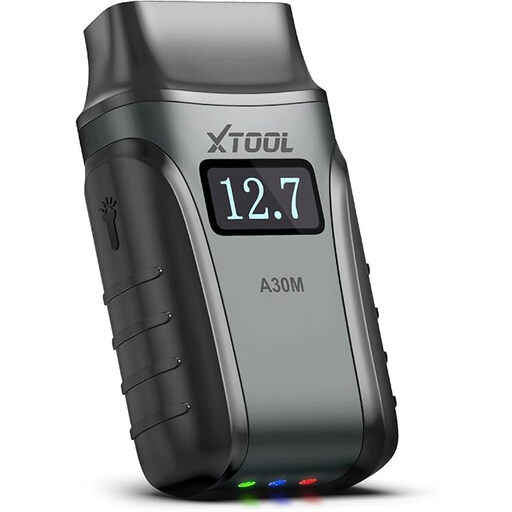
Why it's the right choice: The perfect balance between a pocket-sized format and serious power. Compact enough to fit in the glove box, it nonetheless offers all-system diagnostics, bi-directional control, and over 26 service functions, all wirelessly via Bluetooth.
Its cost model, based on lifetime updates, ensures excellent return on investment for professional use. Its compactness doesn't come at the expense of essential functions, unlike a myriad of entry-level dongles.
A wide range of over 26 reset functions (oil, brakes, injectors, etc.) in an ultra-portable format, all with the peace of mind of free lifetime updates.
We have selected a full range of tools that meet these quality criteria and comply with current regulations.
Is a diagnostic scanner compatible with my car? Most scanners are compatible with the OBD2 standard, which has been mandatory on petrol vehicles sold in Europe since 2001 and on diesel vehicles since 2004. However, compatibility for advanced functions (all-system diagnostics, bi-directional control, resets) is another story and depends heavily on the vehicle's make, model, and year. It is therefore crucial to check the tool's compatibility with your vehicle(s) before you buy.
Do I need a subscription to use a diagnostic scanner? It depends on the model. Some manufacturers, like Autel or Launch on their professional lines, operate with annual subscriptions for updates. Others, like XTOOL or THINKCAR on many of their models, offer free lifetime updates. For an individual or a small workshop, the latter option is often more cost-effective in the long run.
What's the difference between a simple code reader and a true diagnostic tool? A fault code reader usually just reads and clears engine-related error codes. A complete diagnostic tool, on the other hand, opens the door to all of the vehicle's ECUs (ABS, airbags, transmission, etc.), allows you to view live data, perform service functions (oil reset, EPB), and, for the most advanced models, run active tests using bi-directional control.