Hosts looking for a genuine ‘sugar-free’ claim
If this claim is your buying priority, compare the sugar content shown per 100 g on the exact product. EU regulations limit the ‘sugar-free’ claim to 0.5 g of sugars per 100 g.


For a savoury dish to share, plain oats let you choose the other ingredients in the recipe. If your priority is a product labelled ‘sugar-free’, check the ‘of which sugars’ line instead: EU regulations set a maximum of 0.5 g per 100 g, a threshold that simply having no added sugars does not guarantee. Before serving your guests, check the allergens for the specific product you have chosen too.
If this claim is your buying priority, compare the sugar content shown per 100 g on the exact product. EU regulations limit the ‘sugar-free’ claim to 0.5 g of sugars per 100 g.
For oatcakes or a homemade topping, plain oats leave you free to choose what else to add. Still, check the ingredients and allergens before preparing a dish to share.
If guests need to avoid certain ingredients or gluten, check the label on each product. An ingredients list showing only oats is not enough to establish that a product is gluten-free.
For this dinner, first decide whether the ‘sugar-free’ threshold, the freedom to create a savoury recipe or guests’ allergen requirements matter most.
| What matters | What to check | Who is it for? |
|---|---|---|
| ‘Sugar-free’ claim | The ‘of which sugars’ line per 100 g: EU regulations set a maximum of 0.5 g per 100 g for this claim. ‘No added sugars’ means something different. | I want to be able to serve a product that genuinely meets the ‘sugar-free’ claim, rather than confusing it with the recipe on the packet. Around 42% of consumers make this their top priority. |
| Base for a savoury dish | The ingredients list and whether it contains fruit or other additions; choose a product that suits the dish you have in mind. | When making oatcakes or a topping to share, I prefer to choose the seasoning myself. Around 33% of consumers put this freedom to choose the ingredients first. |
| Allergens and gluten | The ingredients, any ‘may contain’ warnings and, if needed, a suitable gluten-free statement or certification that meets your guests’ requirements. | If a guest needs to avoid an ingredient, I must check the product being served before cooking for everyone. Allergen or gluten requirements come first for around 25% of consumers. |
A mix containing fruit can carry the first claim while still containing sugars. The BJORG mix with seeds and raisins is a good example of the difference.
If the ‘sugar-free’ claim is essential, check the ‘of which sugars’ value per 100 g and the 0.5 g threshold set by EU regulations.
Ordinary oats may carry warnings about traces of wheat or other cereals containing gluten. The ingredients list does not replace checking these warnings.
Ask your guests what statements they need to see on the packaging, then check the exact product. AFNOR Certification explains that its AOECS audit covers, among other things, the management of the risk of gluten contamination.
Raisins and other additions change the flavour and ingredients of the dish. A ready-to-eat mix is therefore not automatically a substitute for a plain base.
For a savoury dish, first choose the ingredients you want to include, then check that they match the product you buy.
A listing showing a sugar content that suits your needs does not guarantee that the product will be available when you come to prepare dinner.
Check availability when you buy, and recheck the sugar content and allergens on the packaging of any replacement product.
These products are useful for comparing specific ingredients; a brand name alone cannot confirm the sugar content or allergens across its entire range.
Quaker presents its wholegrain oats as a base for a range of recipes.
The range includes large plain oats as well as a mix with seeds and raisins: two different products to choose between depending on the dish.
The retailer offers a wholegrain oat product made from 100% oats.
A Carrefour listing for 150 g NUT&ME oats shows how to compare an ‘of which sugars’ value with your target threshold.
E.Leclerc’s category lists Grainea oats separately from other products, including granola.
This preparation with oats, fruit and vegetables is different from plain oats for creating a savoury dish: check its ingredients before adding it to your menu.
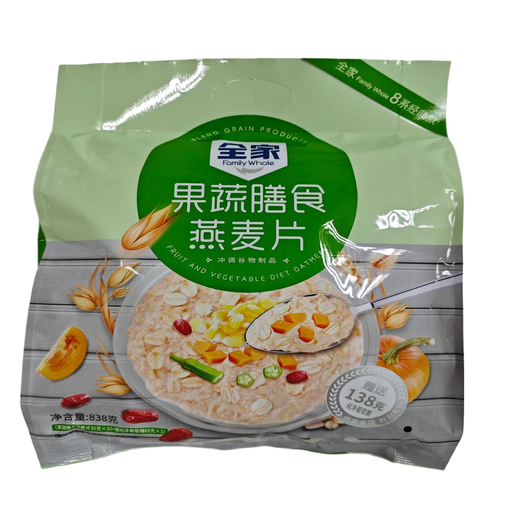 Image unavailable
Worth considering if you want to serve a ready-made preparation rather than create a savoury recipe using plain oats.
The pack is listed as 838 g. Before serving, check the ingredients list, allergens and sugar content per 100 g on the packaging, as well as whether it contains separate glucose sachets; the product name alone is not enough to confirm the ‘sugar-free’ claim.
No. EU regulations reserve the ‘sugar-free’ claim for products containing no more than 0.5 g of sugars per 100 g. A recipe with ‘no added sugars’ may still contain sugars from its ingredients, so compare the ‘of which sugars’ line on the product you choose.
Compare their nutritional information on the same basis, per 100 g, then read the ingredients lists. The DGCCRF explains that presenting information per 100 g makes it easier to compare pre-packed foods; a per-portion value is no substitute for this common basis.
No. Also check any ‘may contain’ warnings and the information specific to the product being served. If your guest needs a product that has been checked for gluten, agree with them on the statement or certification to look for on the packaging; AFNOR Certification says that the AOECS audit covers, among other things, the risk of gluten contamination.
Reseal the packet and store it somewhere dry, away from moisture. This is the advice given for the Auchan and BJORG products mentioned here. Also check the storage instructions and date on your own packaging.