People who prioritise fat content
For a drink to enjoy on its own or with cereal, the figure per 100 ml matters more than the impression given by the front of the carton. It lets you compare products on a like-for-like basis.


To choose a low-fat oat drink for snack time, compare the figures per 100 ml: Regulation (EC) No 1924/2006, published on EUR-Lex, sets the maximum permitted for this claim on a drink at 1.5 g per 100 ml. Check the sugar content and storage instructions separately. A ‘no added sugars’ recipe may still contain sugars, while a barista version is designed first and foremost for its texture.
For a drink to enjoy on its own or with cereal, the figure per 100 ml matters more than the impression given by the front of the carton. It lets you compare products on a like-for-like basis.
If the sugar figures on the label influence your choice of snack, it’s important to distinguish between ‘sugar-free’ and ‘no added sugars’, and to check the ‘of which sugars’ line.
For hot chocolate or another hot drink, texture may matter more. Oatly describes its Barista Edition as creamy and suitable for frothing; that positioning alone doesn’t tell you how much fat it contains.
Start with the factor behind your purchase, then check the other lines on the label separately. Low fat content alone tells you nothing about the sugar content or ingredients.
| Factor | What to check | Who is it for? |
|---|---|---|
| Fat | The figure per 100 ml. In France, Regulation (EC) No 1924/2006, published on EUR-Lex, limits the ‘low fat’ claim for a drink to 1.5 g per 100 ml. | If I’m mainly looking for a low-fat oat drink to go with my snack, I want to be able to compare cartons using the same measurement. Around 33% of consumers would put this factor first. |
| Sugars | The ‘of which sugars’ figure per 100 ml and the exact wording on the label: ‘sugar-free’ or ‘no added sugars’. | If the sugar figures on a drink guide my choice, I don’t want to confuse no sugars with no added sugars. This would be the main priority for around 27% of consumers. |
| Ingredients | The ingredients list, as well as whether calcium and vitamins have been added, if these matter to you. | When comparing several recipes for snack time, I look beyond the fat content and check the ingredients too. Around 20% of consumers would make this their priority. |
| Use and storage | The recommended use for the product you choose and its storage instructions, both before and after opening. | If I sometimes make a hot drink or keep an opened carton, I prioritise a texture and storage instructions that suit how I’ll use it. This would be the main priority for around 20% of consumers. |
On Auchan’s product pages, Ethiquable’s no-added-sugars drink contains 4.7 g of sugars per 100 ml, compared with 0 g per 100 ml for Oatly No Sugars. The two claims therefore don’t describe the same nutritional value.
If sugar content matters to you, compare the ‘of which sugars’ figure per 100 ml for each product.
Two oat drinks from the same brand may have different recipes and nutritional values. Information about one product doesn’t necessarily apply to all its variants.
Check the full product name and nutritional information on the carton you’re planning to buy.
Oatly describes its Barista Edition as creamy and suitable for frothing. This description relates to how it’s used, not whether it meets the fat-content threshold for the ‘low fat’ claim.
If you want both a foamy texture and low fat content, check the figure per 100 ml for the exact barista version.
Anses warns of the risks of replacing breast milk or infant formula with drinks not designed for babies from birth to one year old.
Don’t choose an oat drink for this purpose. Ask a healthcare professional for advice if you have a specific question about feeding an infant.
The range includes several oat drinks, including a No Sugars option. Compare the variants rather than assuming they all have the same ingredients.
No Sugars and Barista Edition meet different needs: the sugar content listed for the former, and the texture you want in a hot drink for the latter.
The Bio Avoine and Sensation products don’t highlight the same features. Compare their labels as you would those of two different recipes.
These two NATRUE drinks could be an option for a drinkable snack. However, their names refer to different recipes, so compare the fat and sugar content and the instructions on each pack before choosing.
 Image unavailable
For a drinkable snack or one to enjoy with cereal, compare the fat and sugar figures per 100 ml. The ‘0%’ in the name doesn’t replace checking the nutritional information.
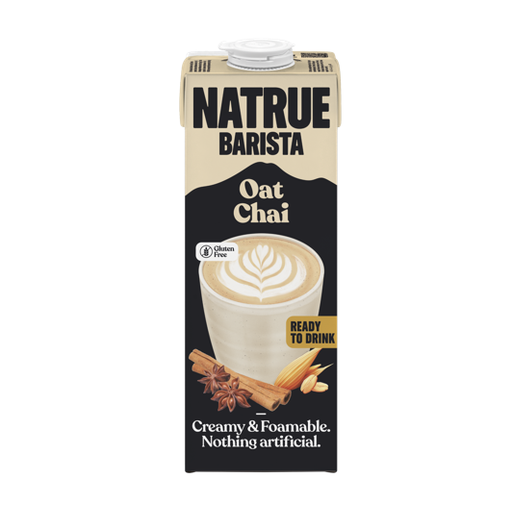 Image unavailable
For a drinkable snack served cold or warmed up, compare this Chai Latte variant separately with a plain oat drink. In particular, check the sugars per 100 ml and the storage instructions after opening.
In France, this claim for a drink is subject to a maximum of 1.5 g of fat per 100 ml under Regulation (EC) No 1924/2006, published on EUR-Lex. Check the figure per 100 ml for the specific product: it doesn’t tell you how much sugar it contains.
No. A drink with no added sugars may still list sugars in its nutritional information. Auchan’s product page for Ethiquable’s no-added-sugars drink lists 4.7 g of sugars per 100 ml, so compare the ‘of which sugars’ figure if it will influence your choice.
Follow the instructions on the carton you’ve chosen, both before and after opening. Oatly says its products sold in the chilled aisle must be kept in the fridge. Don’t assume the instructions are the same for different types of packaging.
No. For babies from birth to one year old, Anses warns of the risks of replacing breast milk or infant formula with drinks not designed for this purpose. An oat drink intended for snack time must not be used as an infant milk substitute.