Parents preparing the lunchbox the night before
If the carton needs to stay out of the fridge before it is opened, check its storage instructions. A chilled drink doesn’t necessarily keep in the same way as a long-life carton.


For a nursery lunchbox that will be kept out of the fridge, choose a carton whose label says it can be stored at room temperature before opening, rather than one that needs to stay chilled. The word ‘filtered’ alone isn’t enough to compare oat drinks: check the ingredients, allergens, storage instructions after opening and what the nursery will accept. For a child under one, a plant-based drink is not a substitute for breast milk or infant formula, as the Anses reminds us.
If the carton needs to stay out of the fridge before it is opened, check its storage instructions. A chilled drink doesn’t necessarily keep in the same way as a long-life carton.
Check that the exact product meets your child’s dietary restrictions and the nursery’s requirements. According to Assurance Maladie, an individual care plan, or PAI, can set out dietary restrictions.
Compare the ingredients list, any ‘no added sugars’ claim and added calcium or vitamins on each product. These features alone don’t determine the drink’s role in your child’s diet.
For a nursery lunchbox, first check how the carton should be stored before opening and what the nursery will accept. Then compare the ingredients, without treating ‘filtered’ as a reliable indication of storage requirements or suitability for your child’s diet.
| Priority | What to check | Who it matters to |
|---|---|---|
| Storage and transport | Storage instructions before and after opening; check with the nursery if a 1 L carton needs to be opened. | If the lunchbox will be kept out of the fridge, I want to be able to pack an unopened carton without confusing long-life drinks with chilled ones. Around 42% of consumers would put this first. |
| Dietary exclusions and nursery arrangements | The ingredients and allergens in the exact product; the nursery’s instructions and the PAI, if there is one. | To meet a dietary exclusion, I need a product that suits my child’s restrictions and is accepted by the nursery. This would be a priority for around 33% of consumers. |
| Ingredients | Any ‘no added sugars’ claim and added ingredients, particularly calcium or vitamins; your child’s age if the drink is replacing a usual food. | I want to distinguish a recipe with no added sugars from a fortified one, without assuming either can replace a diet suited to my child’s age. Ingredients would come first for around 25% of consumers. |
A carton that can be stored at room temperature before opening and a drink that needs to stay chilled have different transport requirements.
Read the instructions for the specific product you’ve bought. If the carton has already been opened or the drink has been poured into another container, ask the nursery what it will accept and how it will store it.
The category ‘oat drink’ doesn’t tell you everything about the ingredients, allergens or requirements of a gluten-free diet.
Check the label on the exact product and follow the PAI, if there is one. For coeliac disease, Assurance Maladie stresses that a gluten-free diet must be strict: have the product checked in line with your child’s medical advice.
According to Anses, plant-based drinks do not meet infants’ nutritional needs.
For a child under one, don’t use them instead of breast milk or infant formula. Seek medical advice about any necessary dietary exclusion or substitution.
On its own, this term doesn’t tell you how to store the carton or whether its ingredients meet your child’s dietary restrictions.
Base your choice on the storage instructions, ingredients list, allergens and pack size shown on the packaging.
Oatly offers long-life oat drinks, as well as Barista products designed for making coffee drinks.
The Carrefour listing for a 1 L Alpro oat drink describes a recipe with calcium and vitamins B2 and D2.
Carrefour offers an organic oat drink in a 1 L carton labelled ‘no added sugars’.
These 1 L products let you compare plain and flavoured oat drinks for a nursery lunchbox. Their names alone don’t confirm that they can be kept out of the fridge or that they meet your child’s dietary restrictions. Check the packaging and what the nursery will accept.
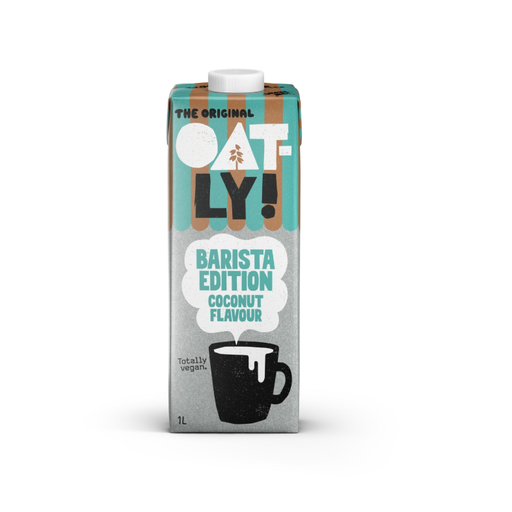 Image unavailable
Worth comparing if you’re considering a coconut-flavoured oat drink. With a 1 L carton, you’ll need to agree with the nursery how it will be served and how an opened carton will be stored.
Before putting it in the lunchbox, check the storage instructions and ingredients on the packaging against your child’s dietary restrictions.
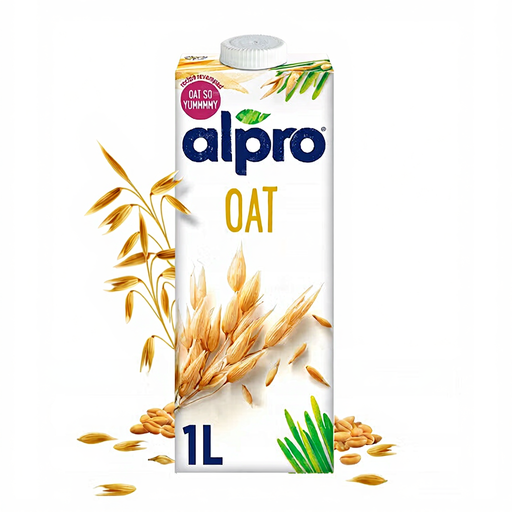 Image unavailable
Worth considering if you’re comparing oat drinks in 1 L cartons. Check the ingredients and allergens in this specific product before taking it in for a child with a dietary exclusion.
Also check how it should be stored before and after opening, and ask the nursery how it handles this pack size.
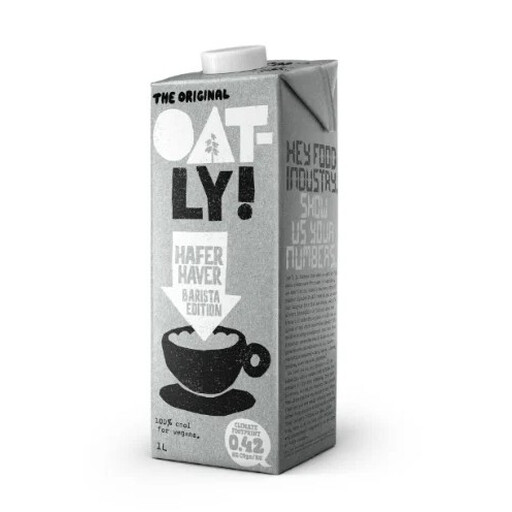 Image unavailable
Worth comparing as a 1 L oat drink, but don’t treat the Barista label as a sign that it’s suitable for nursery.
Read the storage instructions and allergen information for the product you buy; if the carton needs to be opened, confirm how it can be portioned with the nursery.
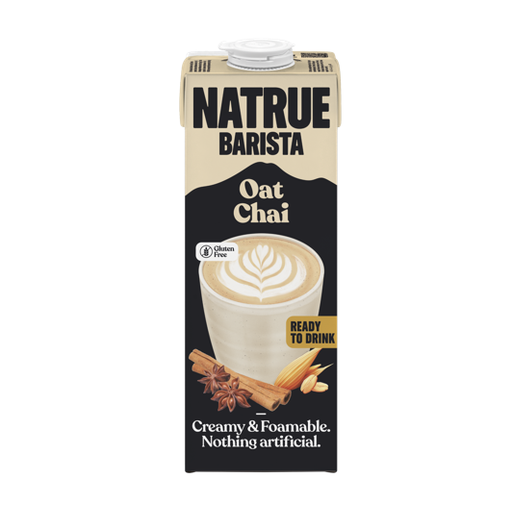 Image unavailable
Check the ingredients particularly carefully before considering this chai-flavoured oat drink for a child at nursery.
Also check the storage instructions and ask the nursery whether it accepts this recipe and a 1 L carton.
 Image unavailable
Worth considering if you’re comparing the ingredients in 1 L oat drinks; check the label to see what ‘0%’ in the product name refers to.
Before transporting it outside the fridge, check the storage instructions. For a dietary exclusion, rely on the allergens listed on the packaging rather than the word ‘oat’ alone.
Not for an infant under one: according to Anses, plant-based drinks do not meet their nutritional needs and cannot replace breast milk or infant formula. For an older child, seek medical advice if the drink is intended to replace a usual food as part of a dietary exclusion.
Don’t assume so from the product category: check the ingredients and allergens in the product you buy. Oatly says its No Sugars drink is not a dairy product, but that statement applies to one specific product and doesn’t remove the need to check the packaging you’ve chosen.
Contact the nursery before bringing in the drink and share the exact product details in line with its requirements. Assurance Maladie explains that a PAI can set out dietary restrictions and arrangements for a child’s day-to-day care in a group setting.
The word ‘oat’ alone isn’t enough to confirm that a drink is suitable for your child. Assurance Maladie reminds us that the diet for coeliac disease must be strict: follow medical advice, check the gluten-free labelling on the specific product and arrange its use with the nursery.
Yes, if the instructions on your chosen carton say it can be stored at room temperature before opening, and the transport and care arrangements are followed. Oatly distinguishes its long-life drinks from its chilled products. Once opened, follow the instructions on the packaging and the arrangements agreed with the nursery.