What should you compare?
When choosing an oat drink as part of a high-protein diet, start with what matters most to you, then compare the nutritional information for each product per 100 ml.
| Criteria |
What to check |
Who is it for? |
| Protein |
The amount per 100 ml, then the amount in the volume you actually pour into your meal. |
If I’m relying on this drink to contribute to the protein in my meal, I want to know what my glass provides; around 36% of consumers would prioritise this. |
| Fat |
The fat content per 100 ml for the exact product, rather than comparing a serving with 100 ml of another product. |
If I use a drink regularly, I want to choose based first on its fat content; this would be the main criterion for around 29% of consumers. |
| Sugars and carbohydrates |
The ‘carbohydrate’ and ‘of which sugars’ figures per 100 ml, even if the front of the pack says ‘no added sugars’. |
When I’m keeping an eye on the sugars or carbohydrates in my drinks, a claim on the packaging isn’t enough; around 21% of consumers would put this first. |
| Use and suitability |
The ingredients, gluten-related claims, any added nutrients and instructions for after opening. |
If I cook with this drink or need to follow a dietary restriction, I want a product that suits my needs; this would be a priority for around 14% of consumers. |
Oat drinks on Joybuy
These two oat drinks can accompany a meal where other foods also provide protein. To choose between NATRUE’s 0% version and Oatly Original, compare the nutritional information on each pack: their names alone don’t tell you which has less fat or more protein.
 Image unavailable
NATRUE Oat Drink 0% 1 Liter
If you’re considering this version to go with a high-protein meal, check what the 0% claim refers to and read the nutritional information on the pack. Also check for any gluten-related claims if they matter to you.
View on Joybuy
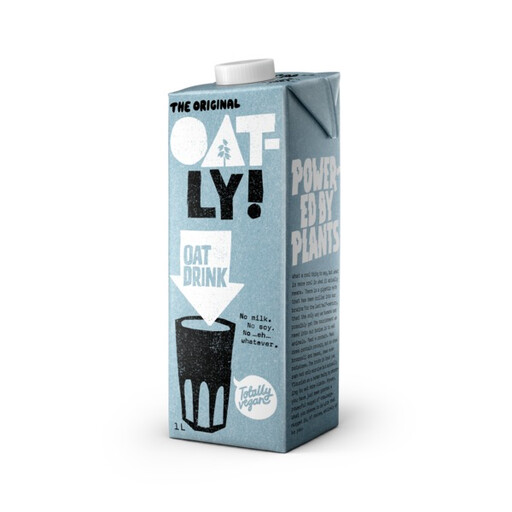 Image unavailable
Oatly Oat Drink Original 1 L
If you’re using oat drink in coffee or cooking, compare this Original version using the nutritional information on its own carton. Check its protein and fat per 100 ml: the figures for Oatly No Sugars don’t apply to the Original version.
View on Joybuy
Frequently asked questions
Can a low-fat oat drink be the main source of protein in a meal?
Not for the products with figures listed here: Auchan and E.Leclerc’s listings for Oatly No Sugars, Bio Village and Auchan Bio show 0.5 to 1 g of protein per 100 ml, or 1.25 to 2.5 g in 250 ml. Consider how much you pour and what else is in your meal.
Does ‘no added sugars’ mean ‘no carbohydrates’?
No. Auchan’s product listing for Oatly No Sugars shows 0 g of sugars, but 6.3 g of carbohydrates per 100 ml. Check both lines in the nutrition table rather than relying on the claim on the front of the pack.
What should I check if I want an oat drink with added nutrients?
Check which nutrients are listed for the exact product. Auchan’s product listing for Alpro No Sugars Oat mentions added calcium and vitamins, while showing 0.7 g of protein per 100 ml. Added nutrients don’t tell you how much protein it provides.
Can I assume an oat drink is suitable for a strict gluten-free diet?
No. If you need to follow a strict gluten-free diet, look for a suitable claim on the pack of the product you choose and check its ingredients list.
How should I store oat drink after opening?
Follow the temperature and storage time shown on the carton you buy. Instructions for unopened cartons don’t tell you how to store them once opened. Oatly, for example, distinguishes its chilled products from cartons that can be kept at room temperature before opening.


