People cooking for Christmas and keeping an eye on fat
Whether you’re making a sauce, gratin, dessert or hot drink, you want to compare the fat content shown in the nutrition table rather than relying on the word ‘light’ alone.


If keeping fat to a minimum is your priority for Christmas dinner, choose an oat drink by comparing nutritional values expressed in the same unit. For a sauce or dessert, also check that the product is suitable for the intended use: its fat content alone won’t tell you how the recipe will taste or turn out.
Whether you’re making a sauce, gratin, dessert or hot drink, you want to compare the fat content shown in the nutrition table rather than relying on the word ‘light’ alone.
You’re looking for an oat drink that can be used in a savoury or sweet dish, and need to check its ingredients against your guests’ dietary requirements.
You want to avoid an oat drink changing the flavour of your dish, so you check both the ingredients list and the ‘of which sugars’ line in the nutritional information.
For Christmas dinner, start with the recipe or drink you have in mind, then compare the fat, sugar and ingredients of products suitable for that use.
| Criteria | What to check when buying | Who it matters to |
|---|---|---|
| Fat | Compare values per 100 ml with other values per 100 ml, or values per 100 g with other values per 100 g. Check the ingredients list too. | If I want to choose a drink with a fat content comparable to another, I need to see the same unit on both cartons; around 44% of consumers put this first. |
| Cooking use | Check the intended culinary use stated for the product and any ingredients that your guests need to take into account. | If I’m making a plant-based sauce or dessert for my guests, I want to know whether the drink is suitable for that recipe; this is the top priority for around 33% of consumers. |
| Sugars and flavour | Read the front-of-pack claim, the ingredients list and the ‘of which sugars’ line per 100 ml. | If I want to preserve the flavour of a recipe, I don’t want to mistake ‘no added sugars’ for ‘sugar-free’; this is the top concern for around 23% of consumers. |
E.Leclerc’s Bio Village oat drink listing says ‘no added sugars’, while also showing 5.0 g of sugars per 100 ml. So the claim on the front of the pack is no substitute for checking the nutritional information.
Compare the ‘of which sugars’ line for the products you’re considering before adjusting the sugar in a recipe.
The E.Leclerc and Auchan listings show 1.2 g of fat per 100 ml for their Bio Village and Auchan Bio products. Carrefour’s listing gives 1.5 g per 100 g for Alpro: as they stand, these figures don’t allow a like-for-like comparison.
To compare two drinks by fat content, first make sure their values are expressed in the same unit.
Depending on the product, the recipe may also include vegetable oil or other ingredients. The product name alone won’t tell you whether its ingredients meet your guests’ dietary requirements.
Check the ingredients list and allergen declaration on the carton you choose; don’t assume a product is gluten-free just because it contains oats.
Auchan Bio’s product listing says to store the drink in the fridge at a maximum of +6 °C and consume it within five days of opening.
Plan how much you’ll need for recipes and drinks, then follow the storage instructions for each carton.
The range includes No Sugars and Fibre Low-Calorie. Check each product separately to see whether it suits your recipe and what its packaging says.
The oat drink listed by Carrefour contains added calcium and vitamins B2 and D2.
E.Leclerc lists a 1 L organic oat drink labelled ‘no added sugars’.
The product listing for this organic oat drink says it can be enjoyed hot or cold, or used in cooking.
These products include a NATRUE oat drink, a chai version and a coconut-flavoured version. To include them in your Christmas meal, consider whether you want to serve them as drinks or use them in a sauce or dessert.
 Image unavailable
Worth considering for coffee, cereal or drinking on its own. For a savoury or sweet recipe, check the intended use on the carton; if a guest has a dietary requirement, check the allergen declaration too.
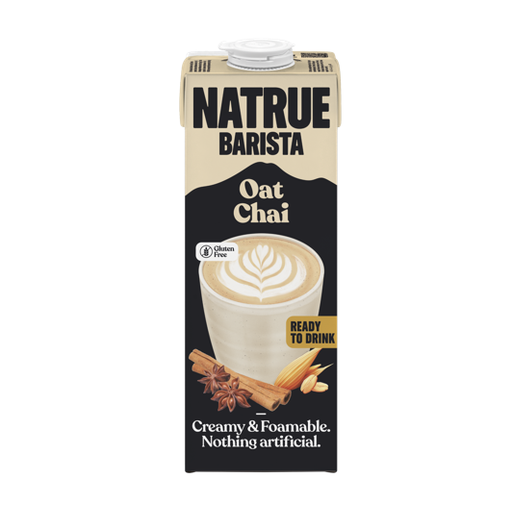 Image unavailable
A good option for serving a chai-flavoured drink, especially warmed up. Its flavour may not suit a recipe that calls for a neutral taste; check the ingredients and nutritional information if you plan to use it in a recipe.
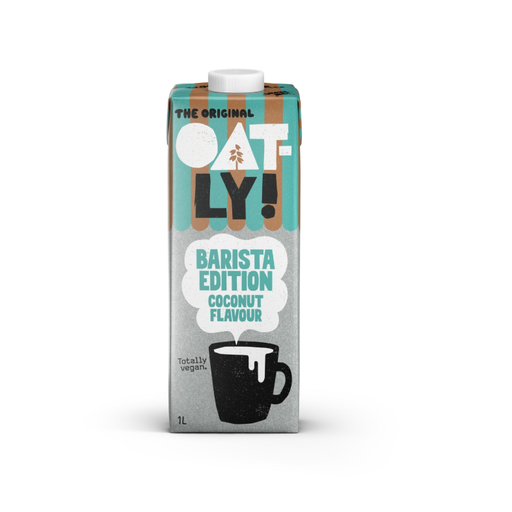 Image unavailable
Worth considering for a hot drink with a coconut flavour. If you’re making a sauce or dessert where you want the oat flavour to be subtle, bear the coconut flavour in mind and check the ingredients and allergen declaration on the pack.
No. E.Leclerc’s Bio Village product listing says ‘no added sugars’ and shows 5.0 g of sugars per 100 ml. To choose based on sugar content, compare the ‘of which sugars’ line using the same units.
Yes, as long as the product is suitable for the intended use. Oatly suggests replacing 10 cl of milk with 10 cl of its No Sugars drink in a savoury or sweet recipe. However, this doesn’t guarantee the same texture as using cream. Try it out in advance if the consistency of the dish is particularly important.
Follow the instructions on the carton you’re using. For its organic oat drink, Auchan says to store it in the fridge at a maximum of +6 °C and consume it within five days of opening.
No. To compare their fat content, check the nutritional values and make sure they’re expressed in the same unit: a value per 100 g can’t be directly compared with one per 100 ml. Then check the ingredients and intended culinary use of each product.