Parents looking for a less sweet taste
If the drink is served on its own or used in a dish for dinner, compare the sugar claims and nutritional values. A brand’s description of the taste can’t predict whether your child will enjoy it.


For an oat drink served occasionally with a child’s dinner, compare the sugar claims, the ‘of which sugars’ line and the ingredients rather than relying on the word ‘mild’ alone: taste is a matter of personal preference. If the drink regularly replaces a dairy product, also check the fortification information on the carton, without treating it as a nutritionally equivalent substitute. For infants, Anses warns against replacing breast milk or infant formula with a drink not designed for this purpose.
If the drink is served on its own or used in a dish for dinner, compare the sugar claims and nutritional values. A brand’s description of the taste can’t predict whether your child will enjoy it.
If the drink regularly takes the place of a dairy product, compare the fortification information for each variant. Santé publique France states that plant-based drinks are not nutritionally equivalent substitutes for drinks made from animal milk.
If your child has specific dietary requirements, including those set by their school, check the ingredients and allergens on the carton you choose. Don’t assume you know the exact composition from the term ‘oat drink’ alone.
For a child’s dinner, first decide whether the drink will be served occasionally or regularly replace a dairy product. Then compare the taste you’re looking for, the fortification and the ingredients of the exact variant.
| Criteria | What to check | Who is it for? |
|---|---|---|
| Less sweet taste | The sugar claim and the ‘of which sugars’ line in the nutritional information; the taste described on pack doesn’t guarantee your child will like it. | If I’m serving the drink on its own or using it in a dish, I don’t want to choose based on the word ‘mild’ alone. Around 50% of consumers would put this criterion at the top of their list. |
| Fortification | Whether the chosen variant contains calcium, vitamin D and, where applicable, B12; your child’s age and the role of the drink in their meals. | If the drink often takes the place of a dairy product, I want to compare what the cartons actually say, without assuming they’re equivalent to milk. This would be the main priority for around 30% of consumers. |
| Ingredients and allergens | The ingredients list and allergens highlighted on the exact packaging, taking account of your child’s individual requirements. | If I need to follow a specific dietary requirement, I need to know the exact composition before serving the drink. For around 20% of consumers, this check would take priority over the others. |
For infants from birth to 1 year old, Anses highlights the risks of replacing breast milk or infant formula with food not designed for this purpose.
Don’t choose an oat drink from the drinks aisle as a replacement. If you’re unsure, ask a healthcare professional for advice.
The claim ‘no added sugars’ doesn’t mean that the drink contains no sugars. Nor does it tell you how sweet your child will find it.
Also check the ‘of which sugars’ line per 100 ml and choose according to how you plan to use it at dinner.
Carrefour Bio’s product listing gives four ingredients for its oat drink, while Oatly distinguishes its Organic version from its fortified versions. A simple recipe alone doesn’t tell you whether calcium or vitamins have been added.
If fortification matters to you, look for this information on the exact variant.
Calling a drink plant-based doesn’t mean you can skip checking its ingredients. In France, the DGCCRF states that allergens must be highlighted on the labels of prepacked foods.
Check the packaging you buy and follow any individual or school requirements that apply to your child.
The Alpro Oat No Sugars variant described by Carrefour France gives you an option to compare if you’re looking for a drink presented as sugar-free and fortified with calcium and vitamins.
Oatly describes its No Sugars version as having a less sweet taste and says its Original version is fortified with vitamins and minerals.
Carrefour France’s product listing features an organic oat drink with a recipe that may appeal to families who start by comparing ingredients lists.
These oat drinks are worth considering based on the taste you’re looking for and the information provided for each variant. Before serving one with a child’s dinner, check the label on the carton you buy, especially if sugars, fortification or allergens are important to your choice.
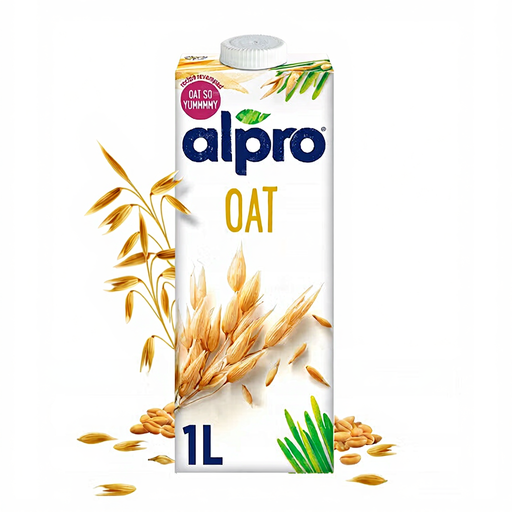 Image unavailable
Worth considering if you’d like to compare an oat drink to serve on its own or use in a dish. For this product, check the sugars, fortification information and allergens on the carton; ‘no added sugars’ doesn’t guarantee your child will like the taste.
 Image unavailable
Worth considering if you’re comparing the sugar content of oat drinks. Check the packaging to see what ‘0%’ refers to, then check the allergens for this variant before serving it to a child: the available descriptions give conflicting information about gluten.
No. An ordinary oat drink shouldn’t replace breast milk or infant formula. Anses states that, from birth to 1 year old, replacing these with food not specifically designed for this purpose may pose risks.
No. According to Santé publique France, plant-based drinks are not nutritionally equivalent substitutes for drinks made from animal milk. The fortification information on a carton is worth comparing, but it isn’t enough to conclude that regularly replacing milk is suitable for a child.
Yes. Check the ingredients and allergens on the variant you buy. In France, the DGCCRF states that allergens in prepacked foods must be highlighted; the term ‘plant-based drink’ doesn’t replace checking the label.
Follow the instructions on the carton you choose, as they depend on the product and its packaging. Check the storage instructions separately for before and after opening.