Parents looking for a mild taste
For cereal, snacks or holiday recipes, you’ll want an oat drink with ingredients and sugar content that are easy to compare. The words ‘no added sugars’ don’t, on their own, tell you what it tastes like.


For holidays with children over one, choose an oat drink by considering the taste you’re looking for, the ingredients list and the sugar content shown on the label. If you serve it regularly, compare the calcium and vitamins in the specific product too; for days out, check how to store it after opening. According to Anses, oat drinks should not replace breast milk or infant formula before a child’s first birthday.
For cereal, snacks or holiday recipes, you’ll want an oat drink with ingredients and sugar content that are easy to compare. The words ‘no added sugars’ don’t, on their own, tell you what it tastes like.
If it’s often on the breakfast table, compare the nutritional information for each product, particularly its calcium, listed vitamins and protein, rather than assuming all recipes are alike.
For a day out or a holiday, pack size matters just as much as storage instructions, both before and after opening. Choosing a portion that suits how you’ll use it means you won’t have to carry around an already-opened carton.
First, distinguish the taste you want from the sugar content. Then check the nutritional information and pack size, depending on how often you’ll drink it and whether you’ll be travelling.
| Criteria | What to check | Who is it for? |
|---|---|---|
| Taste and sugars | The ingredients list and the ‘of which sugars’ line per 100 ml; ‘no added sugars’ doesn’t necessarily mean 0 g of sugars. | For cereal or snacks, I look for a mild taste without trying to work out the sugar content from the front of the carton. Around 38% of consumers are said to put understanding sugar content at the top of their needs. |
| Nutritional profile and age | The child’s age, followed by the calcium, listed vitamins and protein in the exact product. According to Anses, before the age of one, it should not replace breast milk or infant formula. | If I serve it regularly, I want to compare the information on each label without treating all oat drinks as the same. Checking the nutritional profile would be a priority for around 31% of consumers. |
| Pack size and storage | The volume of each carton and the storage instructions, both before and after opening. | For a day out, I prefer to plan a quantity that suits what will be consumed and know what to do with an opened carton. Transport and managing leftovers would come first for around 31% of consumers. |
The words ‘no added sugars’ don’t mean that the total sugar content is zero: E.Leclerc and Auchan list 5,0 g per 100 ml for Bio Village and 4,0 g per 100 ml for Bjorg, respectively.
Compare the ‘of which sugars’ line per 100 ml for the products you’re interested in, without assuming it tells you what they taste like.
According to Anses, common plant-based drinks are not suitable as replacements for breast milk or infant formula for babies.
Don’t make this substitution for a child under one. If you have a specific concern, ask a healthcare professional for advice.
Auchan’s product page for Alpro No Sugars lists calcium and vitamins. You can’t assume another product contains the same just because it’s called an ‘oat drink’.
If calcium matters to you, check the amount listed per 100 ml on the pack you’ve chosen.
Instructions vary from product to product. Auchan’s listing for Bjorg 3 × 25 cl says to keep it in the fridge and consume within 4 days of opening.
Before a day out, choose a suitable pack size and follow the carton’s instructions as soon as it’s opened.
Auchan’s 1 l ‘No Sugars’ oat drink is worth considering if you’re comparing fortified drinks.
Oatly France presents its original oat drink as suitable for drinking on its own or using in cooking and coffee.
E.Leclerc’s 1 l organic oat drink with no added sugars contains water, 11% oats, sunflower oil and salt.
Auchan’s 3 × 25 cl organic pack gives you the option of choosing smaller cartons for days out.
Auchan’s 1 l organic oat drink contains 11% oats, among other ingredients, and can be compared with other no-added-sugars recipes.
This selection includes a 1 l carton of oat drink and Barista variants, including a pack of three cartons. If you plan to serve them on their own or with cereal during your holiday, compare the labels and the storage instructions for each product.
 Image unavailable
For cereal or a drink to take with you, this 1 Liter pack size is worth comparing with what you’ll need for your stay. Check the packaging to see what ‘0%’ refers to, as well as the sugars, allergens and storage instructions after opening.
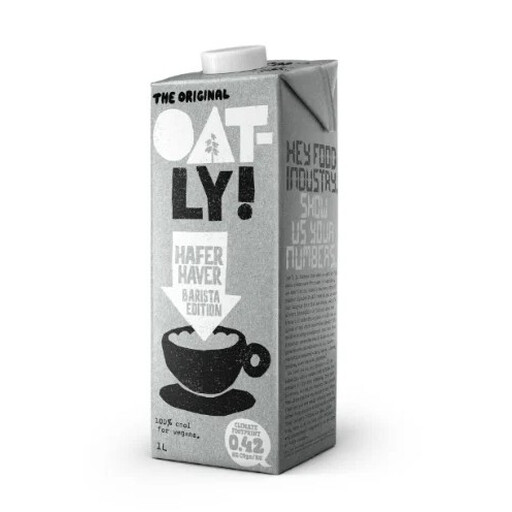 Image unavailable
If you’re looking for an oat drink to use in coffee during your stay, this 1L Barista variant is designed for that purpose. Before serving it on its own to a child, compare its label with those of the drinks you’re considering for that use.
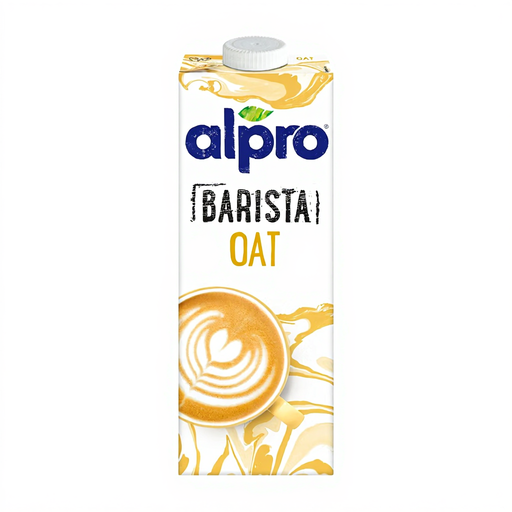 Image unavailable
This 1L carton is labelled Barista, which is worth bearing in mind if you plan to serve the drink on its own or with cereal. Check the sugars, nutritional information and storage instructions for this variant, rather than assuming it has the same values as another Alpro product.
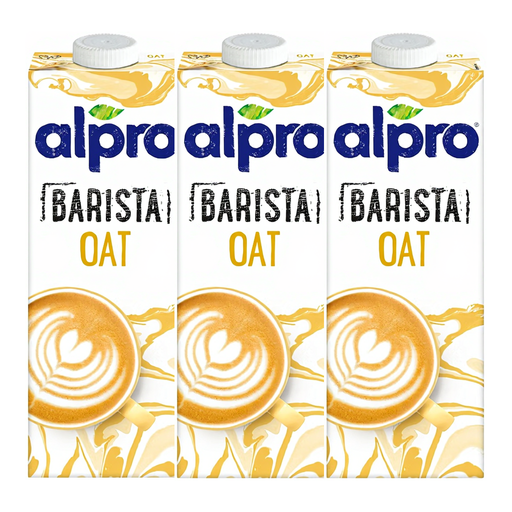 Image unavailable
If you’ll be using several cartons during your stay, compare this pack of three 1L cartons with the volume you need. Keep the Barista label in mind when considering how you plan to use it, and check the storage instructions, including what to do after opening.
No. It should replace neither breast milk nor infant formula. Anses explains that everyday drinks, whether plant-based or animal-based, are not suitable substitutes for babies.
No: check the ‘of which sugars’ line per 100 ml. E.Leclerc and Auchan list 5,0 g for Bio Village and 4,0 g for Bjorg, respectively, while Auchan’s Alpro No Sugars product shows 0 g per 100 ml.
Follow the instructions for the product you’ve chosen, as storage requirements change after opening. For its Bjorg 3 × 25 cl pack, Auchan says to store it at room temperature before opening, then in the fridge and consume within 4 days.
Check the ingredients list on the packaging for the exact product. The DGCCRF says allergenic ingredients must be clearly highlighted there; don’t assume one variant has the same features as another.