Students keeping an eye on fat content
You want to find a precise figure on your oat drink’s label rather than relying on a claim on the front of the pack.


When choosing an oat drink as you settle into student accommodation, start by checking the fat and sugar content on the nutrition declaration: ‘no sugars’ alone tells you nothing about the fat content. According to Auchan’s product information, Auchan Bio contains 1.2 g of fat per 100 ml, while Oatly No Sugars contains 1.5 g per 100 ml. Pack size, storage instructions once opened and how it works in coffee can then help you choose between products that meet your criteria.
You want to find a precise figure on your oat drink’s label rather than relying on a claim on the front of the pack.
You’re looking for a pack size that suits your consumption and available storage space, while keeping an eye on the fat and sugar content of your chosen recipe.
You mainly use oat drink in coffee and want to know whether a recipe designed for frothing is better suited to this than a standard oat drink.
First, compare nutrition values using the same unit. Then choose a pack size you can store and use in line with the carton’s instructions.
| Criteria | What to check | Who is it for? |
|---|---|---|
| Fat content | Check the fat and saturated fat content per 100 ml. If a product listing gives values per 100 g, check the stated basis before making any numerical comparisons. | If my first priority is limiting fat, I want a precise figure rather than trying to infer it from a ‘no sugars’ claim. Around 33% of consumers would put this need first. |
| Pack size | Check the volume of each carton and the number of cartons in a multipack, then compare this with how much you use. | When stocking my cupboards, I prefer an amount I can realistically use without ending up with several open cartons. This would be a priority for around 33% of consumers. |
| Storage | Check the instructions for before and after opening separately. Look at the stated shelf life and how much fridge space you’ll need. | With limited fridge space, I need to know where to store the cartons and when to finish the one I’ve opened. Around 20% of consumers would put this need ahead of the others. |
| Use in coffee | If froth matters, check that the specific recipe is described as suitable for this use. Also check its fat and sugar content. | For my milky coffees, I’m mainly looking for a recipe designed for frothing, while still checking its ingredients. This would be the top priority for around 14% of consumers. |
These figures appear on separate lines. Auchan’s product listing for Oatly No Sugars states 0 g of sugars and 1.5 g of fat per 100 ml.
Check the sugar, fat and saturated fat content separately, using the same unit for comparison.
Auchan Bio’s product information says to keep the drink refrigerated at a maximum of +6 °C and consume it within 5 days of opening.
Choose a pack size that matches how much you use, check the instructions for the product you buy and note when you opened it.
Oatly describes its Barista Edition as suitable for coffee and making foam. This intended use doesn’t tell you how much fat it contains.
If you want both foam and a specific fat content, check the nutrition declaration for the Barista variant you choose.
No Sugars and Barista Edition are suited to different uses: one lets you check the sugar and fat content, while the other is designed for coffee drinks.
The No Sugars Oat product lets you consider a recipe whose Carrefour listing also mentions added nutrients.
This organic oat drink comes in a 1 L carton and has nutrition information and storage instructions that can help you choose the right pack size.
Bio Village’s organic oat drink with no added sugars is available in a 1 L carton.
This organic oat drink offers a useful point of comparison for the ingredients in a supermarket own-brand recipe.
This selection includes a plain oat drink, flavoured options for hot drinks and different pack sizes. Compare their values per 100 ml and storage instructions to find the right one for you.
 Image unavailable
Worth considering if you want to compare the fat and sugar content of an oat drink separately.
The product information states that per 100 ml it contains 1.2 g of fat, including 0.1 g of saturated fatty acids, and 0 g of sugars. The ‘0%’ in the name does not mean it contains 0 g of fat.
The description says to store it in a cool, dry place before opening. Check the carton for instructions on storage after opening. The product information also states that it contains gluten from oats and may contain traces of soya or nuts.
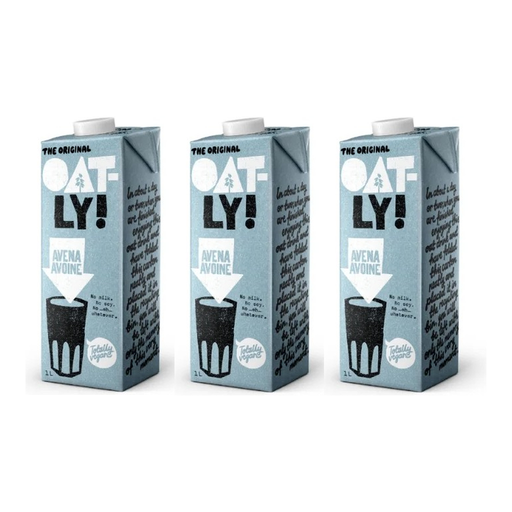 Image unavailable
This pack could work well for your initial supplies if you expect to use all three cartons and have fridge space for them once opened.
The product information states 1.5 g of fat and 3.5 g of sugars per 100 ml. It also mentions added calcium and vitamins D, B2 and B12.
The cartons can be stored at room temperature before opening. Once opened, the product information says to keep them refrigerated and consume within 5 to 7 days. It also states that they contain gluten from oats.
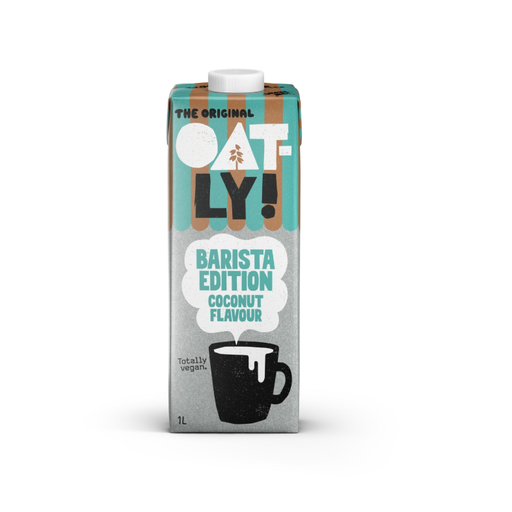 Image unavailable
This flavoured option is worth considering if you mainly make milky coffees and want a recipe presented as suitable for this use.
The product information states 1.6 g of fat and 3.3 g of sugars per 100 ml. The ingredients list also mentions added sugar at 1.6%.
It says to store the product at room temperature before opening, then consume it within five days of opening. Its Barista use doesn’t replace the need to check its nutrition values.
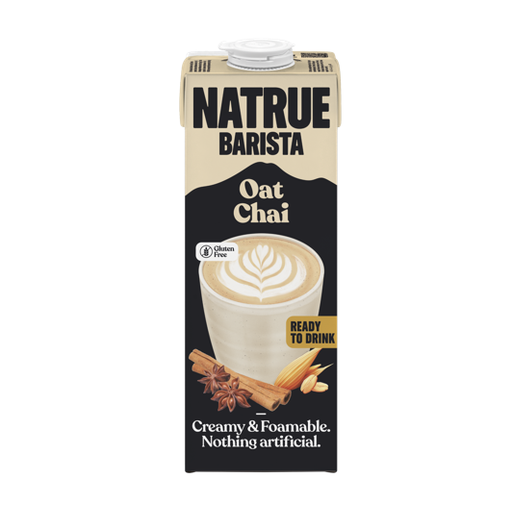 Image unavailable
This chai-flavoured option is for anyone looking for a flavoured oat drink to enjoy cold or warmed up.
The product information states 1.3 g of fat and 4.8 g of sugars per 100 ml. If saturated fat is part of your decision, check this value on the packaging too.
Once opened, the product information recommends refrigerating the drink and consuming it within 3 to 4 days.
No. ‘No sugars’ and fat content describe two different things. Auchan’s product information for Oatly No Sugars states 0 g of sugars and 1.5 g of fat per 100 ml. Check both figures for the specific product.
Yes, if the packaging says the product can be stored at room temperature before opening. Some products need to be kept chilled. Oatly, for example, distinguishes between its cartons with flat tops and products sold in the chilled aisle. Follow the instructions on the carton you buy.
It depends on the product, so follow the instructions on the label. For Auchan Bio oat drink, Auchan’s product information says to keep it refrigerated at a maximum of +6 °C and consume it within 5 days of opening.
Read the ingredients list and allergen information on each pack, including when you switch to a different variant or multipack. Ingredients and trace warnings can vary between products, so don’t assume anything about a product based on the category name alone.