People preparing soft or puréed meals
You’re looking for a liquid ingredient to add to porridge, mash, soup or a smooth dessert. Check that the drink’s flavour works with the dish and that the resulting texture is right for how you plan to use it.


To add oat drink to porridge, mash or smooth soup, start by comparing the fat and sugar content per 100 ml. Then check how it is intended to be used in cooking and, if this matters to you, whether it is fortified. Manger Bouger points out that plant-based drinks are not automatically nutritionally equivalent to milk. If you have a swallowing disorder, the French National Authority for Health says that the appropriate consistency should be determined for each individual by a healthcare professional.
You’re looking for a liquid ingredient to add to porridge, mash, soup or a smooth dessert. Check that the drink’s flavour works with the dish and that the resulting texture is right for how you plan to use it.
You want to compare the ‘fat’ and ‘of which sugars’ figures, rather than relying on an impression of lightness or a claim on the front of the carton.
If you regularly use one instead of milk in recipes, you may also want to compare the protein content and check whether the product is fortified with calcium or vitamins. Manger Bouger highlights that plant-based drinks have a different nutritional composition from animal milk.
For soft or puréed meals, start with the nutritional values per 100 ml, then consider the flavour, how the product can be used in cooking and the storage instructions for the specific product you choose.
| Priority | What to check | Who it’s for |
|---|---|---|
| Fat | Compare the fat and saturated fat content per 100 ml for the exact variants you’re considering. | If my main priority is limiting the fat I add to a soft meal, I compare cartons on the same basis. Around 31% of consumers put this first. |
| Fortification details | Check which calcium and vitamins are listed, and compare the protein content too. | For regular use in my recipes, I want to know which nutrients are listed without assuming the drink is equivalent to milk. This is the main priority for around 25% of consumers. |
| Sugar and flavour | Read the ‘of which sugars’ figure per 100 ml and distinguish between ‘no sugars’ and ‘no added sugars’. | In mash or soup, I prefer a flavour that won’t overpower the dish. Around 25% of consumers put sugar and flavour first. |
| Cooking and storage | Check the suggested uses in cooking and the storage instructions after opening. | If I’m making several meals with the same carton, I want to be able to use it in my recipes and store it correctly. This is the main need for around 19% of consumers. |
Fat content varies between products and recipes. A Barista or flavoured version won’t necessarily have the same nutritional values as the same brand’s original version.
Compare the fat and saturated fat content per 100 ml on the cartons of the variants you’re interested in.
A drink with no added sugars may still list sugars in its nutritional information. The two claims therefore don’t mean the same thing when choosing a product.
Read the ‘of which sugars’ figure per 100 ml, particularly if you’re using the drink in a savoury dish.
A Barista label or a creamy texture doesn’t mean a drink has a consistency suitable for dysphagia. According to the French National Authority for Health, the appropriate consistency should be recommended for each individual by a healthcare professional.
If you have difficulty swallowing liquids, follow your healthcare professional’s advice rather than choosing a thin drink based only on how its texture looks.
Manger Bouger says that plant-based drinks, including oat drinks, have a different nutritional composition from animal milk. A fortification claim doesn’t tell you everything about that composition.
If you use this drink regularly in your meals, check the added nutrients as well as the protein, sugar and salt content of the product you choose.
The range includes an Oat No Sugars product listed on a Carrefour France product page.
Oatly France lists a classic oat drink and a No Sugars version, which have different nutritional profiles.
Carrefour France lists an organic oat drink labelled ‘no added sugars’.
E.Leclerc lists an organic UHT oat drink with no added sugars under the Bio Village brand.
Auchan lists, among other products, a 1 L Barista oat drink intended for coffee and tea lattes.
These products let you compare a classic oat drink, a Barista variant with coconut and a drink labelled 0%. For soft meals, consider how each variant works with your recipe and check the values on its packaging.
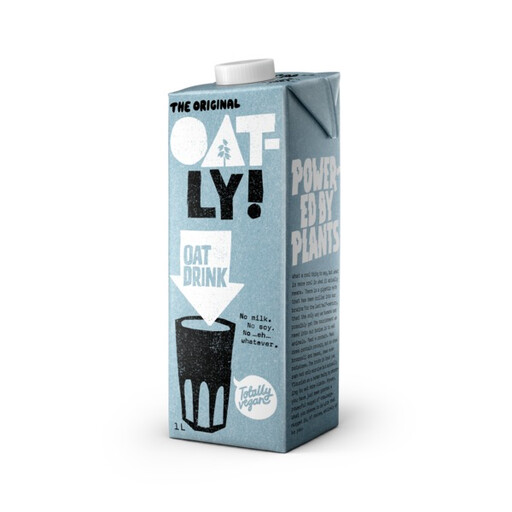 Image unavailable
If you’re making a soft meal and want to add a classic oat drink, check that its flavour works with the dish. According to Oatly France, this version is fortified with calcium, iodine and vitamins D, B2 and B12. Check the carton for storage instructions after opening.
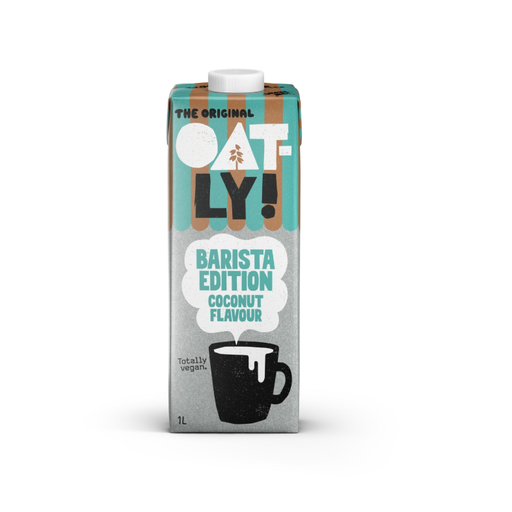 Image unavailable
If coconut works in your porridge, this flavoured variant is worth comparing with the original versions. It comes in a 1 L carton and contains added sugar. Check the sugar content and storage instructions on the packaging.
 Image unavailable
If fat and sugar are your top priorities for a soft meal, compare this drink’s nutritional values with those of other products. Size: 1 L. The 0% in the name doesn’t mean you can skip the label: check the allergens and storage instructions too.
Yes. It can be used as a liquid ingredient in porridge, mash, soup or a smooth dessert, as long as the flavour and final texture work for the meal. If you have a swallowing disorder, the French National Authority for Health says that the appropriate consistency should be recommended for each individual by a healthcare professional. A thin drink on its own won’t meet this need.
No. The E.Leclerc listing for Bio Village with no added sugars gives 5.0 g of sugars per 100 ml, while the Auchan listing for Oatly No Sugars gives 0 g per 100 ml. Always compare the ‘of which sugars’ figure for the variant you choose.
No. Manger Bouger explains that plant-based drinks have a different nutritional composition from animal milk. If you use oat drink regularly, check the fortification details as well as the protein, sugar and salt content. Don’t assume it’s equivalent just because it contains calcium or vitamins.
Compare the nutritional information per 100 ml, especially the fat, sugar, protein and salt content. Then read the ingredients list and allergen information. The French Directorate-General for Competition Policy, Consumer Affairs and Fraud Control (DGCCRF) presents these figures as useful guides to reading nutritional declarations. The carton’s storage instructions also matter if you plan to use it for several meals.