Adults comparing sugar content for everyday use
If you regularly use oat drink with cereal or in cooking, compare the ‘of which sugars’ figure rather than relying on claims such as ‘sugar-free’ or ‘no added sugars’.


For a smaller household, choose an oat drink based on how you’ll use it most: compare the sugars listed for everyday drinking, check the calcium content if that matters to you, or look at Barista versions if you mainly make coffee. Check the ingredients, allergens and storage instructions after opening too. Two cartons in the same category can differ in these respects, and the pack size should suit how quickly you’ll use it.
If you regularly use oat drink with cereal or in cooking, compare the ‘of which sugars’ figure rather than relying on claims such as ‘sugar-free’ or ‘no added sugars’.
If you’re replacing milk in some situations, check the calcium listed for the specific product you’re considering. Whether calcium is included, and how much, varies between recipes.
If you mainly make hot drinks, a version marketed for frothing may suit your needs. Still, compare its ingredients with those of an original version if you also use the drink in other recipes.
In a smaller household, start with how you’ll use the drink most often, then check the label and storage life of the carton you plan to buy.
| What to consider | What to check | Who is it for? |
|---|---|---|
| Sugars for everyday use | Compare ‘of which sugars’ per 100 ml and distinguish between ‘sugar-free’ and ‘no added sugars’. | When I have it with cereal or use it in my usual recipes, I want to know the drink’s sugar content without relying on the front of the carton; around 33% of consumers would make this comparison a priority. |
| Calcium and nutritional information | Check the calcium content per 100 ml for the exact product, and check any other listed nutrients separately. | If I replace milk in some situations, I want to know whether my chosen drink contains declared calcium. This would be a priority for around 25% of consumers. |
| Coffee and cooking | Check the recommended use of a Barista version and compare its ingredients with those of an original version. | I often make coffee with plant-based milk, and being able to froth the drink matters more to me than its other uses; around 25% of consumers would prioritise this result. |
| Pack size and storage | Check the number of cartons, their volume and the instructions for storage after opening. | In my household, I prefer a quantity I can use within the storage instructions after opening; nearly 17% of consumers would make this practical pack size their main consideration. |
A drink with no added sugars may still contain sugars, as shown in its nutritional information. For example, Bio Village’s E.Leclerc product listing gives 5.0 g of sugars per 100 ml.
To compare two products, check the exact wording on each and compare the ‘of which sugars’ figure on the same 100 ml basis.
Fortification depends on the specific product: Carrefour lists calcium in the ingredients for Alpro Oat No Sugars, while the ingredients shown for Bio Village describe a different recipe.
If this matters to you, check the calcium content on the exact pack you choose rather than assuming it applies to the whole brand.
Oatly markets its Barista Edition for coffee drinks and frothing. That alone doesn’t tell you whether its ingredients suit how you use oat drink with cereal or in cooking.
If you don’t need a foamy finish, compare the ingredients and nutritional information of an original version too.
Once a carton is open, its storage life may limit how much you can use in a smaller household. For its oat drink, Auchan Bio advises refrigerating at a maximum of +6 °C and consuming within five days.
Check the number of cartons and the instructions printed on each one before choosing a multipack.
The range includes an Original oat drink, a No Sugars version and a Barista Edition.
The range includes Oat No Sugars as well as oat-based Barista products.
This E.Leclerc brand offers an organic oat drink with no added sugars in a 1 L carton.
The E.Leclerc listing for this 1 L oat drink shows that it contains calcium.
Auchan sells an organic oat drink with no added sugars under this brand, in a 1 L carton.
Lidl has offered an organic oat drink under its plant-based Vemondo brand.
These products cover several of the uses discussed here: a multipack of oat drink, Barista versions for coffee, and 1 L cartons to compare based on their labels and how quickly you’ll use them.
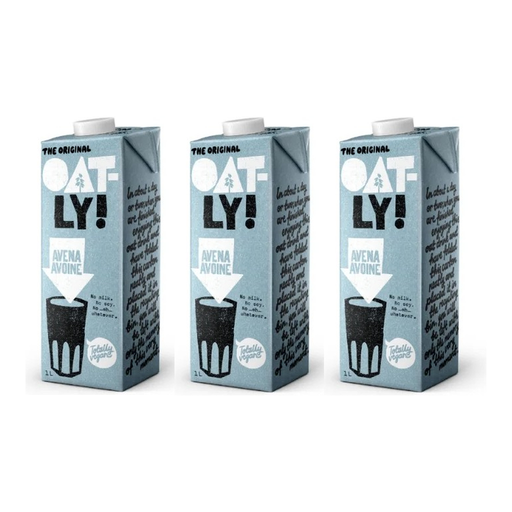 Image unavailable
This multipack may suit you if your household regularly gets through oat drink.
It contains three 1 L cartons. Before choosing this quantity, check the nutritional information, allergens and storage instructions after opening on the packaging.
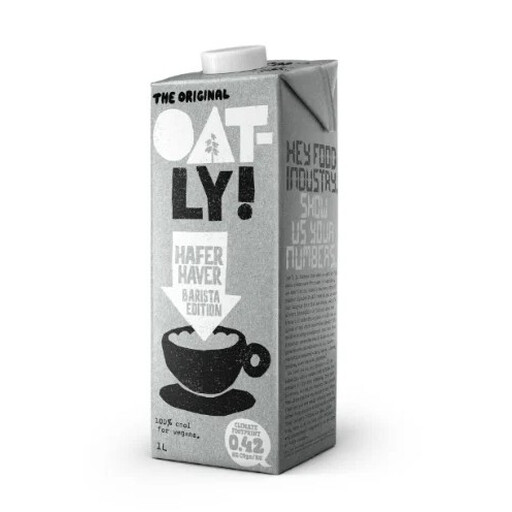 Image unavailable
Consider this version if you mainly make coffee with plant-based milk: Oatly describes its Barista Edition as a formula designed for frothing.
The carton contains 1 L. If you also use it with cereal or in recipes, compare its label with that of an original oat drink.
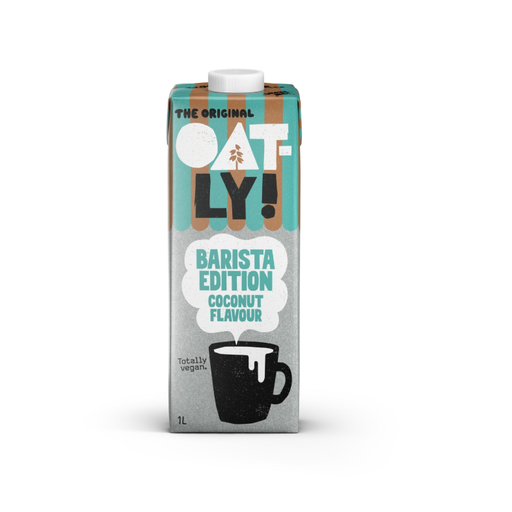 Image unavailable
This coconut-flavoured version is for anyone who’d like to try a different flavour in their coffee drinks.
The carton contains 1 L. If you’re choosing it for a dairy-free diet or to avoid allergens, read the ingredients and information on the exact pack.
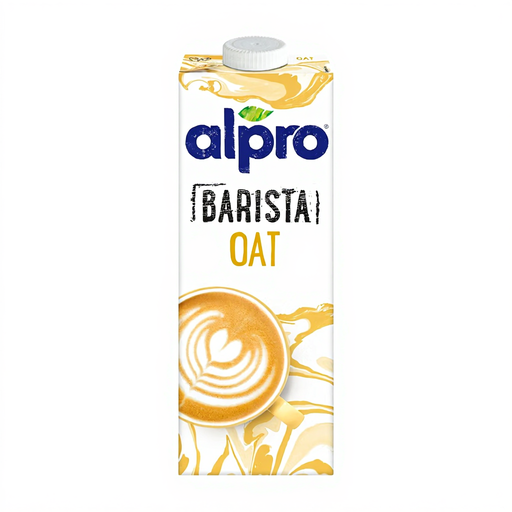 Image unavailable
This oat drink is designed for making coffee with plant-based milk.
The carton contains 1 L. If you’re also comparing calcium or sugars, use the nutritional values for this Barista version, not those for Alpro Oat No Sugars.
 Image unavailable
This carton is worth including in your comparison for everyday oat drink.
It contains 1 L. Check what the ‘0%’ claim refers to on the packaging, and read the ‘of which sugars’ figure, allergens and storage instructions separately.
Don’t assume so from the word ‘oat’ alone: check the ingredients and allergens for the exact product. Oatly says its Original drink contains no cow’s milk; if you need to avoid an ingredient or allergen, you should still check the packaging.
Look for the calcium content per 100 ml in the nutritional information for both products. The E.Leclerc listing for VEGE gives 146.7 mg per 100 ml, while Carrefour’s listing for Alpro Oat No Sugars mentions calcium among the ingredients. Compare the values shown on the cartons you’re actually considering.
Follow the instructions on the carton you buy, as they vary by product. For its organic oat drink, Auchan advises refrigerating at a maximum of +6 °C and consuming within five days of opening.
No. Check the ingredients, allergens and nutritional information for the specific product as well. In a smaller household, the carton size and how long it keeps after opening also matter.