If protein is your priority, compare the values per 100 ml rather than choosing an oat drink based on its name alone. The Auchan and E.Leclerc product pages list 0.5 to 0.8 g for the standard options mentioned here, compared with 2.5 g for a Bjorg variety that also contains soya protein. If you avoid soya, a standard oat drink can accompany your meal, but plan to get most of your protein from other foods. A Barista version is designed primarily to give coffee the right texture; check its protein content separately.
Who is this choice for?
People keeping an eye on the protein in their meals
You want to know what your drink actually contributes to breakfast or a snack. The value per 100 ml lets you distinguish an oat-and-protein variety from a standard oat drink, then work out how much protein is in your serving.
People who want to avoid soya
You want an oat drink without soya protein. Check the ingredients and allergen information for the exact product, as an oat-and-protein variety may also contain soya.
Coffee lovers who use plant-based drinks
You’re mainly looking for a drink that froths well in coffee. Barista suitability and protein content are separate considerations, so check both for the product you’re considering.
What should you look for first?
When choosing a drink as part of a high-protein diet, start with the protein per 100 ml and the ingredients list. Then compare the sugars and intended use, especially if you’re buying it for coffee.
| Criteria |
What to check |
Who is it for? |
| Protein content |
Compare the protein per 100 ml, then adjust the figure to your usual serving size. Check which ingredient provides any extra protein. |
If I’m relying on my drink to contribute to the protein in my meal, I want to know how much I’ll actually consume. Around 36% of consumers put protein intake at the top of their list of concerns. |
| Soya content |
Read the ingredients list and allergen information on each pack; an oat base doesn’t mean the recipe is soya-free. |
If I want to avoid soya, I need to distinguish a drink made with oats alone from a variety that also contains soya protein. This is a priority for around 29% of consumers. |
| Sugars and recipe |
Compare the “of which sugars” figure per 100 ml with any “no added sugars” claim, then check the ingredients. |
If I’m choosing a drink for everyday use, I want to understand what the claims on the front of the pack mean when I compare them with the nutrition table. Around 21% of consumers prioritise sugars and the recipe. |
| Use in coffee |
Look for the Barista label on the product you’re considering and check its protein content separately. |
For my coffee, how well the drink froths matters more than its protein content. Texture is the main consideration for around 14% of consumers. |
Common misconceptions to avoid
-
Assuming every oat drink is high in protein
The Auchan and E.Leclerc product pages list 0.5 to 0.8 g of protein per 100 ml for the standard drinks mentioned here, compared with 2.5 g for Bjorg Avoine Protéines + Bio, which contains soya protein.
Compare the values per 100 ml and the ingredients, then work out how much protein you’ll get from the amount you actually pour.
-
Taking “no added sugars” to mean “sugar-free”
The E.Leclerc product page lists 5.0 g of sugars per 100 ml for the Bio Village drink labelled “no added sugars”.
Check the “of which sugars” figure in the nutrition information as well as the claim on the pack.
-
Assuming a Barista texture means a high protein content
Oatly promotes its Barista Edition for frothing and use in coffee. These features alone don’t tell you how much protein it contains.
Choose a Barista drink if froth matters to you, and check the protein value for the exact variety separately.
-
Taking “mature” or “aged” to mean something about nutrition
These descriptions don’t tell you how much protein an oat drink contains, or help you compare two varieties.
To choose between recipes, look at the values per 100 ml, the ingredients list and the use shown on the pack.
Brands to compare
Bjorg
The Avoine Protéines + Bio variety combines oats with soya protein.
- The Auchan product page lists 2.5 g of protein per 100 ml for this variety.
- The recipe contains 3.2% soya protein and has 4 g of sugars per 100 ml, so check that it suits your dietary needs.
Alpro
An oat drink to consider for everyday use, without assuming it’s high in protein.
- The variety listed on the Auchan product page contains 0.8 g of protein per 100 ml.
- If protein is your main priority, work out how much your serving provides before choosing this drink as part of a meal.
Oatly
The brand distinguishes its standard oat drink from Barista Edition, which is designed for uses such as coffee.
- Oatly says its Barista Edition can be frothed.
- This intended use doesn’t tell you its protein content; compare the nutrition information for the variety you choose.
Carrefour
Carrefour Bio offers an oat drink whose ingredients list lets you check what’s in the recipe.
- The Carrefour product page lists water, 11% oats, sunflower oil and sea salt.
- If protein content is what will determine your purchase, check the value on the pack too.
E.Leclerc / Bio Village
The Bio Village drink labelled “no added sugars” lets you compare the claim on the front of the pack with the nutrition values.
- The E.Leclerc product page lists 0.5 g of protein and 5.0 g of sugars per 100 ml.
- “No added sugars” doesn’t mean “sugar-free”, so don’t choose this variety based on that claim alone.
Oat drinks on Joybuy
These options include two drinks labelled Barista for coffee and one oat drink for everyday use. If you’re including one in a high-protein diet, compare the nutrition information and ingredients on the exact pack.
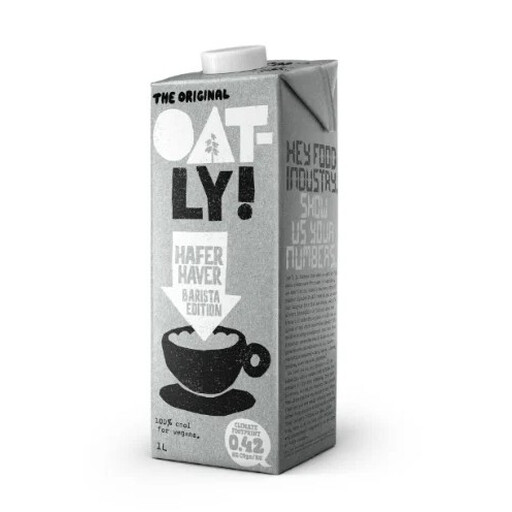 Image unavailable
Oatly Barista Oat Drink 1 L
Worth considering if you’re looking for an oat drink for coffee: Oatly says its Barista range is designed for this use. The listed size is 1 L; check the protein content of this variety if it’s important to your choice.
View on Joybuy
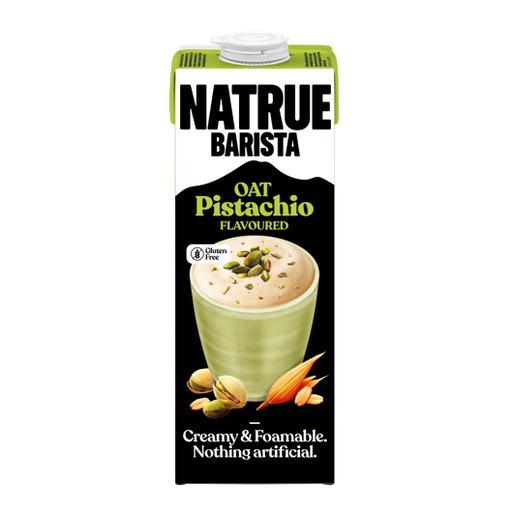 Image unavailable
Natrue Pistachio Oat Drink Barista 1 L
This oat and pistachio variety is labelled Barista and comes in a 1 L pack. If you avoid certain ingredients or are looking for a specific protein content, check the ingredients, allergens and nutrition information on the pack.
View on Joybuy
 Image unavailable
Natrue Oat Drink 0% 1 litre
This 1-litre oat drink is worth considering for everyday use. Don’t assume anything about its sugar or protein content from the “0%” label alone: check the nutrition information for the exact variety.
View on Joybuy
Frequently asked questions
Is a standard oat drink enough to be the main source of protein in a meal?
No, not for the standard varieties mentioned here: the E.Leclerc and Auchan product pages list 0.5 g and 0.8 g of protein per 100 ml respectively. A 250 ml serving would therefore provide 1.25 g or 2 g; if you choose one, make sure you get protein from other foods in your meal too.
Does “no added sugars” mean “sugar-free”?
No. The Bio Village drink listed by E.Leclerc is labelled “no added sugars”, but contains 5.0 g of sugars per 100 ml. Check the “of which sugars” figure to compare products.
How should I store oat drink once opened?
Follow the instructions on the pack you’ve bought. Storage guidance can vary between products, so check the recommended storage temperature and how soon to use the drink after opening before serving it.
What should I check if I need to avoid soya?
Check the ingredients and allergen information on every pack, even if the product is described as an oat drink. The Bjorg Avoine Protéines + Bio variety listed on the Auchan product page contains 3.2% soya protein, so the product category name alone isn’t enough to tell you what’s in it.


