Households that regularly prepare soft meals
If you often make soups, purées, sauces, porridge or desserts, the number of cartons and how long they keep after opening matter just as much as the total amount you buy.


For soups, purées, sauces or soft desserts, choose your oat drink to suit the recipe. A plain or no added sugar version makes it easier to compare ingredients, while a barista version is mainly intended for hot drinks. If you need 2 L in total, two 1 L cartons will give you the volume you want, but they are not the same as one 2 L bottle. Check what you mean by “4 pint” before you buy. If someone has difficulty swallowing, the right consistency should be specified for them individually by a healthcare professional.
If you often make soups, purées, sauces, porridge or desserts, the number of cartons and how long they keep after opening matter just as much as the total amount you buy.
Depending on the recipe, you may want to compare the sugar content, ingredients list or the calcium and vitamins in a specific product, rather than choosing by brand alone.
A meal that is easy to chew is not necessarily suitable for someone who has difficulty swallowing. For someone with dysphagia, the French National Authority for Health says that a healthcare professional should determine the appropriate consistency for them individually.
First decide whether you need enough for several recipes, a particular ingredient profile or a specific consistency for swallowing. A barista formula is designed for a different purpose: Oatly and Auchan market their relevant products for coffee or hot drinks, not as suitable textures for dysphagia.
| Criterion | What to check | Who it matters to |
|---|---|---|
| Volume and storage | Compare the volume of each carton, the number of cartons and the instructions for use after opening. Two 1 L cartons give you 2 L in total, not one single pack. | If I often prepare soft meals, I want to open cartons as I need them for my recipes, without leaving a large amount unused. Around 33% of consumers would make this their priority. |
| Taste and ingredients | Read the ingredients list and nutritional information, including the sugar content, as well as any added nutrients listed for the product you choose. | To get the right flavour in a soup or dessert, I want to know what I’m adding to my recipe. This would be the top criterion for around 25% of consumers. |
| Consistency if you have difficulty swallowing | Ask a healthcare professional which consistency is right for the person. Don’t assume that a “barista” label or creamy appearance tells you what it is. | If someone has been given guidance on swallowing, I need to know whether the drink being served matches the prescribed consistency before considering its pack size or taste. This would be the priority for around 42% of consumers. |
Regular oat drink is still a liquid. If someone has dysphagia, its appearance alone is not enough to confirm that it has the right consistency for them.
The French National Authority for Health says that a healthcare professional should determine the appropriate consistency for each person. Don’t replace this guidance with a barista version.
Carrefour Bio’s product listing says that its no added sugar oat drink contains naturally occurring sugars.
If sweetness matters for your recipe, also compare the “of which sugars” line in the nutritional information.
A multipack can give you the total volume you need, but each opened carton should be used according to its packaging instructions. The listings for the Alpro and Auchan products mentioned here say to consume them within five days of opening.
Check the number of cartons and open them as you need them for your recipes.
Oatly says its Barista Edition is designed for frothing, while the Auchan Barista listing describes a formula that includes pea protein. These are different products from the plain versions.
For a soup, purée or sauce, start by comparing the flavour you want with the ingredients list for the specific product.
These examples can help you compare specific products. The characteristics of one drink do not necessarily apply to every product in the brand’s range.
Auchan’s product listing describes a 1 L Alpro oat drink that can be enjoyed on its own or used in sweet and savoury recipes.
Oatly offers 1 L oat drinks in Classic, No Sugars and Barista Edition varieties.
Carrefour’s product listings include a Sensation Avoine drink and a Carrefour Bio Avoine drink, both in 1 L cartons.
Auchan offers a standard oat-based drink and a Barista version, both in 1 L cartons.
A Lidl offer featured Vemondo organic oat drink in a multipack of eight 1 L cartons.
These two 1 L products are worth considering if you regularly make soft recipes. The Oatly multipack contains three cartons, while the Alpro product is sold individually. Choose according to how much you plan to use, and check the storage instructions on the packaging.
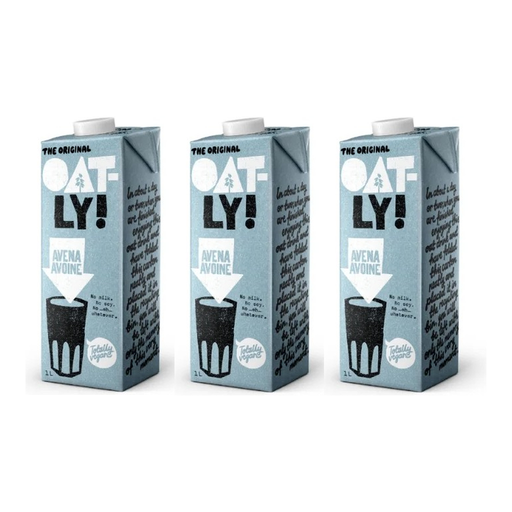 Image unavailable
Worth considering if you regularly use oat drink in sweet or savoury recipes. The pack contains 3 L across three cartons, not one single 2 L bottle. Check the instructions on each carton for use after opening.
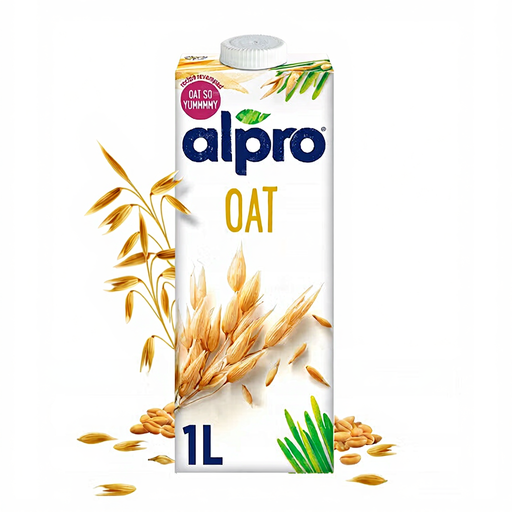 Image unavailable
Worth considering for adding oat drink to sweet or savoury recipes. This carton contains 1 L; you would need two separate cartons to have 2 L in total. Check the packaging for instructions on use after opening.
Not necessarily: regular oat drink is a liquid. For someone with oropharyngeal dysphagia, the French National Authority for Health says that a healthcare professional should recommend the appropriate consistency for them individually.
Yes. Some products are recommended for sweet or savoury cooking: Oatly, for example, suggests replacing 10 cl of milk with 10 cl of its No Sugars drink in a recipe. Adjust the amount to suit your dish. If someone has been given guidance on food consistency, follow the healthcare professional’s instructions.
The listings for the Alpro and Auchan products mentioned here say to keep them refrigerated and consume them within five days of opening. Follow the instructions on the carton you buy, as they may vary between products.
No. Fortification does not automatically make the nutritional profiles identical. If nutritional content matters to your choice, compare the information for the specific product, including protein and sugars, as well as the calcium and vitamins listed on its packaging.