Homemade latte lovers
If you make lattes or cappuccinos, the texture in your coffee matters more than simply seeing ‘oat’ on the label. Oatly and Alpro market their Barista ranges for this purpose, so check the exact product you’re interested in.


When shopping, choose an oat drink based on what matters most to you: a Barista recipe for a coffee-friendly texture, an organic option if organic certification is your priority, or an everyday drink whose ingredients and nutrition information you can compare. The word ‘aged’ tells you nothing about these characteristics, and organic and Barista options don’t promise the same result in your cup.
If you make lattes or cappuccinos, the texture in your coffee matters more than simply seeing ‘oat’ on the label. Oatly and Alpro market their Barista ranges for this purpose, so check the exact product you’re interested in.
If organic certification or the ingredients list guides your shopping, consider these separately from how you’ll use the drink in coffee. Oatly notes, for example, that its Barista BIO doesn’t always give the same result as its original Barista Edition.
For cereal, cold drinks or cooking, compare the ingredients and nutrition information for each product. An enriched recipe and one labelled ‘no added sugars’ refer to different things.
First decide how you’ll use the drink, then check the label on the specific product. The texture you’re looking for, organic certification, ingredients and pack size all meet different needs.
| Criteria | What to check | Who it matters to |
|---|---|---|
| Texture in coffee | Look for the Barista label and check whether the specific product is advertised for coffee. | If I’m making lattes or cappuccinos, the most important thing is a texture that works in my drink; around 31% of consumers would prioritise this use. |
| Organic certification and ingredients | Check the organic certification, ingredients list, and whether the drink is plain or flavoured. | If I choose a drink based on organic certification or its recipe, how it performs in coffee comes second; these would be the top priorities for around 31% of consumers. |
| Nutrition information | Compare the values per 100 ml and any added nutrients listed on each pack. | For a drink I use regularly, I want to distinguish declared sugars from added nutrients; around 23% of consumers would put this comparison first. |
| Pack size and availability | Check the volume and whether the product you want is available in your shop or on your chosen website. | When I’m doing my regular shop, finding the pack size I want matters more than other recipe differences; this would be the top criterion for around 15% of consumers. |
These words don’t tell you how the drink performs in coffee, whether it’s organically certified, or what it contains.
Start with how you plan to use it, then check the claims and ingredients on the specific pack.
The first claim doesn’t, by itself, tell you how much sugar is listed in the nutrition information. Nor does it tell you whether the drink has been enriched.
Read the ingredients list and nutrition information per 100 ml, and check separately for any added nutrients you’re interested in.
The oat drink recipes mentioned by Carrefour and Oatly don’t all have the same ingredients or added nutrients.
Compare the ingredients and nutrition information for the product you choose, based on how you plan to use it.
Oatly France’s range lets you compare a classic oat drink with a Barista Edition and a Barista BIO.
Alpro France markets its Barista range for coffee drinks, including lattes and cappuccinos. Check that the product you choose is oat-based.
The Carrefour Bio oat drink mentioned by Carrefour France is an example of an organic recipe to consider for everyday use, rather than for a specifically advertised Barista use.
These products include mostly Barista recipes, two of them flavoured, as well as an oat drink for everyday use. Choose according to how you’ll use it, and check the ingredients of the variant you’re interested in.
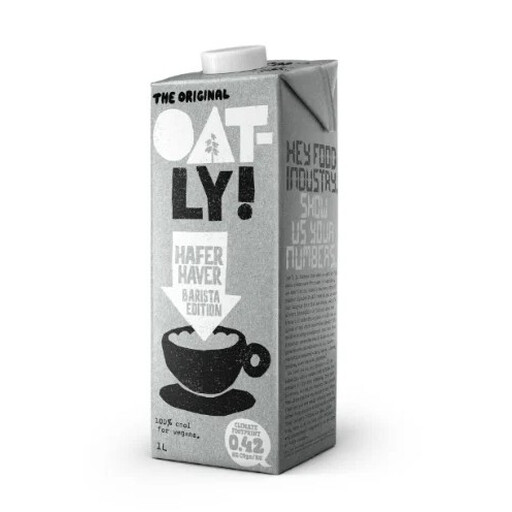 Image unavailable
A Barista option to consider if you make coffee drinks.
Stated volume: 1 L. Compare its ingredients and nutrition information with those of a drink intended for another use.
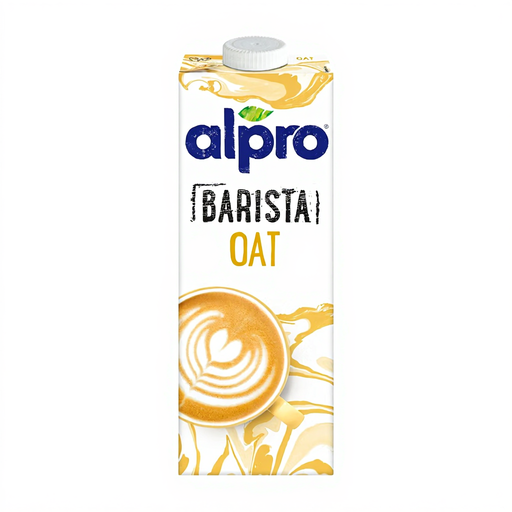 Image unavailable
Another Barista recipe to consider if you mainly use oat drink in coffee.
Stated volume: 1 L. To compare this with Oatly Barista, check the ingredients and information on each product’s packaging.
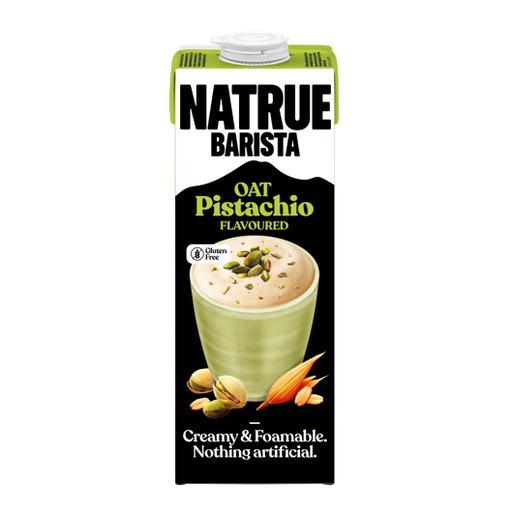 Image unavailable
This pistachio-flavoured Barista option is for anyone who wants this flavour in their coffee drink.
Stated volume: 1 L. If these details matter to you, check the ingredients and allergens for the specific product.
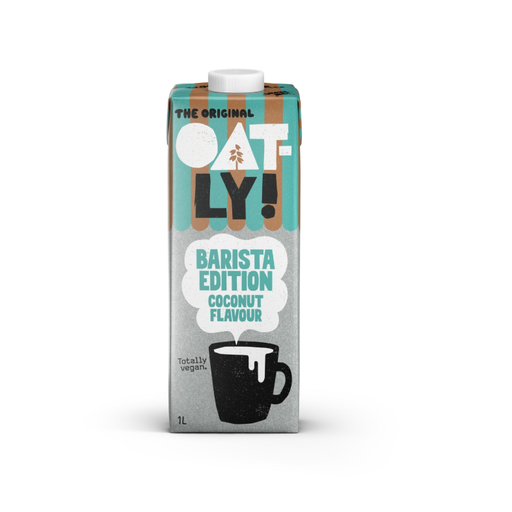 Image unavailable
This coconut-flavoured Barista option is for when you fancy a flavoured drink rather than a plain one.
Stated volume: 1 L. Check the ingredients and declared sugars on the pack before comparing it with other Barista recipes.
 Image unavailable
An oat drink to consider for everyday use rather than for a specifically advertised Barista preparation.
Stated volume: 1 L. Check the pack to see what ‘0%’ means; don’t assume its meaning from the product name alone.
The Barista label points to a recipe marketed for coffee drinks, but it doesn’t guarantee the same result from one product to another. Oatly France notes, for example, that its Barista BIO doesn’t always give exactly the same result as its original Barista Edition.
No. The organic label alone doesn’t describe an oat drink’s nutrition values or added nutrients. Read the table per 100 ml and the ingredients list for each product. Oatly France, for example, says its classic oat drink is enriched; this is a separate consideration from organic certification.
No. The name ‘oat drink’ doesn’t mean a product is gluten-free. If this matters to you, check the relevant claim, allergens and any trace information on the packaging of the specific product.