People with specific dietary requirements
If you avoid dairy, lactose, soya or gluten, look for each required label on the exact product you’re buying. The word ‘oat’ alone doesn’t mean a drink is gluten-free.


For lunch at work, choose an oat drink whose labels match your specific dietary requirements: ‘lactose-free’, ‘dairy-free’, ‘soya-free’ and ‘gluten-free’ are not interchangeable. Then check the carton’s storage instructions. A barista-style formula is mainly designed for use in coffee, but that doesn’t replace checking the ingredients.
If you avoid dairy, lactose, soya or gluten, look for each required label on the exact product you’re buying. The word ‘oat’ alone doesn’t mean a drink is gluten-free.
A carton can be handy to keep for lunch if its packaging says it can be stored at room temperature before opening. Also think about how you’ll store it once opened.
If you mainly want to froth the drink for coffee, it’s worth considering a product designed for that purpose. Check its dietary labels separately.
Start with your essential dietary requirements, then compare suitable drinks by their sugar content, storage instructions and suitability for coffee.
| Criteria | What to check | Who it matters to |
|---|---|---|
| Dietary requirements | Read the ingredients and flagged allergens; look for an explicit ‘gluten-free’ label if you need one. | If I need to avoid an ingredient, a label relating to something else doesn’t meet my needs. Around 36% of consumers prioritise this check. |
| Sugars and ingredients | Know the difference between ‘no added sugar’ and ‘sugar-free’, and check the ‘sugars’ value per 100 ml. | If I’m having it regularly with lunch, I want to know exactly what the carton’s claim means. This is the top priority for around 29% of consumers. |
| Storage | Check the instructions for before and after opening, then choose a size you can use in line with the guidance. | Without access to a fridge during the day, I need to be able to store the carton as instructed. Storage is the priority for around 21% of consumers. |
| Use in coffee | If you want a frothy drink, look for a product designed for that purpose, after checking your dietary requirements. | At lunchtime, I mainly want a drink to add to my coffee. Around 14% of consumers put this use first. |
The DGCCRF lists oats among the cereals associated with gluten. So the name of the cereal alone doesn’t tell you whether a drink meets a strict gluten-free requirement.
Look for the ‘gluten-free’ label on the specific product and size you’re buying.
A drink with no added sugar may still contain naturally occurring sugars. The two labels don’t mean the same thing.
Compare the claim on the front of the pack with the ‘sugars’ value per 100 ml in the nutritional information.
Instructions allowing storage at room temperature before opening may not apply once the carton has been opened.
Check the instructions for after opening and choose a size that suits your access to a fridge.
If you can’t follow these instructions, you may have to throw some of the drink away.
A barista-style formula is designed for use in hot drinks; that doesn’t tell you whether it meets a specific dietary requirement.
First rule out products whose labels don’t match your needs, then compare the remaining options for coffee.
Alpro France lists an ‘unsweetened oat’ product with labels including ‘lactose-free’, ‘dairy-free’ and ‘gluten-free’.
Oatly France offers oat drinks for different uses, including No Sugars and Barista Edition.
The Carrefour France listing for an organic oat drink gives four ingredients: water, oats 11%, sunflower oil and sea salt.
These products include options for coffee with plant-based milk, drinking on its own and choosing a size for work. Before you decide, check the dietary labels and storage instructions for each individual carton.
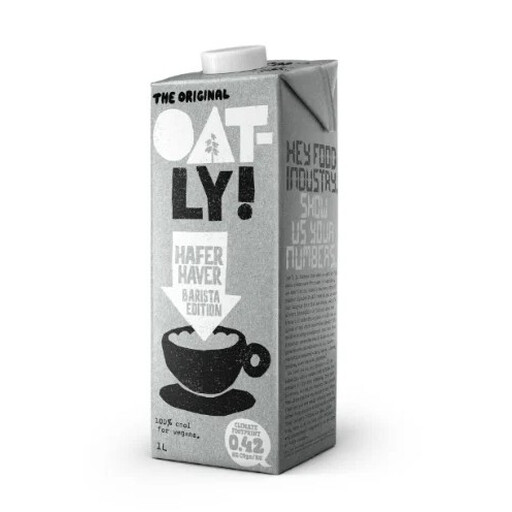 Image unavailable
Worth considering if your priority is making coffee with plant-based milk. Oatly recommends its Barista Edition for this purpose and says this product is free from dairy and soya.
The product listing flags gluten from oats, so don’t choose this drink if you need to avoid gluten strictly. Follow the instructions on the carton after opening.
 Image unavailable
This pack could suit someone who wants several cartons for their lunches, as long as they can follow the storage instructions for each one.
The listing flags gluten from oats, so this product isn’t suitable if you need to avoid gluten strictly.
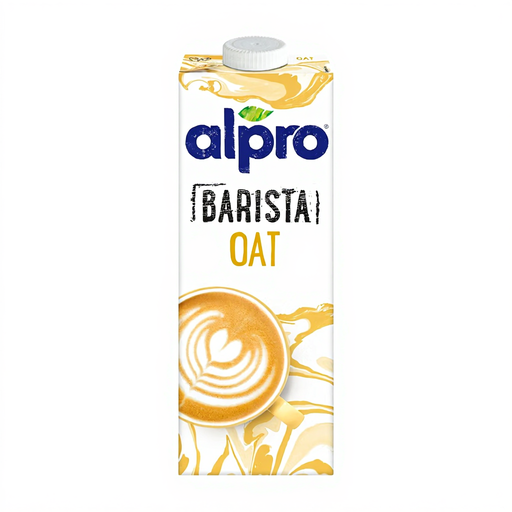 Image unavailable
Worth considering for coffee with plant-based milk: this product is called Barista, and its listing says it can be frothed.
The listing says ‘lactose-free’ and ‘dairy-free’, but also flags gluten from oats. Don’t confuse this product with the ‘unsweetened oat’ drink that Alpro France lists as ‘gluten-free’.
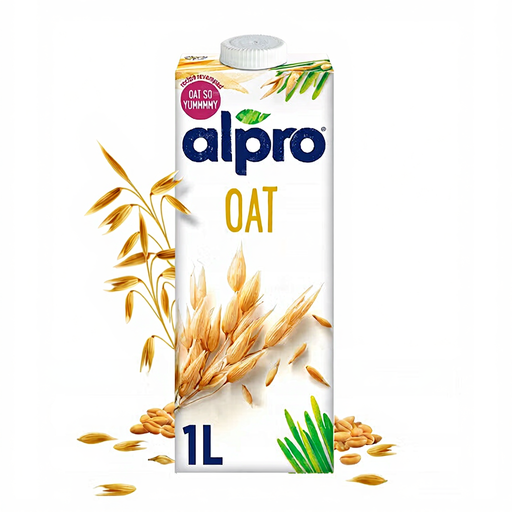 Image unavailable
This drink could be a good option with lunch. Check the ‘free from’ labels on its carton that matter to you, rather than assuming they match those on another Alpro product.
The listing says ‘no added sugar’, which doesn’t mean ‘sugar-free’, and flags gluten from oats. Check the storage instructions too before keeping it at work.
 Image unavailable
If you’re comparing drinks by their sugar content, check the nutritional information per 100 ml and what ‘0%’ means for this product.
The listing flags gluten from oats and possible traces of soya or nuts. Check the pack instructions before storing an opened carton at work.
No. The DGCCRF lists oats among the cereals associated with gluten. If you need to avoid gluten strictly, look for a ‘gluten-free’ label on the specific product you’re buying.
No: check each dietary requirement separately on the product you choose. Alpro France lists several distinct labels for its ‘unsweetened oat’ drink, while Oatly says its Barista Edition is free from dairy and soya. These claims don’t apply to other products.
Yes, if the instructions on that carton allow it to be stored at room temperature before opening. Oatly says this applies to some pack formats. Once opened, follow the refrigeration and consumption instructions on the packaging.
No. This claim doesn’t rule out naturally occurring sugars. If the sugar content affects your choice, check the ‘sugars’ value per 100 ml in the nutritional information.