Host avoiding dairy
For a dairy-free sauce, dessert or coffee, check the ingredients and product information for the version you choose. This alone isn’t enough to confirm that it’s suitable for every other dietary requirement.


For an Italian evening, choose your oat drink based on the ingredient that needs to be avoided and the recipe you have planned. A version designed for coffee may not be the best choice for a sauce or dessert. A plant-based recipe or a ‘no added sugars’ claim does not guarantee that the drink is gluten-free or free from all allergens, so check the information on the carton you’ll be serving.
For a dairy-free sauce, dessert or coffee, check the ingredients and product information for the version you choose. This alone isn’t enough to confirm that it’s suitable for every other dietary requirement.
If you’re using the drink in a sauce or dessert, compare the ‘no added sugars’ claim with the ingredients list and nutritional information. This claim doesn’t mean the drink contains no sugar at all.
The fact that an oat drink is plant-based doesn’t, by itself, meet this requirement. Look for a ‘gluten-free’ claim on the product you buy and check its allergen information again.
First, identify the dietary requirement that needs to be met, then choose a drink suited to how you’ll use it in your meal or coffee. The DGCCRF reminds consumers that allergens must be highlighted in the ingredients list of prepacked foods. The European Commission also sets out separate conditions for ‘gluten-free’ and ‘very low gluten’ claims.
| Criteria | What to check | Consumers concerned |
|---|---|---|
| Dairy | Ingredients and milk-related information for the specific product. | If I’m replacing milk in a sauce, dessert or coffee, avoiding dairy comes before texture. Around 31% of consumers prioritise this. |
| Sugars and ingredients | ‘No added sugars’ claim, ingredients and the ‘of which sugars’ line per 100 ml. | For a recipe where I want to keep control of the ingredients, I prefer to distinguish between added sugars and sugars already present in the drink. This is the main consideration for around 31% of consumers. |
| Use in coffee | Frothing or barista-use information and the ingredients in the version you choose. | If I’m serving coffee after the meal, I look first for a drink designed for this purpose, even if it has a different recipe from the one I choose for cooking. Around 23% of consumers prioritise this use. |
| Avoiding gluten | ‘Gluten-free’ claim, ingredients and warnings on the carton you buy. | If I need to avoid gluten, a drink that’s simply plant-based isn’t enough: I want clear information on the product being served. This is the top priority for around 15% of consumers. |
Always check exactly what the claim excludes: milk, soya, gluten or another ingredient. A plant-based drink isn’t automatically gluten-free.
Ask which ingredients your guests need to avoid, then check the relevant information on every product you serve, including accompaniments.
An oat drink designed for cooking isn’t necessarily intended for frothing. Oatly, for example, describes its Barista Edition as suitable for this use; that doesn’t apply to every version from the brand.
For after-dinner coffee, look for a barista-use claim. For a sauce or dessert, check the stated cooking use and make sure any dietary requirements are met.
No added sugars doesn’t mean the total sugar content is zero.
Check the claim, the ingredients list and the ‘of which sugars’ line in the nutritional information.
Storage times vary by product. The Ethiquable product information published by Auchan says to keep it in the fridge for five days after opening.
Estimate how much you’ll need for recipes and coffee, then follow the instructions on each carton.
A carton that’s too large for your planned dishes could leave you with an opened drink you won’t use.
These ranges offer useful points of comparison for ingredients and intended use. The features of one version don’t automatically apply to the others.
The range includes No Sugars, described as suitable for savoury or sweet recipes, and Barista Edition, designed for coffee.
An oat drink listed by Carrefour offers a useful comparison: it is described as lactose-free and enriched with calcium and vitamins.
Carrefour’s product information for a 1 L organic oat drink lists water, 11% oats, sunflower oil and sea salt.
The organic oat drink listed by Auchan carries a ‘no added sugars’ claim.
These products include drinks labelled for coffee and others to consider for recipes. The right choice depends on how you plan to use the drink and which dietary requirements you need to check on each pack.
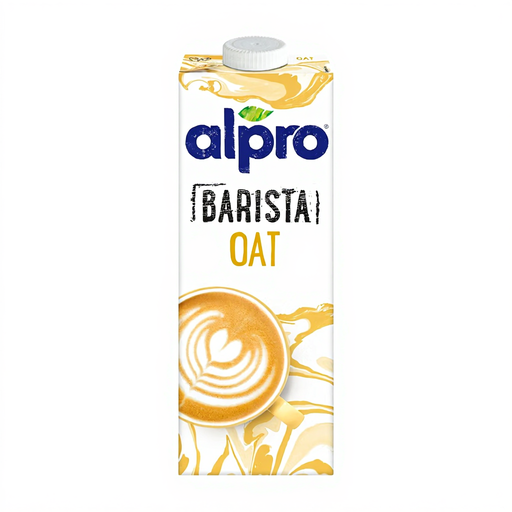 Image unavailable
A version to consider for after-dinner coffee. Its product information flags gluten associated with oats, so don’t choose it if you need a gluten-free drink. Follow the carton’s instructions for preparation and storage.
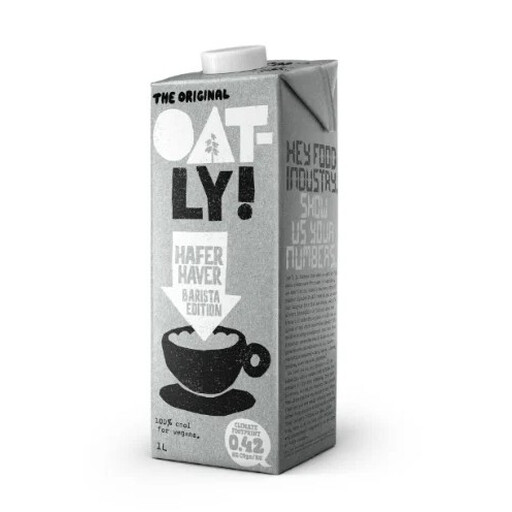 Image unavailable
This barista version is designed for coffee. Its product information flags gluten from oats, so it isn’t suitable if you need a gluten-free drink. Check the other allergen information against your guests’ requirements.
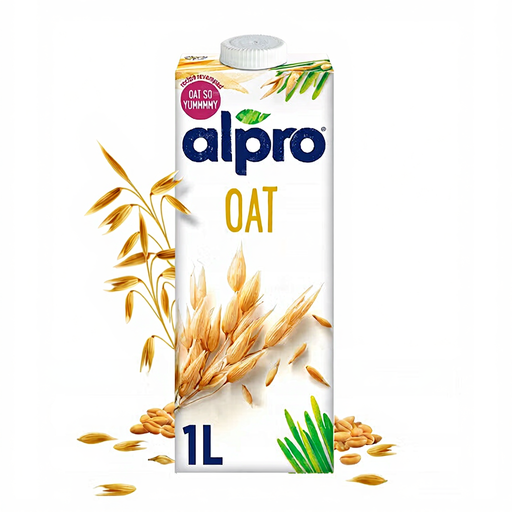 Image unavailable
If you’re using this product in a sauce or dessert, check its suitability for cooking and the information about sugars. Its product information says it contains oats with gluten, so don’t choose it if you need a gluten-free drink.
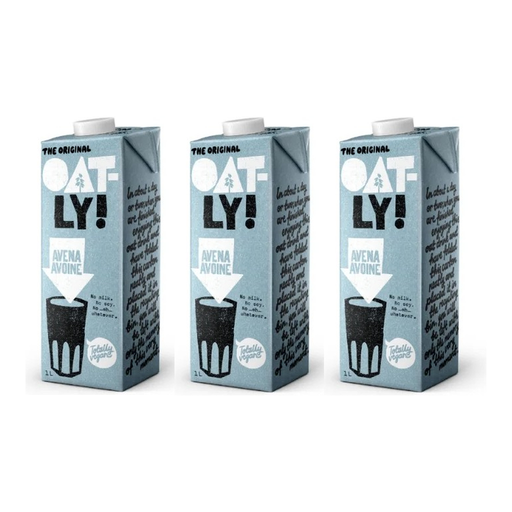 Image unavailable
Compare this pack of three cartons with the quantities you’ll need for recipes and drinks. Its product information flags cereals containing gluten. Also check for any other dietary requirements and follow the storage instructions for each opened carton.
 Image unavailable
If you’re comparing drinks for your meal, check the ingredients and nutritional information for this product. Don’t assume that ‘0%’ tells you what it excludes. Its product information flags gluten and possible traces of soya or nuts, so don’t choose it if these need to be avoided.
No. If you need to avoid gluten, look for an explicit ‘gluten-free’ claim on the product you buy and check its ingredients and warnings. Being plant-based, dairy-free or labelled ‘lactose-free’ doesn’t replace this check.
Check the ingredients, highlighted allergens and warnings against the dietary requirements your guests have mentioned. The DGCCRF stresses the importance of clear labelling on prepacked foods. Also check the date and storage instructions on the carton you’re serving.
No. This claim doesn’t mean the drink contains no sugar at all. If the total amount matters for your recipe, check the ‘of which sugars’ line in the nutritional information.
Follow the storage time given for the product you buy. The product information for the Ethiquable drink listed by Auchan says to keep it in the fridge for five days after opening, but this guidance shouldn’t be applied to other oat drinks.