People keeping an eye on fat
You’re making a sauce, batter or dessert for an Italian evening and want to compare the fat content of oat drinks per 100 ml.


For a sauce or dessert, choose an oat drink labelled as suitable for cooking and check its fat content. Under EU nutrition claims rules, a liquid must contain no more than 1.5 g of fat per 100 ml to be described as low in fat. For an after-dinner coffee, a Barista formula is designed with frothing in mind; check its nutritional information separately if low fat is still a priority. In all cases, also check the sugars, allergens and storage instructions after opening on the carton you choose.
You’re making a sauce, batter or dessert for an Italian evening and want to compare the fat content of oat drinks per 100 ml.
You’re looking for a plain or no-added-sugar drink for a recipe, and would rather check its ingredients than rely on the front of the carton alone.
You’d like to round off the meal with a cappuccino or latte and are looking for a formula designed to froth, while also checking whether it meets your requirements for fat content.
| What to consider | What to check | Who it matters to |
|---|---|---|
| Fat | Compare the figures per 100 ml. For a liquid to be labelled “low fat”, EU rules set a maximum of 1.5 g per 100 ml. | For my sauce or dessert, I want to meet a specific fat limit first; around 46% of consumers put this at the top of their list. |
| Intended use | Look for a cooking recommendation for recipes, or a Barista label if coffee foam matters more. | If I’m making a sauce or serving a cappuccino, I prefer a drink designed for that purpose; nearly 36% of consumers make this their priority. |
| Ingredients and storage | Check the sugars per 100 ml, ingredients and allergens, then read the storage instructions for after opening. | If a guest avoids gluten or I’m planning for leftovers, ingredients and storage come before other considerations; around 18% of consumers prioritise them. |
A drink can be labelled “no added sugars” and still contain sugars. E.Leclerc lists 5.0 g of sugars per 100 ml for its Bio Village drink carrying this claim.
Whether you’re making a sauce or a dessert, check the “of which sugars” line in the nutritional information for the product you choose.
This claim doesn’t replace the actual figure. Under EU nutrition claims rules, a liquid must contain no more than 1.5 g of fat per 100 ml to be described as low in fat.
If this threshold guides your purchase, compare the “fat” figure per 100 ml on each carton.
The European Union classifies oats as a cereal containing gluten that must be declared when used in a food product.
If a guest avoids gluten, check the allergens and any specific claims on the packaging of the product you plan to serve.
Oatly describes its Barista Edition as suitable for frothing in hot drinks. That intended use alone doesn’t tell you how it will work in a sauce or whether it meets low-fat requirements.
For cooking, first check the stated culinary use, sugars and fat; save the search for a good foam for your coffee.
The brand distinguishes its Original oat drink, presented as suitable for cooking and baking, from its Barista Edition, designed in particular for hot drinks.
The Joybuy listing for Alpro oat drink in a 1 L carton says it can be used in sweet or savoury recipes and that it contains added calcium and vitamins.
Carrefour offers an organic oat-based drink labelled “no added sugars”.
These products match a search for a low-fat oat drink for your evening. Both Oatly formats are labelled as suitable for cooking and baking; for NATRUE, check the intended use if you’re making a sauce or dessert.
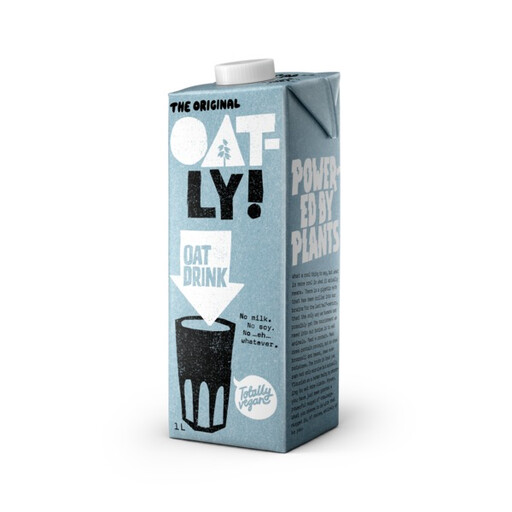 Image unavailable
For a sauce or dessert, Oatly says its Original formula is suitable for cooking and baking.
It contains 1.5 g of fat and 3.5 g of sugars per 100 ml. Oats are listed in the gluten information; check the label if a guest needs to avoid them.
 Image unavailable
This pack of three cartons is labelled as suitable for cooking and baking; consider how many cartons you’ll need to store.
The product contains 1.5 g of fat and 3.5 g of sugars per 100 ml. Check the gluten information and storage instructions for after opening on each carton.
 Image unavailable
If fat content is your main consideration, compare the stated figure rather than relying on “0 %” in the name: this product lists 1.2 g per 100 ml.
It also lists 0 g of sugars per 100 ml. For a sauce or dessert, check the instructions on the packaging; if a guest avoids gluten, carefully check the allergen information, including possible traces of soya and nuts.
Under EU nutrition claims rules, a liquid can only be described as low in fat if it contains no more than 1.5 g of fat per 100 ml. Check this figure in the nutritional information on the carton, whatever wording appears on the front.
No. The fact that a drink is plant-based doesn’t guarantee that it’s suitable for someone avoiding gluten. The European Union includes oats among the cereals containing gluten that must be declared when used as ingredients. Check the label on the specific carton before serving it.
Yes, if the product you choose suits the uses that matter to you, but a “Barista” label isn’t a substitute for a cooking recommendation. Oatly describes its Original as suitable for cooking and baking, while its Barista Edition is designed for frothing. Check the fat content separately if you’re also looking for a low-fat drink.
Follow the storage instructions and use-by period shown on the carton you buy. As an example for one specific product, Auchan says its Natrue oat drink should be consumed within 3 to 4 days of opening; don’t assume the same advice applies to all oat drinks.