In a care home, choose an oat drink according to the resident’s dietary plan and the role it will play at mealtimes: served by the glass, used as an ingredient or offered as an alternative to dairy products. The French National Authority for Health’s recommendations on malnutrition in older people call for individualised care, so an oat drink alone cannot replace the nutritional intake planned as part of that care. Compare the nutritional information per 100 ml, allergens, suggested uses and storage instructions for the product you choose.
Who should you choose this drink for?
Teams supporting residents at risk of malnutrition
If a resident is eating or drinking less, losing weight or following a fortified diet plan, the team should consider how the oat drink fits into the overall meal. The French National Authority for Health recommends individualised care for malnutrition in older people, including those living in care homes.
Residents whose diet plan includes an alternative to dairy products
When a dietary plan includes a plant-based drink, the choice should still be tailored to the resident. Check the ingredients, allergens and expected nutritional intake rather than assuming all oat drinks are interchangeable.
Kitchen teams using oat drink in recipes
Whether it’s served on its own, used in a sweet or savoury recipe, or added to a hot drink, the recommended use for each product matters just as much as how cartons are managed once opened. A formula designed for hot drinks may not meet the same needs as one chosen for its nutritional profile.
What should you look for?
First, consider the drink’s place in the meal and any instructions specific to the resident. Then compare the nutritional information and ingredients of the products you’re considering, before checking how they should be used and stored.
| What matters |
What to check |
Who this matters to |
| Place in the meal |
Compare energy and protein per 100 ml, then ask the team to confirm how the drink fits into the resident’s dietary plan. |
If a resident is eating less or is at risk of malnutrition, I want to make sure that a drink chosen as an alternative doesn’t displace nutritional intake planned by the team. Around 36% of consumers would prioritise this individual nutritional need. |
| Dietary restrictions and texture |
Check the ingredients and allergens on the product supplied; follow individual instructions if a modified texture has been prescribed. |
If a recipe needs to meet dietary restrictions or a prescribed texture, I can’t rely on the drink’s name alone. Around 29% of consumers would prioritise this individual check. |
| Sugars and calcium |
Compare the ‘sugars’ and calcium figures per 100 ml; distinguish between the composition of an organic product and one with added calcium. |
If a drink is served regularly, I want to know how much sugar and calcium it actually provides in the context of the menu. Around 21% of consumers would prioritise this comparison. |
| Cooking and storage |
Check the intended use, refrigeration instructions and how long the drink can be kept after opening, as shown on the carton being used. |
If several services use the same carton, I need a drink that’s suitable for the recipes and can be rotated in line with the storage instructions. Around 14% of consumers would put this organisation first. |
Mistakes to avoid
-
Treating a plant-based drink as a nutritional supplement
The French National Authority for Health recommends individualised care for malnutrition. For example, Alpro France states that its Avoine Sans Sucres product contains 0.2 g of protein per 100 ml; Auchan France lists less than 0.5 g per 100 ml for its standard oat drink.
Before choosing a drink for a resident in this situation, ask the relevant team to clarify its role in the meal and compare its nutritional content with what the dietary plan calls for.
-
Assuming an organic recipe contains added calcium
The ingredient lists shown by Carrefour France and E.Leclerc for their organic oat drinks don’t include any added calcium ingredients. For its Avoine Sans Sucres product, Alpro France states that it contains 120 mg of calcium per 100 ml. These products have different compositions.
If calcium is one of the menu requirements, check the ingredients list and nutritional information for the exact product you’ve chosen.
-
Assuming ‘Barista’ means the drink has a prescribed texture
Auchan France presents its Barista oat drink as suitable for lattes made with coffee or tea. This suggested use doesn’t mean it’s suitable for a resident with swallowing difficulties, which requires individual attention according to the French National Authority for Health.
If a modified texture has been prescribed or the resident has a swallowing difficulty, follow the care home’s protocol and the instructions of the relevant professionals.
-
Forgetting to rotate opened cartons
For the two oat drinks considered here, Auchan France advises refrigerating the product at between 0 °C and +6 °C after opening and consuming it within five days.
Make a note of when each carton is opened and plan its use according to the instructions on the product supplied.
Brands to know when comparing products
A brand may offer several recipes. The details below relate to the specific products listed, not all of its oat drinks.
Alpro
Alpro France presents its Avoine Sans Sucres product as suitable for drinking or using in recipes.
- For this product, Alpro France states that it contains 0 g of sugars, 120 mg of calcium and 0.2 g of protein per 100 ml.
- The fact that it contains added calcium doesn’t make it a substitute for the care plan of a resident with malnutrition.
Oatly
Oatly France presents its No Sugars product as suitable for drinking on its own or using as an ingredient in sweet and savoury recipes.
- These suggested uses provide a starting point when choosing a drink for cooking.
- To compare its nutritional content with another product, check the nutritional information on the carton you buy.
Carrefour Bio
Carrefour France lists a 1 L organic oat drink whose ingredients include water, 11% organic oats, organic sunflower oil and sea salt.
- Carrefour France’s product information lists 43 kcal per 100 ml for this product.
- The ingredients shown don’t include any added calcium ingredients. Check the packaging if this is relevant to the menu.
Bio Village / E.Leclerc
E.Leclerc’s product information describes a 1 L organic oat drink made with ingredients including water, 11% oats, sunflower oil and salt.
- For this product, E.Leclerc lists 43 kcal, 5 g of sugars and 0.5 g of protein per 100 ml.
- If the menu calls for a drink with added calcium, check the ingredients before replacing the product currently in use.
Auchan
Auchan France describes a standard oat drink and a Barista product designed for hot drinks such as coffee or tea lattes.
- Auchan France describes its standard drink as a source of calcium; the Barista formula includes pea protein in its ingredients list.
- The Barista name doesn’t confirm that the drink has a medically modified texture. Also check the storage instructions for each opened carton.
Oat drinks available on Joybuy
These products offer options for serving oat drink or using it in cooking, as well as Barista formulas for certain hot drinks. Before adding one to a care home meal, compare the label on the product supplied with the residents’ needs and individual instructions.
 Image unavailable
Oatly oat drink, pack of 3 × 1 L
If you’re planning to use several cartons for serving or recipes, check that the pack size matches the amount you need and read the storage instructions for each carton once opened.
View on Joybuy
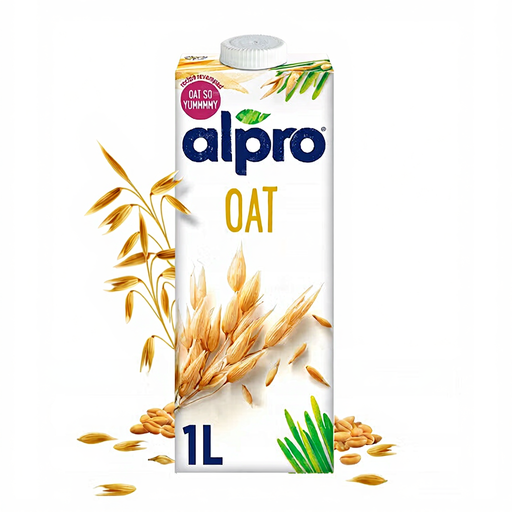 Image unavailable
Alpro oat drink, 1 L
If you’re including this drink in a menu or recipe, compare its nutritional information per 100 ml and its ingredients with the resident’s dietary instructions. Don’t confuse it with Alpro Avoine Sans Sucres.
View on Joybuy
 Image unavailable
NATRUE Oat Drink 0%, 1 L
If dietary restrictions affect your choice, check the allergens and gluten status on the packaging of the product supplied. Also check what ‘0%’ refers to rather than assuming it indicates a particular nutritional value.
View on Joybuy
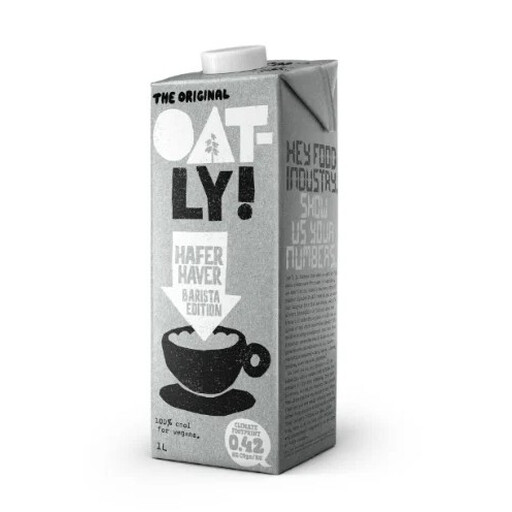 Image unavailable
Oatly Barista oat drink, 1 L
For a hot drink, check that the use listed on the packaging matches the recipe you have planned. The Barista name doesn’t tell you whether the drink meets a prescribed texture requirement.
View on Joybuy
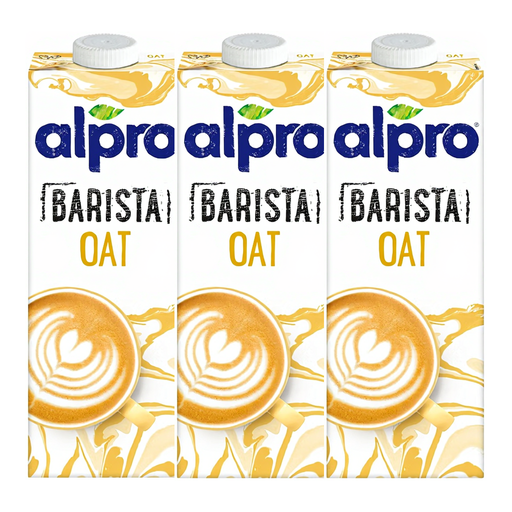 Image unavailable
Alpro Barista oat drink, pack of 3 × 1 L
For hot drinks that need several cartons, make sure the pack size suits the quantities you serve and check the storage instructions once opened. Any prescribed texture should be assessed separately.
View on Joybuy
Frequently asked questions
Can an oat drink replace the nutritional intake planned for a resident with malnutrition?
No, not on its own. The French National Authority for Health’s recommendations on malnutrition in older people call for individualised care, including in care homes. The relevant team should decide whether and how the drink fits into the complete meal, rather than treating it as a solution for nutritional rehabilitation.
What should you do after opening an Auchan oat drink?
For the standard and Barista products described by Auchan France, the instructions say to store the drink between 0 °C and +6 °C and consume it within five days of opening. Follow the instructions on the carton you’re using.
Do all oat drinks contain 0 g of sugars?
No. Alpro France states that its Avoine Sans Sucres product contains 0 g of sugars per 100 ml, while Auchan France lists 3.4 g per 100 ml for its standard drink and 5.3 g per 100 ml for its Barista product. For the products you’re considering, compare the ‘sugars’ figure in the nutritional information on the same 100 ml basis.


