Fans of plant-based lattes
You’re looking for a drink designed for lattes or other hot drinks, with frothing properties stated by the brand. Oatly and Auchan’s barista ranges are marketed for this purpose.


Start by thinking about how you’ll use it. A drink labelled ‘barista’ is designed to froth for coffee, while it’s easier to compare a plain recipe by looking at its ingredients and nutritional information. If calcium, vitamins or allergens matter to you, check the specific product: according to Santé publique France, plant-based drinks do not automatically have the same nutritional composition as animal milk.
You’re looking for a drink designed for lattes or other hot drinks, with frothing properties stated by the brand. Oatly and Auchan’s barista ranges are marketed for this purpose.
For cereal or cooking, you want to compare the ingredients and nutritional information on each carton. Carrefour Bio and Bio Village recipes, for example, both list water, oats, sunflower oil and salt.
You check for calcium and vitamins without assuming they’re included in every oat drink. Santé publique France points out that the nutritional composition of plant-based drinks differs from that of animal milk.
To choose between two oat drinks, start with how you’ll mainly use them, then read the label of the product you’re considering. A barista label, a short ingredients list and added nutrients each meet different needs.
| Criteria | What to check | Who is it for? |
|---|---|---|
| Froth and texture | Look for a barista label and an intended use in coffee or tea lattes; frothing is a property claimed by the brand. | If you often make lattes, choose a recipe marketed for hot drinks rather than assuming it will froth just because it’s made with oats. Around 40% of consumers prioritise this. |
| Everyday recipe | Check the ingredients list, any organic or ‘no added sugar’ claims you’re looking for, and the nutritional information for the specific product. | If you use the same carton with cereal or in cooking, you’ll want ingredients that suit your preferences. Around 30% of consumers put this first. |
| Ingredients and allergens | Check for calcium and vitamins, as well as the ingredients and allergen information on the packaging. | If certain nutrients or allergens influence your purchase, check each product rather than relying on its category. Around 30% of consumers prioritise this information. |
The term indicates that the drink is intended for latte-style drinks; it doesn’t mean that the recipe is better suited to your other needs.
If you mainly use oat drink with cereal or in cooking, compare the ingredients in plain versions too.
Santé publique France says their nutritional compositions differ. A claim that one product is fortified doesn’t apply to all oat drinks.
If these details matter to you, check the nutritional information and ingredients on the carton you choose.
The European Commission classifies oats as a gluten-containing cereal that must be taken into account when declaring allergens.
If you need to avoid gluten or have an allergy, read the ingredients and allergen information on the packaging of the exact product you’re considering.
Alpro offers an oat drink, as well as a variant labelled ‘no sugars’.
The Barista Edition range includes 1 L and 50 cl formats.
The Carrefour Sensation and Carrefour Bio ranges include oat drinks in 1 L cartons.
Bio Village offers a 1 L organic oat drink sold as having ‘no added sugars’.
Auchan offers an oat-based drink and a barista version, both in 1 L cartons.
Vemondo has offered an organic oat drink in a pack of eight 1 L cartons.
These products include barista drinks for coffee, flavoured options and an oat drink without ‘barista’ in its name. Start by comparing the flavour and format, then check the label of the specific product.
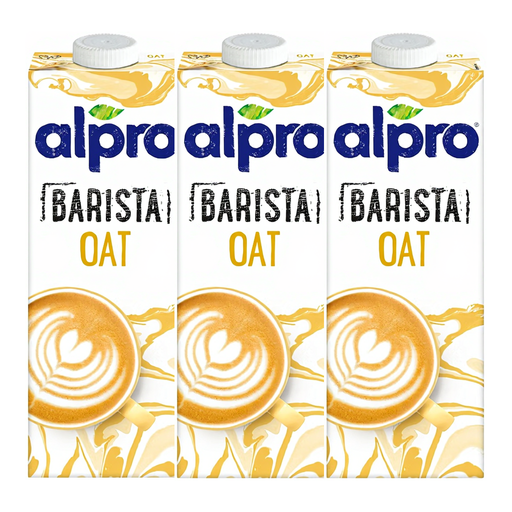 Image unavailable
A barista option if you regularly make coffee drinks. The pack contains three 1 L cartons, so consider whether you’ll use that quantity before choosing.
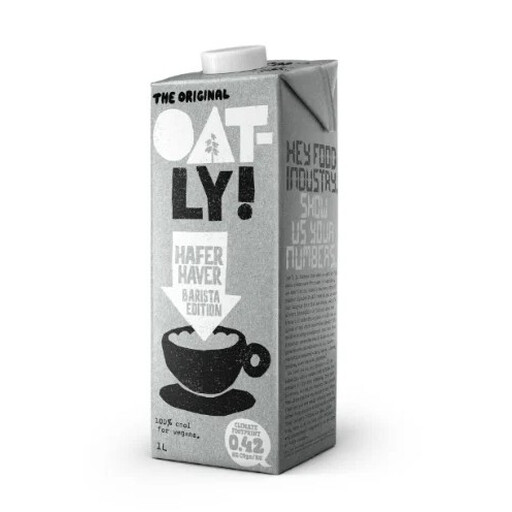 Image unavailable
Worth considering for coffee drinks: Oatly markets its Barista range for this purpose. The stated format is 1 L.
 Image unavailable
A 1 L oat drink to consider if you’re looking for a product without ‘barista’ in its name. If gluten or allergens matter to you, check the information on the packaging rather than relying on the product name alone.
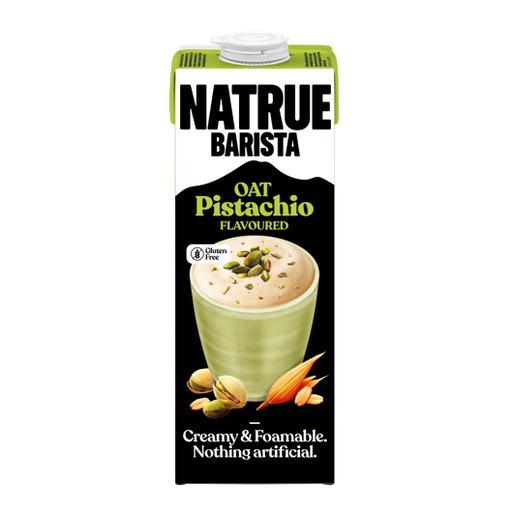 Image unavailable
This pistachio-flavoured barista option is for those looking for a particular flavour rather than a neutral drink. Check the ingredients and allergen information on the packaging if needed.
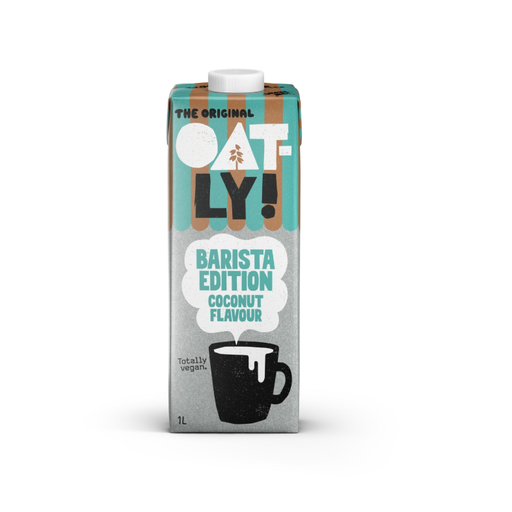 Image unavailable
A 1 L coconut-flavoured barista option for anyone who isn’t looking for a neutral taste. Check the ingredients list if the presence of sugar is a factor in your choice.
Not automatically: Santé publique France points out that plant-based drinks and animal milk have very different nutritional compositions. Compare the nutritional information for the products you’re considering rather than relying on how you’d use them in cooking or coffee.
No. According to Anses, everyday plant-based drinks cannot replace breast milk or infant formula in a baby’s diet.
Check the ingredients and allergen information for the specific product. The European Commission includes oats in its list of gluten-containing cereals that must be declared as allergens. The words ‘oat drink’ alone aren’t enough to determine whether a product is suitable for a particular diet.
Start with the product name, ingredients list and nutritional information. The DGCCRF lists these among the food labelling details to check; they can help you distinguish a plain recipe from a flavoured or fortified option.