Who is this option for?

Parents of a child over one who refuses certain flavours

You’d like to try an oat drink in a familiar recipe or with cereal, without treating it as a nutritional replacement for milk. Manger Bouger highlights the difference in composition between plant-based drinks and animal milk.

Families avoiding certain ingredients

If you avoid milk, lactose or gluten, check the ingredients and allergens on the carton you choose. The words ‘oat drink’ alone don’t tell you whether a particular product is suitable for your diet.

Parents comparing recipes

You’re looking for a flavour that suits the meal you have in mind and want to compare the sugars and ingredients per 100 ml, rather than relying only on a claim on the front of the pack.

What should you look for first?

Start with your child’s age and the role the drink will play in their diet. If you’re using it as an ingredient, check the recipe, allergens and nutritional information for the product you’ve chosen.

Criterion What to check Who this matters to
Age and role in the meal Child’s age; occasional ingredient or potential replacement for their milk-based diet. If my child is still an infant, I need to distinguish an everyday drink from their milk-based diet. Around 31% of consumers would put the child’s age and the drink’s role in the meal first.
Flavour and cooking use Whether it’s recommended for cereal or cooking; try a small amount in a familiar recipe. If my child refuses certain flavours, I’d rather try the drink in a familiar dish before serving it on its own. Around 25% of consumers would prioritise whether the child accepts it with their meal.
Ingredients and allergens Ingredients list and allergens on the carton you buy; suitable information if gluten needs to be avoided. If our family avoids an ingredient, I want to check the exact product before adding it to a meal. Around 25% of consumers would put checking allergens first.
Sugars and fortification Sugars and protein per 100 ml; calcium and vitamins listed on the pack. If several options suit the planned use, I compare their composition rather than just their names. Around 19% of consumers would prioritise nutritional information.

Mistakes to avoid

  • Replacing infant milk with an oat drink

    Anses advises that everyday drinks, whether plant-based or animal-based, cannot replace breast milk or infant formula for babies.

    Check your child’s age and how you plan to use the drink before buying. If you’re looking for a solution to an allergy or a very restricted diet for an infant, ask a health professional for advice rather than choosing an everyday plant-based drink.

  • Assuming the word ‘oat’ tells you which allergens are present

    An oat drink isn’t necessarily a dairy product, but that doesn’t mean it’s suitable for every elimination diet. The DGCCRF includes oats among the cereals covered by gluten information requirements.

    Read the ingredients and any allergens highlighted on the pack you buy. If you need to avoid gluten strictly, check the information for that specific product.

  • Relying only on a claim on the front of the pack

    A claim about sugars or calcium doesn’t tell you everything about the recipe. For example, the Carrefour and VEGE product pages published by E.Leclerc show different sugar levels for their respective products.

    Compare the values per 100 ml and the ingredients list, then consider them in relation to how you plan to use the drink: on its own, with cereal or in a recipe.

  • Looking for a ‘mature’ or ‘aged’ variety

    These terms don’t describe a useful way to choose between oat drinks here. They tell you neither how a particular recipe tastes nor what it contains.

    Instead, look for the cooking use you have in mind, then check the ingredients, allergens and nutritional information on the carton you choose.

Brands to compare

Alpro

The range includes standard and no-sugars oat drinks, with options for cereal and recipes.

  • The Auchan product page for an Alpro oat drink lists added calcium and vitamins B2 and D2.
  • Composition varies by product, so check the ingredients and nutritional values on the carton you choose.

Oatly

Oatly offers a standard oat drink and a No Sugars version, which the manufacturer describes as suitable for cooking.

  • Oatly says its standard drink contains added calcium, iodine and vitamins D, B2 and B12.
  • The No Sugars and standard versions have different recipes, so check the label of the one you buy.

Carrefour Sensation

A retailer’s own oat drink, with a product page that lets you check the ingredients before choosing.

  • Carrefour’s product page lists 10% oats, as well as inulin, sunflower oil and added vitamins for this drink.
  • This information applies to this product, not to all Carrefour oat drinks.

VEGE (Marque Repère / E.Leclerc)

A 1 L oat drink that E.Leclerc says is made with oats of French origin.

  • For this product, the E.Leclerc page lists 2.9 g of sugars and 146.7 mg of calcium per 100 ml.
  • These values apply to the product described; check the label on the carton you actually choose.

Auchan

A 1 L plant-based oat drink, with Auchan providing information about its composition and storage.

  • For this product, the Auchan page lists 10% oats and 3.4 g of sugars per 100 ml.
  • The product page states that this drink cannot be a baby’s sole source of nutrition before 12 months, unless prescribed by a paediatrician.

Oat drinks available on Joybuy

These three oat drinks are options to try with cereal or as part of a meal. To decide which one to try, start with the recipe you have in mind and check the ingredients, allergens and nutritional information that matter to your family on each carton.
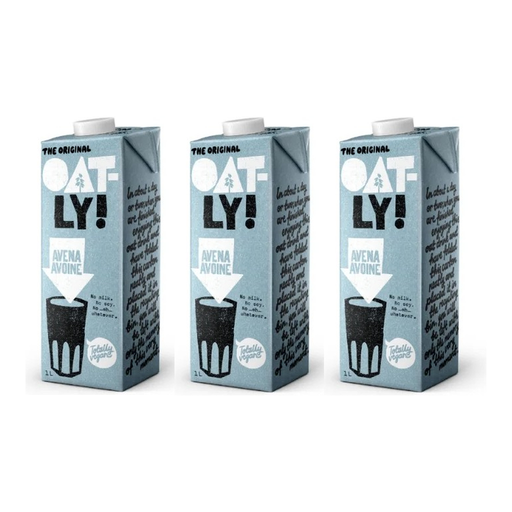
Oatly Oat Drink 1 L, pack of three cartons

Oatly Oat Drink 1 L, pack of 3

Worth trying if you’d like to use an oat drink in a familiar recipe; start with a small amount to see how it works in the dish.

Pack size: three 1 L cartons. Oatly describes its standard drink as fortified with calcium, iodine and vitamins D, B2 and B12; check the composition on the cartons you receive.

View on Joybuy
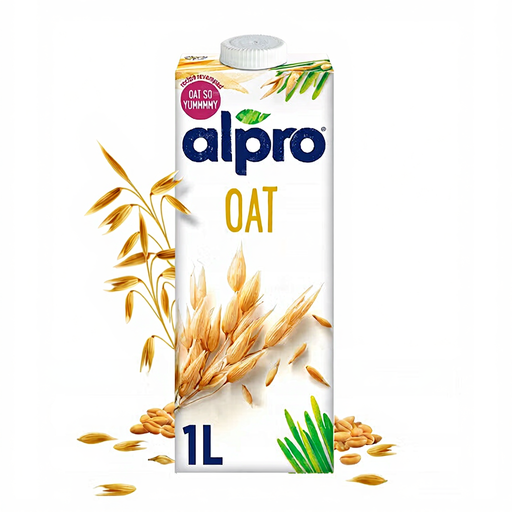
Alpro Oat Drink 1 L

Alpro Oat Drink 1 L

Consider trying this oat drink with cereal or in a recipe, without assuming your child will enjoy the taste.

Size: 1 L. If fortification or sugar content matters to you, compare the information on this carton rather than relying on that for another Alpro version.

View on Joybuy

NATRUE Oat Drink 0%, 1 L

NATRUE Oat Drink 0% 1 L

If you’re trying it with cereal, first check that this product’s composition meets your dietary requirements.

Size: 1 L. ‘0%’ is part of the product name; read the nutrition declaration to find out exactly what it refers to.

View on Joybuy

Frequently asked questions

Can an oat drink replace milk for a baby?

No. An everyday oat drink cannot replace a baby’s milk-based diet. Anses advises that everyday drinks, whether plant-based or animal-based, cannot replace breast milk or first or follow-on infant formula.

Does an oat drink always contain milk or lactose?

No, that isn’t true of every product. Oatly describes its No Sugars version, for example, as dairy-free. If you need to avoid an ingredient, check the composition and allergens on the packaging of the product you buy.

Can I choose any oat drink if my child avoids gluten?

No. Check the information for each product. The DGCCRF includes oats among the cereals associated with gluten; if you need to avoid gluten strictly, check the current label and any information relevant to this diet.

What should I compare on two cartons of oat drink?

First compare the ingredients and allergens, then the sugars and protein, and, if it matters to your choice, the calcium listed per 100 ml. The values on the Carrefour and VEGE product pages published by E.Leclerc apply to specific recipes; they don’t apply to all oat drinks.