For stocking your first kitchen cupboard
You’re looking for a carton that can be stored unopened and then used within the stated time once opened. UHT treatment, pack size and storage instructions matter more than the recipe name alone.


For your first kitchen cupboard, choose an oat drink whose label confirms how it can be stored unopened and explains what to do with the carton once opened. Then compare the ingredients and nutritional values to suit your needs: a barista version is designed for coffee, while the meaning of “filtered” is worth checking with the manufacturer for the product you’re considering.
You’re looking for a carton that can be stored unopened and then used within the stated time once opened. UHT treatment, pack size and storage instructions matter more than the recipe name alone.
You’re choosing based on ingredients, sugars, or added vitamins and minerals. Read the nutrition information for each product rather than assuming that two oat drinks have the same ingredients.
You mainly use oat drink in coffee and are looking for a recipe designed for frothing. Check the heating instructions and allergens for the specific product.
For your first food shop, start with storage and pack size, then compare recipes based on their ingredients or how they work in coffee. Don’t treat “filtered” as a guarantee of shelf life or a feature shared by all products: check what the term means for the carton you’re considering.
| What to consider | What to check | Who is it for? |
|---|---|---|
| Storage and waste | Look for UHT labelling or storage instructions for unopened cartons, then check how long the drink keeps in the fridge after opening and choose a pack size that suits how much you’ll use. | If I’m stocking my cupboard, I want to be able to keep a carton unopened, then finish it within the stated time once I open it; around 42% of consumers make storage management their priority. |
| Ingredients and nutrition | Check the ingredients list, allergens and sugars per 100 ml; check separately for any stated fortification. | To choose between an original, no added sugar or fortified recipe, I need to know exactly what each carton contains; this is the priority for around 33% of consumers. |
| Using it in coffee | Look for an explicit “barista” or “for coffee” label, as well as the heating instructions for that product. | If I mainly make milky coffees, I’m looking for a recipe designed for frothing rather than a drink chosen just to stock my cupboard; around 25% of consumers prioritise this use. |
Auchan’s product listing for an Ethiquable drink labelled as having no added sugars still shows 4.7 g of sugars per 100 ml. The recipe claim and the total sugar content answer two different questions.
To compare two cartons, check the “of which sugars” line in the nutrition information, using the same unit.
The products listed by Auchan require refrigeration and should be used within five days of opening, even though they can be stored differently before opening.
Follow the instructions on your carton and choose a size you can use within the stated time.
An opened carton left too long could end up being thrown away.
Joybuy’s listing for Alpro Oat Barista identifies oats as a cereal containing gluten. Don’t assume the labelling for one product applies to another.
If you need to avoid gluten, check the relevant statement and allergen declaration on the specific carton.
Anses warns of the risks of this kind of substitution for babies under one; Auchan’s listing for its Bio product carries the same warning.
For a baby, don’t replace breast milk or suitable infant formula with an oat drink. Speak to a healthcare professional about your individual circumstances.
These examples show why it’s important to compare specific products within a brand: a standard, fortified or coffee-focused recipe won’t necessarily have the same features as the others.
Oat drinks for different uses, including one listed by Carrefour and an Oat Barista recipe designed for coffee.
A classic oat drink and a Barista Edition that the brand recommends for coffee.
An organic, UHT oat drink labelled as having no added sugars, worth considering for everyday use.
Lidl featured Vemondo organic oat drink in a pack of 8 × 1 L in an offer dated 30 September 2026.
These products suit specific uses: two barista recipes for coffee and a matcha oat drink to serve hot or cold. If you’re looking for an original oat drink for everyday use, compare them with that in mind. If “filtered” is important to you, check what it means for the specific product.
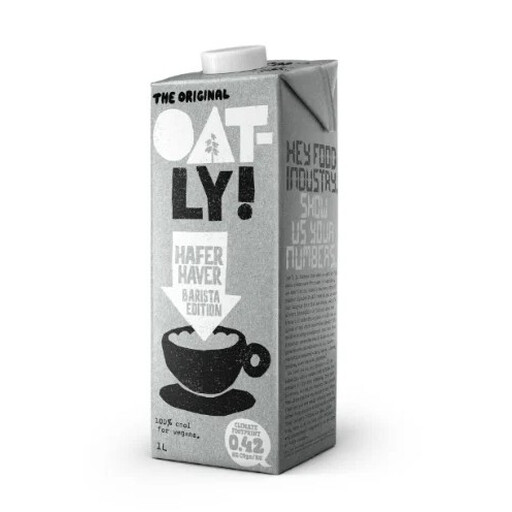 Image unavailable
Worth considering if you mainly make milky coffees and want to store the carton at room temperature before opening, as stated on its product listing. Once opened, refrigerate it and follow the seven-day storage guidance for this product. Also check its gluten declaration.
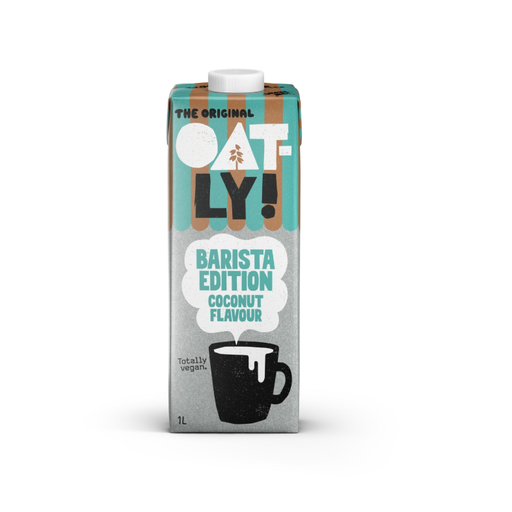 Image unavailable
This coconut-flavoured barista version is for anyone who wants that flavour in their coffee, rather than a neutral recipe. Its product listing says to store it unopened at room temperature, up to 25 °C. Once opened, it should be kept between 2 and 8 °C and used within five days.
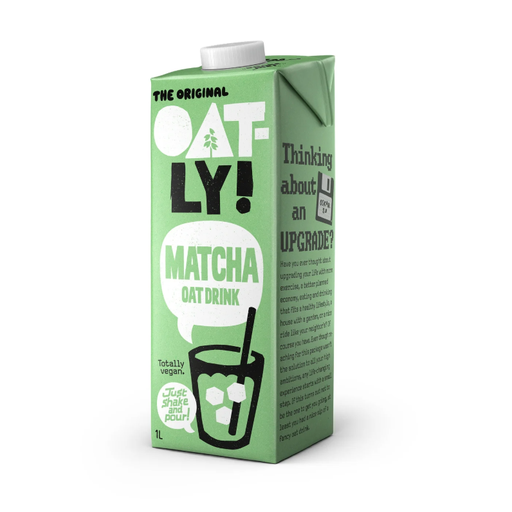 Image unavailable
This matcha oat drink is designed to be served hot or cold, so it won’t serve the same purpose as an original recipe. Its product listing says to store it at room temperature before opening. Check the sugars and caffeine on the label; once opened, refrigerate the carton and follow the stated five-day storage guidance.
Yes, if the instructions for that product allow it to be stored at room temperature before opening. Oatly France says its long-life oat drink can be stored this way; check the best-before date and the instructions on your carton.
Follow the storage time stated on the carton you’ve bought. Two products listed by Auchan say to refrigerate and use within five days of opening; this guidance doesn’t automatically apply to every oat drink.
No. For a baby under one, oat drink must not replace breast milk or suitable infant formula. Anses warns of the nutritional risks of making this substitution.
No. Don’t assume a product is “gluten-free” just because oats appear in its name. If this matters to you, check the relevant statement and allergens on the packaging of the product you’ve chosen.