You’re keeping an eye on your fat intake
You want to compare the figures rather than rely on how a product is presented. Under EU rules, a drink can be described as ‘low fat’ only if it contains no more than 1.5 g of fat per 100 ml.


If you’re looking for an oat drink that’s low in fat, check the amount per 100 ml. Under EU rules, a drink must contain no more than 1.5 g of fat per 100 ml to make this claim. A ‘sugar-free’ claim is based on a different criterion, so also compare the ingredients, intended use and the exact product available for collection.
You want to compare the figures rather than rely on how a product is presented. Under EU rules, a drink can be described as ‘low fat’ only if it contains no more than 1.5 g of fat per 100 ml.
You check both lines in the nutrition information, without assuming that a ‘sugar-free’ drink necessarily contains less fat.
You’re looking for a recipe suited to how you’ll use it, while checking its fat content separately and confirming that the product is available for collection.
Start by checking the fat content per 100 ml, then look at the sugars and any guidance on use. If a product lists values per 100 g, don’t assume they’re directly comparable with figures per 100 ml.
| Criterion | What to check | Who it matters to |
|---|---|---|
| Fat | Total amount per 100 ml: under EU rules, a drink must contain no more than 1.5 g to make the ‘low fat’ claim. | If I want to apply a specific threshold before adding a drink to my basket, the figure matters more than how it’s presented. Around 40% of consumers would put this criterion first. |
| Sugars and ingredients | Sugars per 100 ml, followed by the fat content of the same product; check the ingredients or fortification if these are important to you. | A ‘sugar-free’ claim matters to me, but I don’t want to assume anything about the fat content. This distinction would be a priority for around 30% of consumers. |
| Use and collection | Any guidance on using it in coffee or cooking, and whether the product is available at your selected collection point. | If I mainly want to make hot drinks or recipes, I’m looking for a suitable product that I can collect with my groceries. Around 30% of consumers would prioritise this combination of needs. |
These claims refer to different characteristics. Under EU rules, a drink can be described as ‘low fat’ only if it contains no more than 1.5 g of fat per 100 ml.
Compare total fat and sugars separately in the nutrition information.
A recommendation for use in coffee or cooking doesn’t, by itself, tell you how much fat the recipe contains.
Check the figures per 100 ml for the product you’ve chosen, as well as its intended use.
E.Leclerc says you should check with the relevant store to see if its Bio Village drink is available. A product shown on a listing isn’t necessarily offered for collection at your chosen location.
Check the store, pack size and product in your basket before placing your order.
Anses warns that replacing food specially formulated for children under one with other drinks can pose nutritional risks.
For an infant, don’t replace breast milk or an appropriate infant formula with oat drink. Ask a healthcare professional for advice.
Carrefour lists, among others, a Classic Oat drink and a No Sugars Oat version.
The range includes standard, No Sugars and Barista recipes, with different uses and ingredients to compare separately.
E.Leclerc lists a 1 L organic oat drink with ‘no added sugars’.
The retailer offers a 1 L oat-based plant drink under its own brand.
This selection includes oat drinks in single or multipack formats, as well as a chai version. To check the fat content, look at the figures per 100 ml for the product you’ve chosen; the product name alone doesn’t tell you what it contains.
 Image unavailable
If fat content is your main consideration, check the amount per 100 ml on the label of this oat drink.
Listed size: 1 L. The ‘0%’ in the name doesn’t, by itself, tell you the figure to compare.
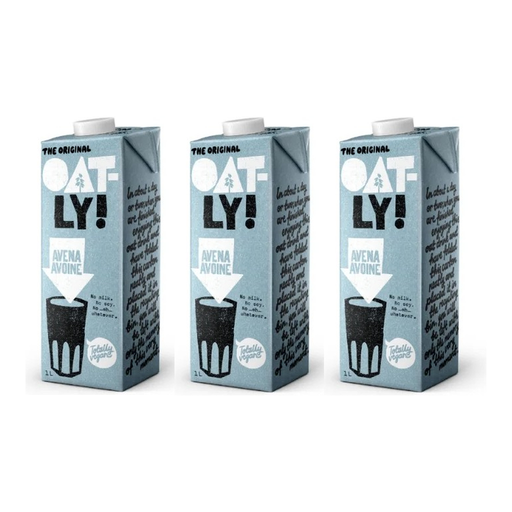 Image unavailable
If you’re considering a multipack, check that the pack size suits your needs and compare the sugars and fat in this recipe.
Pack size: three 1 L cartons.
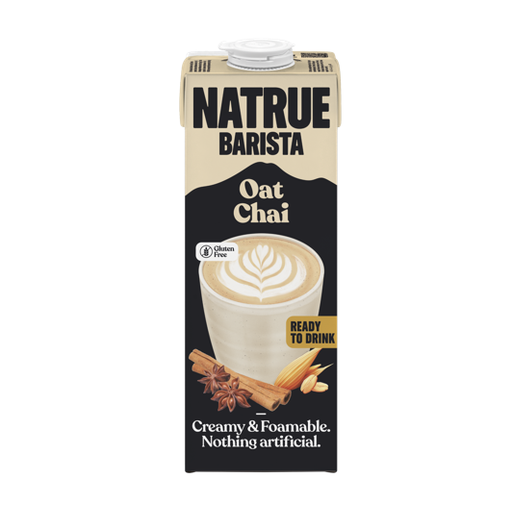 Image unavailable
If you’re looking for a chai-style oat drink, check its sugars and fat per 100 ml before choosing it.
Listed size: 1 L.
Under EU rules on nutrition claims, a drink can carry this claim if it contains no more than 1.5 g of fat per 100 ml. Check the ‘fat’ line and its unit for the product you’re buying.
No. The two claims refer to different characteristics. Auchan’s listing for Oatly No Sugars gives 0 g of sugars and 1.5 g of fat per 100 ml, but these figures don’t automatically apply to another recipe.
Not necessarily: availability depends on the collection point you select. For the Bio Village drink, E.Leclerc recommends checking with the relevant store; confirm the product in your basket before placing your order.
Follow the instructions for the product you’ve bought. Auchan’s listing for its oat drink says to store it between 0 °C and +6 °C and consume it within five days of opening; this guidance doesn’t apply to every recipe.
No. It shouldn’t replace breast milk or formula designed for infants. Anses highlights the nutritional risks of making such substitutions for children under one; ask a healthcare professional for advice.