Those setting fat-content requirements
You need a figure in g per 100 ml to choose a low-fat oat drink, rather than relying on a claim on the front of the pack.


For a workplace canteen looking for a low-fat oat drink, first check that it contains no more than 1.5 g of fat per 100 ml. This is the maximum permitted for drinks under Regulation (EC) No 1924/2006, published on EUR-Lex. Product listings from Carrefour France and Auchan France give a figure of 1.2 g/100 ml for their respective Bio products. Then compare the options by sugar content, storage instructions after opening and intended use at the serving counter.
You need a figure in g per 100 ml to choose a low-fat oat drink, rather than relying on a claim on the front of the pack.
You’re planning a drink for different canteen uses and need to match carton opening to the volume served and the storage instructions for each product.
You want to distinguish a drink chosen for its fat content from an option designed for coffee. Oatly’s Barista Edition, which the brand recommends for this use, should be assessed separately for its nutritional values.
First set your maximum fat content per 100 ml, then choose the product based on your sugar target and the practicalities of storage and service.
| Criteria | What to check | Who it matters to |
|---|---|---|
| Fat | Check total fat, not just saturated fatty acids, per 100 ml for the product you’re ordering. For the claim ‘low fat’ on drinks, Regulation (EC) No 1924/2006 sets a maximum of 1.5 g/100 ml. | I need to justify the nutritional requirement in the canteen specification; around 33% of consumers prioritise this specific limit. |
| Sugars | Read the ‘of which sugars’ line per 100 ml and distinguish it from the claim ‘no added sugars’. Auchan France states that Auchan Bio No Added Sugars contains 5 g of sugars/100 ml, compared with 0 g/100 ml for Oatly No Sugars. | If I’m looking for a drink with 0 g of sugars, ‘no added sugars’ isn’t enough to make the decision; this is the top priority for around 27% of consumers. |
| Storage | Check how the drink should be stored before opening, then note the temperature and time limit after opening. Auchan France’s listing for its Bio drink specifies a maximum of +6 °C and consumption within 5 days of opening. | When several cartons are open at the serving counter, I need to be able to use them in line with their storage instructions; managing open cartons is a priority for around 27% of consumers. |
| Hot drinks | If texture matters for plant-based milky coffees, consider an option intended for this use and check its fat content per 100 ml separately. Oatly recommends its Barista Edition for coffee, but this intended use tells you nothing about the other varieties. | If I regularly prepare hot drinks that need a particular texture, I prefer a formula suited to the serving counter; around 13% of consumers put this use ahead of other criteria. |
Auchan France’s listing for Alpro Oat No Sugars states that it contains 1.8 g of fat per 100 ml. This is above the maximum of 1.5 g/100 ml for the ‘low fat’ claim on drinks.
Set a specific limit in your specification and check the nutrition table for the exact product you’re ordering.
Auchan France’s listing for Auchan Bio No Added Sugars gives a figure of 5 g of sugars/100 ml: the two claims don’t mean the same thing.
If you’re looking for 0 g of sugars, check the ‘of which sugars’ line per 100 ml as well as the claims on the pack.
Once the drink has been poured into a jug, guests can no longer see its packaging. Storage instructions after opening also vary by product: Auchan France specifies a maximum of +6 °C and consumption within 5 days for its Bio drink.
Keep ingredient and allergen information accessible during service, date cartons when opened and follow the instructions on the packs in use.
The range includes No Sugars and Barista Edition, which meet different selection criteria.
The 1 L Bio oat drink can be compared with other products using its nutrition label.
Auchan Bio No Added Sugars oat drink comes in a 1 L carton.
Oat No Sugars is a separate option from drinks selected solely on the basis of a fat-content limit.
Lidl France has offered an organic oat drink in a pack of 8 × 1 L.
These two oat drinks include an Oat Drink 0% option and a Chai Latte option. If you’re buying for a canteen, compare their labels with your fat-content limit and the intended uses at your service.
 Image unavailable
If you’re considering this oat drink for everyday canteen service, check the fat content and ‘of which sugars’ line on the pack: the name ‘0%’ doesn’t tell you which value it refers to.
Stated pack size: 1 L. Also check the instructions for use after opening before planning how to rotate cartons.
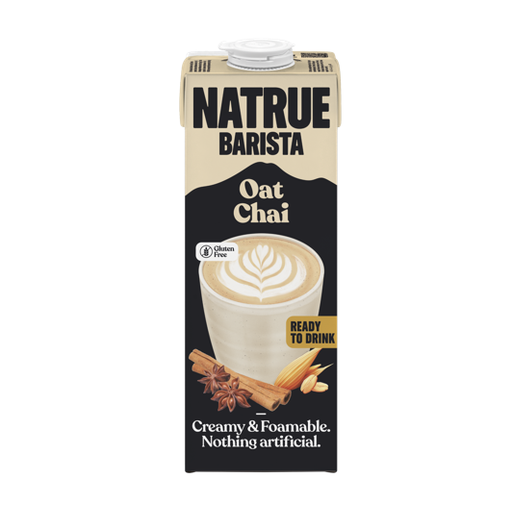 Image unavailable
This chai option suits a different type of service from an unflavoured oat drink. Before choosing it for your canteen, compare its fat and sugar values with the requirements in your specification.
Stated pack size: 1 L. Check the storage instructions for the carton in use.
For a drink carrying the claim ‘low fat’ or equivalent wording, Regulation (EC) No 1924/2006, published on EUR-Lex, sets a maximum of 1.5 g of fat per 100 ml. Check this figure for the exact product: Auchan France’s listing for Alpro Oat No Sugars states 1.8 g/100 ml.
No. A drink with no added sugars can still contain sugars according to its nutrition information. Auchan France states that its Auchan Bio No Added Sugars oat drink contains 5 g of sugars per 100 ml, compared with 0 g/100 ml for Oatly No Sugars. Check the ‘of which sugars’ line if this distinction affects your purchase.
Follow the instructions for each drink and adjust the number of cartons you open to the volume being served. For its Bio oat drink, Auchan France specifies storage at a maximum of +6 °C and consumption within 5 days of opening.
Make sure you can link each drink being served to its ingredient and allergen information, even when guests can no longer see the carton. In French catering, information about allergens in non-prepacked food must be available for the food in question. Check the label of each product and make this information accessible at the serving point.