Households preparing several meals
You use oat drink for breakfasts, main meals or desserts prepared in advance. The number of cartons you need to store and how quickly you finish an opened carton matter just as much as the total volume.


When preparing several recipes in advance, choose between individual cartons and a multipack based on how much you’ll actually use and how much storage space you have. Three 1 L cartons add up to 3 L, but they won’t keep once opened in the same way as a single container, so check the instructions for each product. If you want to control the sweetness of sauces or desserts, compare the sugar content. Save a barista version for recipes where froth matters.
You use oat drink for breakfasts, main meals or desserts prepared in advance. The number of cartons you need to store and how quickly you finish an opened carton matter just as much as the total volume.
You use oat drink in sauces, porridge or desserts and want to compare the sugar content before choosing a base.
You also make milky coffees or hot chocolates. A version designed to froth may appeal, provided you check that it also works for your other planned recipes.
When preparing several meals or drinks in advance, start with how much you’ll use. Then distinguish between recipes that need a neutral base and those where the texture of a hot drink matters.
| Factor | What to check | Who is it for? |
|---|---|---|
| Volume and storage | Count the 1 L cartons, consider how much space you’ll need and how much you use after opening each one. A multipack of three cartons isn’t a single 3 L bottle. | If I cook in batches, I want several cartons available without opening more than I need. Around 36% of consumers would make this their priority. |
| Use in cooking | Check the uses listed for the exact version, such as sauces, baking or hot drinks. Check the storage instructions after opening separately. | If I switch between recipes and milky coffees, I mainly want a drink that suits the things I make most often; around 29% of consumers would prioritise this use. |
| Sugars and nutritional content | Compare the sugars and fat per 100 ml, then check for any calcium or vitamin claims on the pack. | For a sauce or dessert, I prefer to know the stated sugar content before deciding how to season or sweeten the recipe. This would be the main factor for around 21% of consumers. |
| Organic, origin and ingredients | Read the ingredients list and, if these details matter to you, check the organic claims, where the oats come from and where the product is packed. | If I choose based on origin or ingredients first, these details matter more to me than barista use. Around 14% of consumers would prioritise this profile. |
A multipack of three 1 L cartons gives you 3 L to buy, but each carton is a separate unit to store and open.
Check the number of units and how much storage space you have before choosing a multipack instead of a single carton.
Storage instructions change once a carton has been opened. For the Oatly Organic Barista product listed by Auchan, the instructions are to store it between 2 °C and 8 °C and consume it within 5 days of opening.
Plan recipes that use the same carton and follow the time limit stated on the pack you buy.
An opened carton kept for longer than the stated time may lead to food waste.
These terms describe different characteristics. Oatly says its organic oat drink isn’t fortified, so the organic label doesn’t mean that vitamins or minerals have been added.
Compare the ingredients list and nutritional information for the version you plan to buy.
The No Sugars Oat version listed by Carrefour comes in a 1 L carton and is worth considering if sugar content matters for your recipes.
The range includes Original, No Sugars and organic drinks, as well as Barista Edition versions in 1 L cartons.
Carrefour Sensation and Carrefour Bio give you two 1 L carton oat drinks to compare.
Bio Village oat drink comes in a 1 L carton and offers another ingredient list to consider for recipes prepared in advance.
Auchan oat drink comes in a 1 L carton, with oats stated to be of French origin and the product packed in France.
A Vemondo organic offer dated 30 September 2026 was for a multipack of eight 1 L cartons, not a single container.
For preparing several recipes, these options include a multipack of three 1 L cartons and two drinks in 1 L cartons. The multipack’s total volume doesn’t make it a single 3 L bottle.
 Image unavailable
Worth considering if you use oat drink across several recipes and prefer to open the cartons one at a time.
The multipack contains three 1 L cartons, not a single 3 L container. Check the storage instructions on each carton after opening.
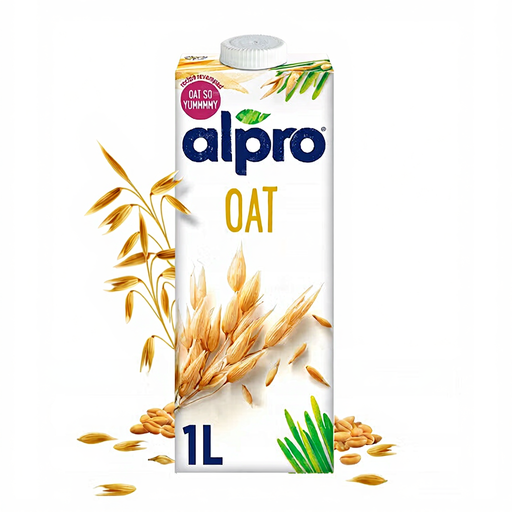 Image unavailable
An individual carton to consider if you don’t need to buy a multipack for your recipes.
This product comes in a 1 L carton. To decide whether this version works in a sweet or savoury recipe, check its ingredients, sugar content and instructions for use after opening.
 Image unavailable
If you compare sugar content before choosing a base for your recipes, check the nutritional information for this version.
The carton is listed as 1 L; the “0%” in the name is no substitute for reading the label. If gluten matters to you, also check the declaration on the exact pack.
Not necessarily: choose a version to suit the recipe and the result you want. Oatly says its No Sugars version can be used in sweet or savoury recipes, and recommends its Barista Edition for cooking and baking. These claims don’t guarantee the same result with every oat drink.
Follow the instructions on the carton you buy. Auchan’s product information for Oatly Organic Barista says to store it between 2 °C and 8 °C after opening and consume it within 5 days. Don’t automatically apply this timeframe to other versions.
No: Oatly says its organic oat drink isn’t fortified with vitamins and minerals. For any other product, check the claims and nutritional information on the relevant carton rather than assuming its ingredients from the organic logo alone.
First compare the ingredients and nutritional values on the same basis, then check the storage instructions and the relevant date. The DGCCRF lists the ingredients, nutritional declaration and net quantity among the information required for a prepacked food. Also check the allergens listed in the ingredients.