Anyone making custards and fillings
When the liquid’s texture matters to your recipe, compare an oat drink with a plant-based cream alternative rather than treating them as interchangeable.


To replace milk in pancakes or cakes, start with an oat drink labelled for cooking or baking. If your recipe calls for a cream-like base, compare plant-based cream alternatives and their fat content instead. To keep an eye on sugar and ingredients you need to avoid, check the label of the product you buy.
When the liquid’s texture matters to your recipe, compare an oat drink with a plant-based cream alternative rather than treating them as interchangeable.
For pancakes, loaf cakes and everyday cakes, a drink labelled for cooking or baking is a good place to start.
If you want to keep an eye on sugar or need to avoid certain ingredients, check each product’s ingredients list, nutritional information and allergen advice.
Your choice depends first on the role the liquid plays in your recipe: replacing milk in a batter or providing the creaminess you’d expect from cream.
Choose this for: replacing milk in pancake or cake batter with a product labelled for cooking or baking.
Bear in mind: a standard drink may not work as a cream alternative in a filling.
Consider this if: you’d also like to use the drink in hot beverages; Oatly says its Barista Edition is suitable for baking too.
Bear in mind: the word ‘barista’ alone won’t tell you how a recipe will turn out.
Compare this for: a dessert cream or filling where you want the qualities of cream rather than milk.
Bear in mind: its composition may affect the balance of your recipe; the Alnatura product sold by Carrefour also carries an allergen cross-contamination warning.
| What to consider | What to check | Who is it for? |
|---|---|---|
| Recipe texture | The product type and, if creaminess matters, the fat content per 100 ml. | For a custard or filling, I want to choose a liquid that suits the texture I’m after rather than picking a drink at random; around 42% of consumers would put this need first. |
| Sugars and ingredients | The ‘sugars’ line in the nutritional information and the ingredients list. | When a recipe already contains sugar, I prefer to know what the drink adds and compare its ingredients; this would be the main consideration for around 33% of consumers. |
| Ingredients to avoid | The ingredients, declared allergens and any ‘may contain’ warnings on each pack. | If I need to avoid dairy products or a specific allergen, I need to check the drink and the rest of the recipe; around 25% of consumers would prioritise this check. |
An oat drink and a plant-based cream alternative play different roles in a recipe. Carrefour’s product listing for the Alnatura alternative states that it contains 7.5 g of fat per 100 ml.
For a filling or dessert cream, compare the product category and fat content first.
The ‘no added sugars’ claim on Carrefour Bio’s drink doesn’t mean that its total sugar content is zero.
If this matters for your recipe, check the ‘sugars’ line in the nutritional information too.
Precautions vary by product: Carrefour’s Alnatura alternative may contain traces of soya, almond and tree nuts.
Read the label on the product you buy and check the other ingredients in your bake too.
Oatly says its Original and Barista Edition drinks can be used in cooking and baking.
The 1 L oat drink listed by Auchan is recommended for sweet and savoury recipes.
Carrefour’s range includes a Carrefour Bio drink and an Alnatura plant-based cream alternative for cooking and baking.
The listing for Auchan’s 1 L plant-based drink states that it contains 10% oats sourced from France.
Lidl featured Vemondo Organic Oat Drink in a pack of 8 × 1 L as part of an offer dated 30 September 2026.
These oat drinks include two barista versions and one standard drink. For baking, compare their stated uses and labels against your recipe; they may not be a suitable replacement for a plant-based cream alternative.
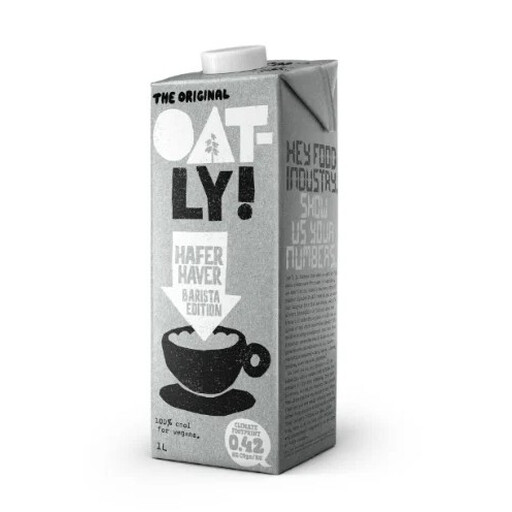 Image unavailable
To replace milk in baking, Oatly says its Barista Edition is suitable for cooking and baking. If sugar or gluten content matters to you, check the information on the packaging.
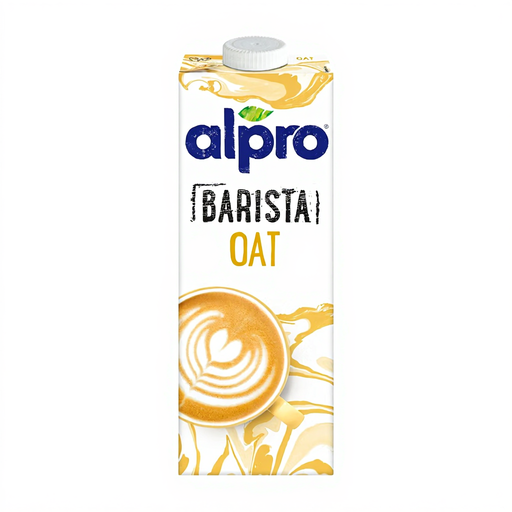 Image unavailable
If you’re considering this barista drink for baking, check that the product’s stated uses match what you have in mind. Check the ingredients and allergen information too, especially if you need to avoid gluten.
 Image unavailable
To compare a standard drink with a barista version in a recipe, start by checking its stated uses and ingredients. Before choosing it, check what ‘0%’ refers to on the packaging, as well as the allergen information.
It can replace milk in some recipes, but it won’t necessarily do the job of cream. Oatly says its oat drinks can be used in cooking and baking. For a recipe where the liquid has a big impact on the texture, compare plant-based cream alternatives too and try a small amount first.
No, this claim doesn’t rule out naturally occurring sugars. To find out how much sugar the drink you’ve chosen contains, check the ‘sugars’ line in the nutritional information.
Check the drink’s ingredients and allergen information, then do the same for every other ingredient in the recipe, including butter, cream, chocolate and decorations. If you need to avoid a specific allergen, also look out for any ‘may contain’ warnings on each pack.
Follow the storage instructions and use-by period stated on the carton you’re using. As a guide for this particular product, Auchan’s listing for its oat-based plant drink advises using it within five days of opening.