People comparing protein content
For a snack you can take with you, you’d rather check the protein per 100 g and relate that figure to your portion than rely on a claim on the pack.


When choosing nuts to take with you, compare the protein per 100 g, then consider how much you plan to eat: Auchan’s product pages for two varieties of roasted almonds with no added salt list 26 and 27 g of protein per 100 g. Also check the salt content, allergens and storage instructions for the specific product. Its protein content alone is not enough to draw conclusions about sports recovery.
For a snack you can take with you, you’d rather check the protein per 100 g and relate that figure to your portion than rely on a claim on the pack.
You’re looking for a snack to take with you and want to tell a ‘no added salt’ variety apart from another roasted or flavoured recipe.
Before eating or sharing nuts, you check the main ingredient and any ‘may contain’ statements on the packaging of the product you’ve bought.
For a snack during Make Music Day, the per-100 g figures make it easier to compare products. The portion you take, the ingredients and the information on the pack will then help you decide what suits your needs.
| Criterion | What to check | Who is it for? |
|---|---|---|
| Protein and portion size | Check the protein per 100 g, then consider how much you’ll take with you. Auchan’s product page for one variety also lists 6.8 g of protein per 25 g portion. | If protein content guides my choice, I want to know what I’m getting in my snack, not just how much is in the pack. Around 42% of consumers would make this comparison a priority. |
| Added salt | Check that the exact variety is labelled ‘no added salt’, and look at the salt figure in the nutritional information. | For a snack to take with me, I want to avoid mistaking a roasted recipe for one with no added salt. This would be the top priority for around 33% of consumers. |
| Allergens and storage | Check the ingredients, any potential traces and the storage instructions on the pack you’ve bought. | If I need to check allergens or keep an opened pack while I’m out, this information comes before anything else. Around 25% of consumers would make it their priority. |
The two varieties of roasted almonds listed by Auchan contain 26 or 27 g of protein per 100 g. Auchan’s product page also lists 632 kcal and 52 g of fat per 100 g: the whole pack is not the same as the 25 g portion shown on that page.
Compare the nutritional values per 100 g and decide how much to take with you before you set off.
Roasting and adding salt are two separate things. A flavoured recipe may also have a different composition from roasted almonds with no added salt.
Look for the claim on the exact variety, then check its salt content per 100 g.
An ingredients list containing only almonds doesn’t rule out possible traces of other substances. Monoprix’s product page for one variety of blanched almonds lists possible traces of peanuts, other nuts, sesame, sulphites, cereals containing gluten and soya.
If you have an allergy, check the ingredients and any ‘may contain’ statements on the packaging of the relevant batch, even if you’re planning to share the pack.
Auchan’s product page for roasted almonds recommends keeping the product away from heat and moisture and resealing the pack tightly after opening.
Follow the storage instructions for the product you take with you, and keep its packaging closed when it’s not in use.
The 150 g variety of roasted almonds with no added salt listed by Auchan makes it easy to compare protein, salt and ingredients.
Its 400 g variety of roasted almonds with no added salt shows values per 100 g and per stated 25 g portion.
Carrefour’s product page for a 200 g variety of roasted almonds carries the claim ‘no added salt’.
Monoprix’s product page for the 200 g variety of plain blanched almonds lists ‘blanched almonds’ as the ingredient.
This selection includes cashews with no added salt and flavoured almond snacks in different handy sizes. Their ingredients vary, so compare the values per 100 g and check the allergens to suit your needs.
 Image unavailable
A pack of ready-to-eat cashews for a snack on the go. The product page lists 20 g of protein and 0.02 g of salt per 100 g; compare these figures with the amount you plan to eat. The product contains cashews and may contain traces of peanuts and other nuts.
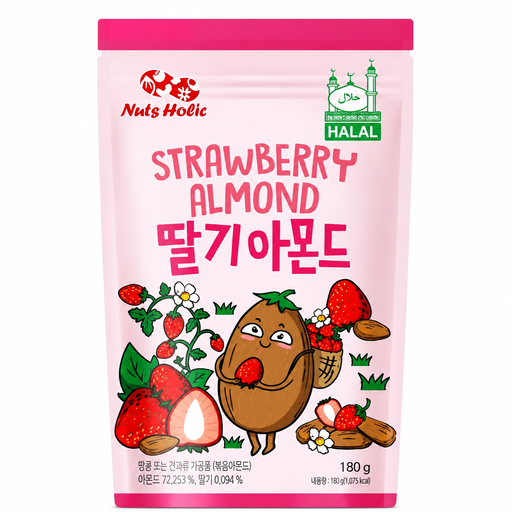 Image unavailable
This flavoured snack is a handy option if you’d rather take coated almonds than plain ones. The product page lists 70% almonds, 20.9 g of protein and 19.7 g of sugars per 100 g; the recipe also contains sugar and salt. It contains almonds and milk, and may contain traces of gluten, peanuts and sesame.
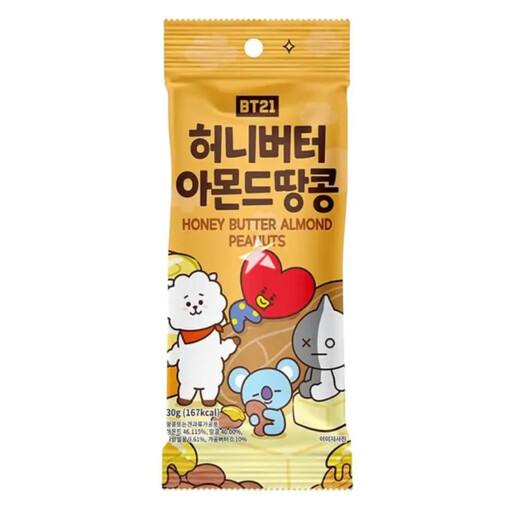 Image unavailable
The 30 g pack is a handy way to take a small portion of flavoured almonds with you. The product page lists 19.98 g of protein and 0.29 g of salt per 100 g; the ingredients include sugar, honey and salt. The product contains almonds, milk and soya.
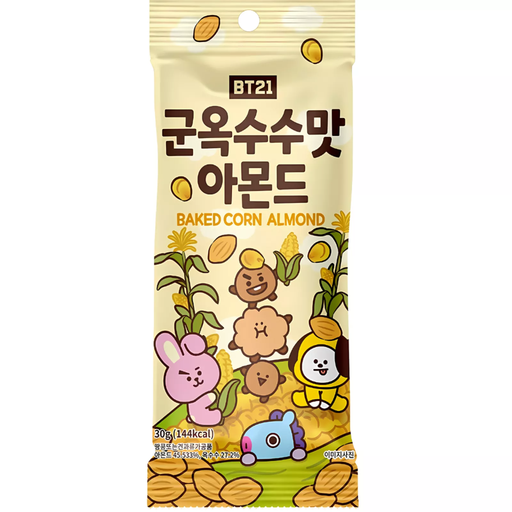 Image unavailable
This 30 g pack combines almonds and corn in a flavoured snack. The product page lists 13.3 g of protein and 0.29 g of salt per 100 g; the ingredients include sugar and refined salt. The product contains soya and milk, and the product page notes that it may contain traces of other allergens.
First, check the protein per 100 g, then compare it with the amounts you’ll actually eat. Auchan’s product pages for two varieties of roasted almonds with no added salt list 26 and 27 g per 100 g; the page for the Auchan variety also lists 6.8 g per 25 g portion.
No. A nutritional value can’t guarantee an individual recovery result. Use the protein content to compare foods and take portion size into account, but don’t assume it will have a specific effect on your performance or recovery.
Check the ingredients and any ‘may contain’ statements on the pack you’ve bought before sharing it. Monoprix’s product page for one variety of blanched almonds notes possible traces of peanuts, sesame and soya, among other things. These statements vary by product.
Follow the instructions on the pack in question. For its variety of roasted almonds with no added salt, Auchan recommends protecting the product from heat and moisture, sealing the pack tightly after opening and eating it within 15 days.