To put together a small snack for lunch, compare the nutritional values per 100 g, then decide how much to serve: ‘no added salt’ does not mean ‘low in calories’. Plain nuts are a good choice if you’re looking for an unsalted option, while dried fruit is naturally high in sugars and is better suited to a small portion now and then, as Manger Bouger points out. If the lunch is for a child under 6, do not give them whole nuts, in line with the advice from Assurance Maladie.
Who are these options for?
Anyone preparing a small portion
When adding a snack to a packed lunch, how much you serve matters just as much as which pack you choose. Nuts with no added salt can still be high in energy, so compare the values per 100 g before preparing a portion.
Families during the school holidays
The same lunch may be for children of different ages. Assurance Maladie advises against giving whole nuts to children under 6 because of the risk of choking. You should also check the allergens in the product you choose.
Anyone keeping an eye on added ingredients
If you want to avoid added salt or sugar, check the ingredients to tell plain nuts, dried fruit and mixes apart. Manger Bouger points out that dried fruit is naturally high in sugars, even when no sugar has been added.
What should you check before buying?
For this lunch, start by deciding how much you plan to serve, then compare recipes according to your needs around sugars, salt and allergens.
| What to consider |
What to check |
Who is it for? |
| Portion and energy |
Compare the kcal per 100 g and measure the amount you’ll actually serve, rather than leaving the pack within reach. |
When I’m preparing a packed lunch snack, I want to know how much to put in. Around 36% of consumers put portion size and energy value at the top of their list. |
| Sugars in dried fruit |
Check the ‘of which sugars’ line per 100 g and the ingredients list, especially in a mix. |
For a sweet addition to lunch, I want to tell naturally occurring sugars apart from added sugar. This is the main priority for around 29% of consumers. |
| Unsalted recipe |
Check for the words ‘no added salt’ and read the ingredients for the exact product. |
If I choose plain nuts, I mainly want to avoid a salted recipe or ingredients I’m not looking for. Around 21% of consumers prioritise this kind of recipe. |
| Age and allergens |
For a child under 6, check the product’s form, as well as the allergens and any ‘may contain’ warnings. |
When lunch is for a young child or someone with an allergy, I need to check that the product is suitable before considering the portion size. This precaution comes first for around 14% of consumers. |
Common misconceptions to avoid
-
Assuming ‘no added salt’ means low in calories
The claim refers to salt, not energy. Carrefour lists 549 kcal per 100 g for its no-added-salt mix; Auchan lists 640 kcal per 100 g for its roasted almonds with no added salt.
Compare the kcal per 100 g of relevant products, then prepare the amount you plan to serve at lunch.
-
Assuming ‘no added sugars’ means ‘low in sugar’
Raisins, dates and dried apricots are naturally high in sugars, as Manger Bouger points out. So, no added sugar does not tell you the product’s total sugar content.
Check both the ingredients and the ‘of which sugars’ line. If you add dried fruit to lunch, keep it to a small portion now and then.
-
Giving whole nuts to a child under 6
Assurance Maladie warns of the risk of choking for children under this age.
Do not give the child whole nuts. If you’re considering a preparation that contains nuts in another form, check its ingredients and any relevant allergies first.
-
Relying on the name of a mix when someone has an allergy
A mix may contain several types of nuts as well as peanuts. The Carrefour mix described here contains peanuts, almonds and cashews, among other ingredients.
Check the ingredients list, highlighted allergens and any ‘may contain’ warnings on the exact product. The DGCCRF reminds shoppers that allergenic ingredients must be highlighted on the label.
Brands and ranges to explore
The products mentioned offer a few different recipes to consider. Choose by checking the label on the pack you plan to buy, rather than relying on the retailer’s name alone.
Carrefour
The retailer offers, among other options, a mix of nuts and raisins with no added salt.
- The product details for Carrefour’s 120 g mix list the ingredients and state 549 kcal per 100 g.
- The recipe contains peanuts, almonds and cashews, so check the allergens and the portion you plan to serve.
E.Leclerc
E.Leclerc Drive includes dried fruit in its fruit and vegetable section.
- This section can be a useful starting point when looking for something suitable for lunch.
- Check the ingredients and nutritional information for the exact product before choosing it.
Auchan
The retailer offers, among other options, roasted almonds with no added salt.
- Auchan’s product details state that this product contains less than 0.01 g of salt per 100 g.
- They also state 640 kcal per 100 g, so no added salt doesn’t mean you can skip deciding on a portion size.
Lidl
The Alesto range includes nuts, dried fruit and savoury snacks.
- You can use the range to look for options such as plain nuts.
- Recipes vary, so check the ingredients and nutritional values for each product.
Aldi
Aldi offers, among other options, 200 g packs of Trader Joe's blanched almonds with no added salt.
- This product is an option if you’re looking for almonds without added salt.
- When putting together a snack, check its energy value and how much you plan to serve.
Monoprix
Monoprix’s nuts section includes, among other options, almonds and cashews.
- Products on offer include, for example, Monoprix blanched almonds and plain Seeberger cashews.
- The name of the section isn’t enough to tell recipes apart: check the ingredients and nutritional values on the pack you choose.
A Joybuy pick for this lunch
If you’re planning a snack for a packed lunch, this selection features a 125 g Titiz product. Check its ingredients and nutritional values before deciding how much to serve.
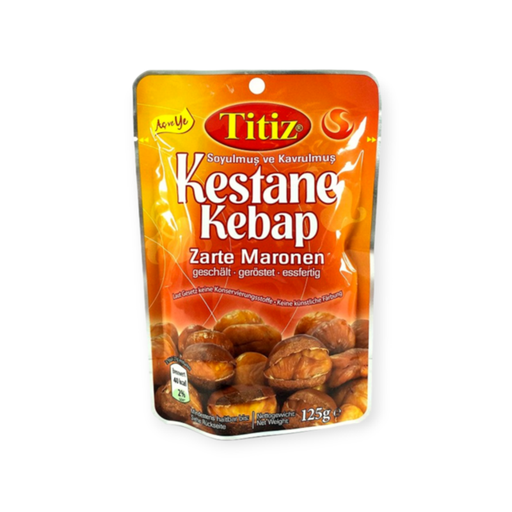 Image unavailable
Titiz Cooked Nuts Natura 125 g
To add it to lunch, take out the amount you want to serve rather than relying on the pack size. The pack is listed as 125 g; check the packaging for the ingredients, allergens and energy value per 100 g.
View on Joybuy
Frequently asked questions
Are nuts with no added salt necessarily low in calories?
No: ‘no added salt’ tells you nothing about the energy value. Carrefour lists 549 kcal per 100 g for one of its no-added-salt mixes, while Auchan lists 640 kcal per 100 g for its roasted almonds with no added salt. Compare the labels, then consider how much you’ll put in the lunchbox.
Are dried fruits a low-calorie snack?
Don’t assume so based on the name or the absence of added sugar: check the energy value per 100 g of the product you choose. Manger Bouger explains that dates, raisins and dried apricots are naturally high in sugars and can be eaten occasionally. In the European Union, Regulation (EC) No 1924/2006 restricts the ‘low energy’ claim to solid foods containing no more than 40 kcal per 100 g.
Can you put whole almonds or nuts in a young child’s lunch?
Not before the age of 6: Assurance Maladie advises against giving children whole nuts at this age because of the risk of choking. For any preparation containing nuts, also check the ingredients and any relevant allergies.
What should you check on a mix for someone with an allergy?
Read the highlighted allergenic ingredients and any ‘may contain’ warnings on the exact pack. The DGCCRF reminds shoppers that allergenic ingredients must be highlighted; a recipe name such as ‘plain’ is no substitute for checking the label.


