Parents keeping an eye on fat content
If low fat content is your main priority, compare the amount per 100 g for each product. A ‘no added salt’ claim doesn’t answer the same question.


If you’re looking for a low-fat option, compare the nutritional information for the specific product rather than relying on the ‘dried fruit’ category or a ‘no added salt’ claim. Also distinguish between snacks for parents and foods to offer a child: Manger Bouger advises against giving whole nuts to children under 6 because of the risk of choking. Dried fruit, nuts and mixes each need to be checked for their ingredients and format.
If low fat content is your main priority, compare the amount per 100 g for each product. A ‘no added salt’ claim doesn’t answer the same question.
When a child is eating the product, its format matters just as much as its ingredients. Manger Bouger advises against giving whole nuts to children under 6 and recommends mixing ground nuts into food.
For an adult snack or a family recipe, choose between dried fruit, nuts, ground nuts and mixes according to how you plan to use them. Carrefour, E.Leclerc, Auchan and Monoprix offer a range of formats; check the ingredients of the product you choose.
First decide who will be eating the product, then compare its ingredients and format on the label.
| What matters | What to check | Who it’s for |
|---|---|---|
| Format for children | If the product is for a child, distinguish between whole nuts and ground nuts mixed into suitable food. | If you want to share an ingredient with a young child, choose a format other than a handful of whole nuts. Around 42% of consumers put a child-friendly format first. |
| Fat content and ingredients | Check the fat content per 100 g and the ingredients list; compare sugars and salt separately. | If low fat content is the reason for your purchase, a claim on the front of the pack isn’t enough to help you decide. Around 33% of consumers make this their priority. |
| Convenient format | Choose between dried fruit, ground nuts and a mix according to the snack or recipe you have in mind; check the ingredients on the pack. | If you’re cooking or want to keep a snack handy for the parents, the pack should suit the way you plan to use it. Around 25% of consumers prioritise convenience. |
For solid foods, European Regulation (EC) No 1924/2006 allows the claim ‘low fat’ only for products containing no more than 3 g of fat per 100 g. This figure alone doesn’t tell you about the product’s sugars, salt or format.
These claims relate to different qualities. For example, E.Leclerc lists 30,8 g of fat per 100 g for its TOKAPI no added salt mix; this figure applies to that specific product.
If fat content is your priority, check the amount per 100 g for the product you’ve chosen rather than drawing conclusions from its salt claim.
According to Manger Bouger, whole nuts pose a choking risk at this age, even if they’re plain or unsalted.
Don’t simply give your child the same snack as the adults: Manger Bouger recommends mixing ground nuts into suitable food.
A single pack can contain both dried fruit and nuts, along with added ingredients. The ingredients list for the TOKAPI mix featured by E.Leclerc includes sweetened cranberries and sunflower oil, for example.
If you’re making a specific recipe, compare the ingredients list for a single-ingredient product with that of the mix, as well as their nutritional information per 100 g.
Carrefour’s online range separates dried fruit, nuts and mixes.
E.Leclerc’s selection includes almonds, raisins, prunes and mixes.
Auchan’s range includes dried fruit, nuts, seeds and mixes.
Lidl’s Alesto range includes nuts, dried fruit and aperitif snacks.
ALDI offers raisins and, under the Trader Joe’s brand, dates and almonds.
Monoprix’s online range includes raisins, dates, prunes, apricots and figs.
This selection features a bag of dried fruit for a snack for the parents or for a recipe. If low fat content is important to you, check the nutritional information and ingredients on the packaging of the product you buy; don’t assume its format is suitable for a young child.
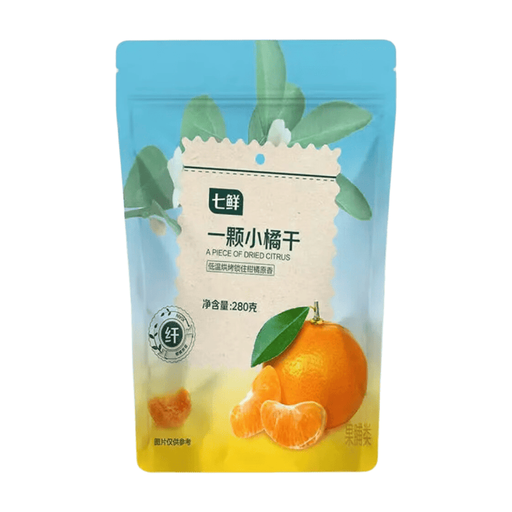 Image unavailable
A bag of dried mandarins to consider for a snack for the parents or for a recipe. The pack contains 280 g. Before choosing it as a low-fat option, check the nutritional information per 100 g and the ingredients list on the packaging. If it’s for a young child, check separately that the format is suitable.
For solid foods, European Regulation (EC) No 1924/2006 allows this claim, or a claim with the same meaning, if the product contains no more than 3 g of fat per 100 g. Check the figure for the specific product: a ‘no added salt’ claim doesn’t tell you anything about its fat content.
Not before the age of 6, according to Manger Bouger, because of the risk of choking. If a child is eating suitable food, Manger Bouger recommends mixing ground nuts into it rather than offering them whole.
Compare their fat, sugar and salt content per 100 g: the DGCCRF says that presenting nutritional information this way makes it easier to compare products. Also read the ingredients, especially if one of the products is a mix.
Not necessarily: no added salt doesn’t tell you how much fat the product contains. For example, E.Leclerc lists 30,8 g of fat per 100 g for its TOKAPI no added salt mix; check the figure for the specific pack you’re considering.