What should you check first?
When choosing a snack to take with you, start with your main priority, then check the other details on the pack. Protein content doesn’t tell you everything about the recipe or how much to take.
| What to consider |
What to check |
Who is it for? |
| Protein content |
Compare the protein per 100 g and read the first few ingredients in the mix. |
If my main aim is to compare the protein in different snacks, the name on the pack isn’t enough. Around 45% of consumers would make protein content their top priority. |
| Pack size and portion |
Check the net weight and decide whether you’ll take the whole pack or prepare a portion in advance. |
If I keep a pack in my bag for several breaks, I want to be able to take the amount I need without treating the whole pack as one snack. Pack size and portion would be the main priority for around 33% of consumers. |
| Ingredients |
Check the sugars and salt per 100 g, as well as the ingredients and allergen information. |
When choosing a mix of dried fruit and nuts, I need to know what the sweetened fruit or seasoning adds, and spot any ingredients I need to avoid. This would be the top priority for around 22% of consumers. |
Brands and retailers to explore
These retailers offer specific recipes and pack sizes to explore. Their inclusion here doesn’t mean every product is available in every store.
Carrefour
The retailer lists the Daco Bello Recharge en Protéines mix in a 150 g pack, among other products.
- Its product listing lets you check the recipe and allergens in the mix.
- The 150 g pack isn’t identified as a single serving; check the pack size and availability at your local store.
E.Leclerc
Its Tokapi product listings let you compare several mixes of nuts and dried fruit.
- The listing for the Tokapi walnut and almond mix with no added salt gives 11.4 g of protein and 0 g of salt per 100 g.
- Check the ingredients for each variety and its local availability before choosing.
Auchan
The online range includes almonds, walnuts, seeds and mixes, including 100 and 150 g packs.
- These pack sizes make it easier to compare nut recipes to take with you or divide into portions.
- Check the listing for your chosen product to confirm its ingredients and exact weight.
Lidl
The Alesto range includes plain nuts as well as other dried fruit and snacks.
- Plain nuts are worth considering if you’re looking for a product with no stated seasoning.
- Check the pack size and nutritional information for the specific product in store.
Aldi
The retailer lists Trader Joe’s roasted almonds with no added salt, among other products.
- This product gives you an almond-based option with no added salt to consider.
- Check local availability: another Aldi listing, for a nut mix, showed the product as unavailable.
Monoprix
The retailer lists the 150 g Daco Bello Recharge en protéines mix, among other products.
- Its listing provides ingredient information and gives 17 g of protein per 100 g.
- Daco Bello lists 18 g per 100 g on its own product page, so check the nutritional information on the pack you buy.
Nuts available on Joybuy
These cashew and almond options include recipes with no added salt as well as flavoured varieties, in different pack sizes. To choose a snack to take with you, compare the labels and, if needed, portion out what you want to put in your bag.
 Image unavailable
BENENUTS Cashews with no added salt, 130 g
Worth considering if you’re looking for cashews with no added salt and prefer to portion out what you take with you. The pack contains 130 g, but that doesn’t mean it’s a single serving. Check the allergens on the packaging.
View on Joybuy
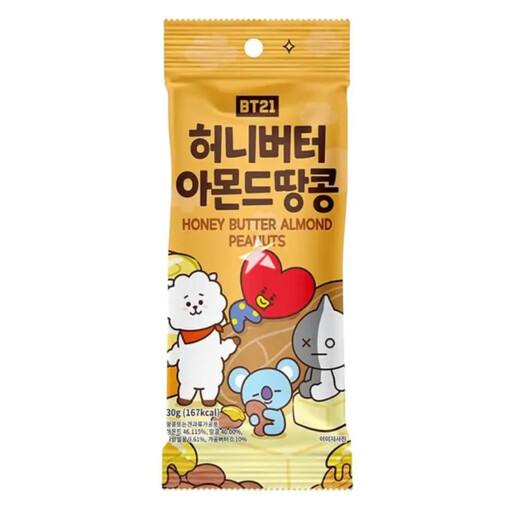 Image unavailable
BT21 Honey Butter Almonds, 30 g
The compact 30 g pack is easy to carry, but its weight alone doesn’t determine whether it’s a suitable portion. These almonds are seasoned with honey and butter, rather than being plain. If ingredients matter to you, compare the sugars and ingredients on the packaging.
View on Joybuy
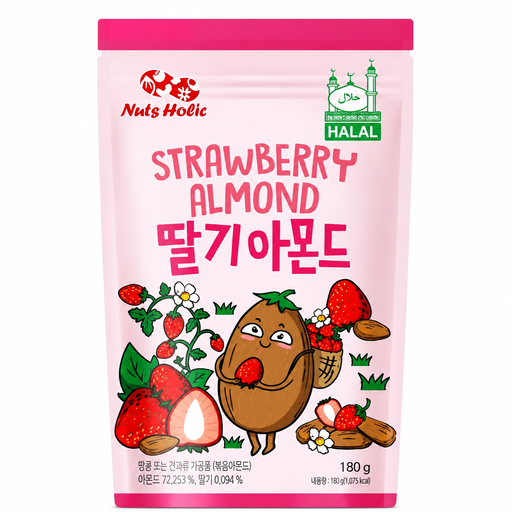 Image unavailable
Nutsholic Strawberry-Flavoured Almonds, 180 g
This recipe is useful for comparing flavoured almonds with unseasoned nuts. The pack contains 180 g, so portion out the amount you want before travelling rather than treating the whole pack as one serving. Check the flavouring ingredients and allergens on the packaging.
View on Joybuy
Frequently asked questions
Is a 100 or 150 g pack a single serving?
The weight alone doesn’t tell you. If you want to take a specific amount with you, check the net weight and portion it into another container, or choose a pack size that matches the snack you have in mind.
Which nuts fit the Manger Bouger guidance?
Manger Bouger, the Santé publique France website, recommends a small handful of unsalted nuts, such as walnuts, hazelnuts and almonds. This general guidance doesn’t set a protein target for each person; check the label if protein is your main reason for buying.
Is the word ‘protein’ enough to help you choose a mix?
No. Compare the protein per 100 g, then check the sugars, salt and ingredients. For Daco Bello Protéines +, the manufacturer lists 18 g of protein per 100 g, compared with 17 g on the Monoprix listing. Check the nutritional information on the pack you buy.
Where can you find allergen information on a pre-packed mix?
Read the ingredients list on the specific pack. The DGCCRF says that allergens must be highlighted in the ingredients list on pre-packed foods sold in France. Also check for any ‘may contain’ statements, particularly if the recipe includes several types of nuts or soya.


