For a nursery snack, first check the setting’s guidelines and, if the child has one, the arrangements set out in their individual care plan (PAI). An individually wrapped wafer means there’s no need to spread anything on site, but it isn’t a portion of spread on its own, and its ingredients must be suitable for the child. A jar lets you prepare the amount you choose at home, provided the nursery allows this type of snack.
Who are these formats for?
Parents who need to follow allergy-related guidelines
If a child needs to avoid certain foods or has a PAI, the permitted foods and snack arrangements take priority over the format. The French Ministry of National Education explains that a PAI can be put in place for a pupil with a food allergy, and that it can set out different arrangements for snacks. Check which arrangements apply to the child and read the label on the product you buy.
Parents looking for a snack that doesn’t need spreading on site
An individually wrapped snack can be popped into a bag without having to prepare a sandwich. The Nutella B-Ready filled wafer featured by Auchan offers this convenience, subject to its ingredients being suitable and the nursery agreeing to it.
Parents who want to choose the amount of spread
A jar lets you prepare the amount you want to serve at home, rather than giving your child a pre-portioned item. You’ll need to provide something to eat it with and pack the snack, then check that the setting allows this.
What should you check before choosing?
For a snack brought into the nursery, start by checking which foods and arrangements are allowed. Then compare the individual packaging, portion size and nutritional information for the specific product.
| What matters |
What to check |
Who it matters to |
| Allergens and guidelines |
Ask which snacks are allowed and, where applicable, follow the arrangements set out in the PAI. Check the ingredients list and allergens for the product you buy. |
If a child needs to avoid certain ingredients, being easy to transport doesn’t automatically make a snack suitable. Around 36% of consumers put compatibility with these guidelines and allergens first. |
| Ready-to-pack format |
Know the difference between a filled wafer, a kit with breadsticks and spread in a jar. Check the number of units and their weight. |
If nobody should need to spread anything at the nursery, a sealed individual snack makes preparing a snack easier. This convenience is the main priority for around 29% of consumers. |
| Serving size |
Check the weight of an individual item, or prepare the amount you want from a jar if the setting allows it. |
A pre-packed portion fixes the amount of that product, while preparing a snack at home lets you choose the portion size. Around 21% of consumers put this control over portions first. |
| Ingredients and nutritional information |
Compare the ingredients and nutritional information per 100 g, then check the per-portion figures if they’re shown on the packaging. |
When several recipes meet the setting’s guidelines, checking their sugar and fat content helps you understand what each product contains, rather than judging by its format alone. Around 14% of consumers prioritise this comparison. |
Common mix-ups to avoid
-
Assuming every mini format is a mini jar of spread
The individual products featured by Auchan and E.Leclerc aren’t jars of spread on their own: Nutella B-Ready is a filled wafer, while the Nustikao kit combines spread and breadsticks. The extra items mean there are more ingredients to check.
Read the product description and ingredients before deciding whether this type of snack is suitable for the child and the nursery.
-
Assuming all Nutella formats have the same ingredients
The ingredients list for the jar of Nutella spread featured by Carrefour doesn’t mention any gluten-containing cereals. The Auchan listing for the B-Ready wafer, however, lists wheat and barley. This difference doesn’t remove the need to check the specific product you buy.
Read its label, including information about allergens and possible traces, and follow any food exclusions that apply to the child.
-
Assuming a Nutri-Score label is compulsory
According to the DGCCRF, displaying a Nutri-Score is voluntary. Nutritional information is generally compulsory for prepacked food, so the absence of a Nutri-Score doesn’t, by itself, mean a product is non-compliant.
To compare two products, check their nutritional information per 100 g and their ingredients lists, then take the portion actually being served into account.
-
Relying on the word “individual” to judge portion size
An individually wrapped item has its own weight and nutritional values. The Auchan listing for the 130 g B-Ready multipack gives 115 kcal and 10.4 g of sugar per 22 g biscuit. These figures apply to this product and portion size.
Check the weight and per-portion information on the pack you choose. If you want to decide how much spread to serve, prepare it from a jar, provided this type of snack is allowed.
Brands and ranges to know
These examples help distinguish spread in a jar from a filled wafer and a kit with an accompaniment. The details below apply to the specific products mentioned, not every product from each brand.
Nutella
The brand offers spread in jars as well as snacks to take away, including B-Ready.
- The 130 g B-Ready pack featured by Auchan contains six individually wrapped wafers.
- The wafer contains ingredients including hazelnuts, milk, soya, wheat and barley, so it’s not the same as spread in a jar.
Nustikao
E.Leclerc features Nustikao spread in a jar and a spread-and-breadstick kit.
- The 3 × 60 g kit contains 40 g of spread and 20 g of breadsticks in each unit.
- It isn’t a portion of spread on its own; the E.Leclerc listing says the breadsticks contain wheat and barley, among other ingredients.
Carrefour Classic’ et Carrefour Bio
The products featured by Carrefour are spreads in jars, which you’ll need to portion before leaving home.
- The Carrefour Bio listing describes a 700 g jar that contains no palm oil.
- “No palm oil” doesn’t mean “allergen-free”: this product contains hazelnuts and milk.
Nos Régions ont du Talent
E.Leclerc features a spread made with hazelnuts from Lot-et-Garonne in a 400 g jar.
- Its listing states that it contains 35% hazelnuts and 8% cocoa, useful details when comparing recipes.
- It comes in a jar that you’ll need to portion, and contains hazelnuts and milk.
Aldi et Tartichoc
Aldi features products including Tartichoc hazelnut spread and a hazelnut and cocoa variety.
- To choose a specific product for nursery, check its packaging and label in store, particularly the allergen information.
Two formats available on Joybuy
These two products offer different ways to prepare a snack: take a filled wafer in an individual wrapper, or portion spread from a jar at home. In both cases, check the nursery’s guidelines and the label on the product you buy.
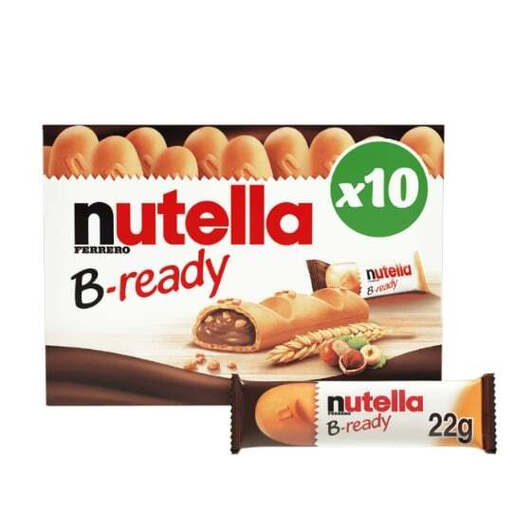 Image unavailable
Nutella B-Ready T10, 220 g
An individually wrapped filled wafer is a handy option if you need a snack that doesn’t have to be spread on site and the nursery allows it. This product isn’t a mini jar of spread. Before giving it to your child, check the ingredients on the packaging, including hazelnuts, milk, soya, wheat and barley, as well as the weight and nutritional values of each wafer.
View on Joybuy
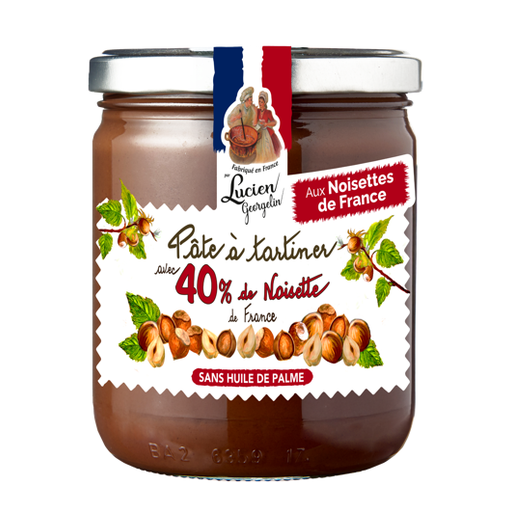 Image unavailable
Lucien Georgelin, 40% hazelnut and cocoa spread, 400 g
This jar is suitable for preparing and packing a portion at home, if the nursery allows this type of snack. Its name states that it contains 40% hazelnuts and the jar weighs 400 g; it isn’t pre-portioned. Check the batch label for allergens, including hazelnuts and milk, and for possible traces of other nuts.
View on Joybuy
Frequently asked questions
Is Nutri-Score compulsory on spread in France?
No. The DGCCRF says that Nutri-Score is voluntary, while nutritional information is generally compulsory for prepacked food. To compare spreads, read their nutritional values per 100 g and their ingredients lists, whether or not a Nutri-Score is displayed.
Does every hazelnut and cocoa spread contain gluten?
You can’t answer for every product based on its category alone. The ingredients list for the jar of Nutella spread featured by Carrefour doesn’t mention any gluten-containing cereals, while the B-Ready wafer featured by Auchan contains wheat and barley. Check the ingredients and any information about possible traces on the packaging you buy.
Will a snack in individual packaging always be allowed at nursery?
No. Individual packaging doesn’t override the setting’s guidelines or any arrangements that apply to the child. Ask which foods can be brought in and, if the child has a PAI, follow the arrangements it sets out for their snack.
What role can a PAI play in snacks for a child with an allergy?
The French Ministry of National Education says an individual care plan can help a pupil with a food allergy to be accommodated. Depending on the child’s needs, the arrangements may include avoiding allergens or specifying which foods the family can bring in. Ask about the arrangements that apply at the child’s setting.


