Parents of children who are particular about texture
You’re looking for a crêpe with a texture your child will find familiar. Trying a small batch lets you see if they like it before you pack it in their lunchbox.


For crêpes in a lunchbox for a child who is particular about texture, white T45 flour can be a good starting point. T110 semi-wholemeal flour lets you try a less refined flour without jumping straight to wholemeal T150. Let your child taste the crêpes before packing them for nursery. All three types of wheat flour contain gluten, so if your child follows a special diet, check the ingredients, any precautionary allergen warnings and the nursery’s guidance.
You’re looking for a crêpe with a texture your child will find familiar. Trying a small batch lets you see if they like it before you pack it in their lunchbox.
You’d like to include a less refined flour without using only T150. Manger Bouger presents semi-wholemeal products as an option alongside wholemeal products.
If your child has an allergy or follows a gluten-free diet, check the exact packet and ask the nursery about meal arrangements. For a school-age child whose health requires specific adjustments, the French Ministry of National Education says that an individual care plan can set out their dietary requirements.
When choosing flour for a nursery lunchbox, start with the texture your child accepts, whether you’d like to use a less refined flour, and any guidance that applies to their meals.
| Criteria | What to check | Who it’s for |
|---|---|---|
| Crêpe texture | Check the flour type and test the batter before making several portions. Carrefour describes its Francine T45 anti-lump flour as suitable for crêpe batter. | If your child refuses unfamiliar textures, a familiar crêpe matters more than changing flour; around 42% of consumers put texture acceptance first. |
| Flour type | Compare T45, T110 semi-wholemeal and T150 wholemeal flour. If you want to compare fibre content, check the nutritional information for the product you choose. | If you’d like to introduce a less refined flour without starting with T150 alone, T110 is an option to try. Around 33% of consumers prefer this middle ground between flour types. |
| Allergens and transport | Read the ingredients and precautionary allergen warnings. Check the nursery’s guidance and how the lunchbox will be stored if the filling needs to stay chilled. | If the meal needs to follow a special diet or include a chilled filling, planning the lunchbox becomes a priority; this is the main concern for around 25% of consumers. |
Carrefour Bio T110 and Auchan Bio T110 are wheat flours. Their level of refinement doesn’t change the fact that they contain gluten.
If your child follows a gluten-free diet, don’t replace their usual flour with T110 or T150 wheat flour. Check the ingredients of the product you’re considering and any guidance that applies to their meals.
Wholemeal flour can change the flavour and texture of your batter. The flour type alone won’t tell you whether your child will like the crêpes.
Start by making a small batch. If you’re looking for a step between white and wholemeal flour, try comparing it with T110 too.
The Carrefour Bio T110 product information warns that the flour may contain traces of soya and milk. The Auchan Bio T110 information mentions possible traces of other gluten-containing cereals and soya.
If your child follows a special diet, read the label on the packet you buy and check it against the guidance for your child and their nursery.
Anses points out that keeping food at a low temperature slows the growth of micro-organisms. Crêpes filled with ingredients that need to be kept chilled therefore require suitable transport and storage conditions.
Before choosing a filling, ask the nursery how the lunchbox will be stored until mealtime.
Carrefour Bio semi-wholemeal T110 wheat flour is an example of a middle-ground option between white T45 and wholemeal T150.
Francine’s anti-lump T45 and wholemeal T150 flours offer two different options, depending on your recipe and the type of flour you’re looking for.
Auchan Bio offers a 1 kg bag of semi-wholemeal T110 wheat flour, which is worth considering if you’d like to try this type of flour.
These two Francine flours let you choose between a white T45 base and introducing wholemeal T150 flour into homemade crêpes. Before packing them for nursery, check that your child likes them and confirm the nursery’s guidance.
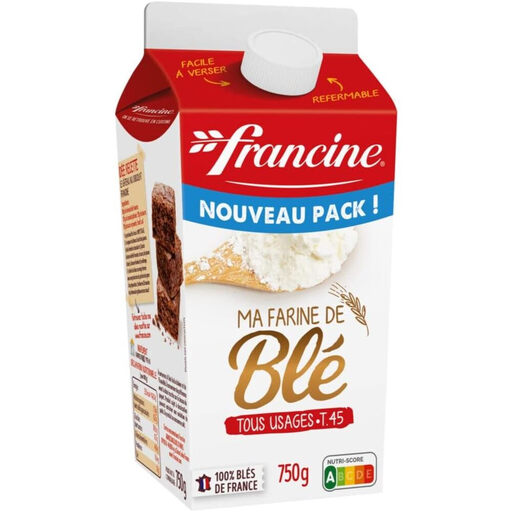 Image unavailable
This option lets you keep some white flour in your crêpe batter. The bag contains 750 g of T45 wheat flour.
It isn’t suitable for a gluten-free diet. If your child has allergen-related dietary requirements, check the information on the exact packet before preparing their meal.
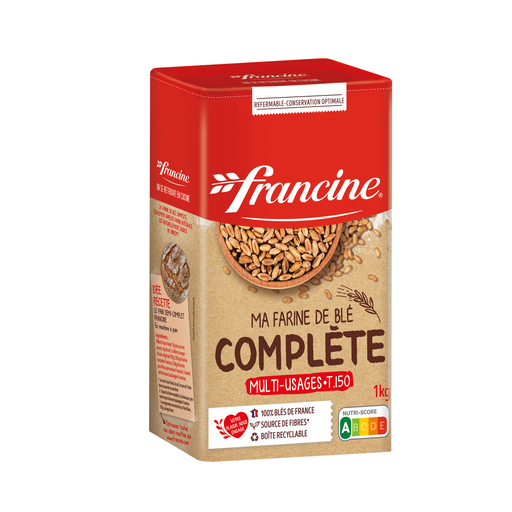 Image unavailable
Try this flour in a recipe made with wholemeal flour. The pack contains 1 kg of T150 wheat flour.
The description mentions a rustic texture, so let your child try the crêpes before packing them for nursery. This wheat-based product isn’t suitable for a gluten-free diet; check the allergen information on the packet too.
If a familiar texture is your priority, try making a batch with T45 flour first. Carrefour describes Francine anti-lump T45, in particular, as suitable for crêpe batter. T110 is another option if you’d like to introduce a less refined flour, but let your child try the recipe before packing it for nursery.
No. T110 and T150 wheat flours contain gluten, even when they’re organic. Assurance Maladie says that people with coeliac disease must follow a strict gluten-free diet, so these wheat flours can’t replace flour that’s suitable for that diet.
Ask what guidance applies to ingredients, possible traces and food brought from home, then check the label on the product you choose. If your child has written medical guidance, follow the arrangements agreed with their nursery. For school-age children, the French Ministry of National Education says an individual care plan can set out their dietary requirements.
Keep the food chilled and check with the nursery how it will be stored until mealtime. Anses points out that keeping food at a low temperature slows the growth of micro-organisms, so choose a filling that suits the storage conditions available.