Anyone preparing several snacks
A bag of mini bars or separate bites makes it easy to portion them out in advance, without having to break up a large bar on the spot. Still, check how many pieces are in the bag and how much they weigh.


If you’re preparing several snacks, start by choosing a format that lets you control how much you hand out: mini bars for clearly defined portions, or separate bites if you want to share out smaller pieces. The word ‘mini’ tells you nothing about the sugar content of a portion or its allergens. Check the weight you’ll serve, the label on the pack you buy and your nursery’s guidelines.
A bag of mini bars or separate bites makes it easy to portion them out in advance, without having to break up a large bar on the spot. Still, check how many pieces are in the bag and how much they weigh.
The exact ingredients matter more than the size of the chocolate. Check the allergens and any ‘may contain’ warnings on the pack you buy, then ask the nursery which foods children are allowed to bring in.
A whole mini bar and a single bite don’t necessarily contain the same amount. Knowing the weight of each piece lets you work out how the nutritional information, usually given per 100 g, applies to the amount you’ll actually hand out.
Start with your nursery’s guidelines and any allergy-related needs. Then compare the packaging and the weight of the amount you plan to hand out.
| What matters | What to check | Who is this for? |
|---|---|---|
| Portioning | Number of pieces, net weight and weight per piece, where stated or possible to calculate; individual wrapping if needed. | If you’re preparing several snacks without breaking up a bar on the spot, you need to know what each child will receive. Around 42% of consumers prioritise this. |
| Allergens and guidelines | Ingredients, allergens, ‘may contain’ warnings and the nursery’s rules on food brought in. | If a child has an allergy or the nursery restricts the foods it accepts, the ingredients on the pack you buy become the main consideration. This is the priority for around 33% of consumers. |
| Sugars and serving size | The ‘of which sugars’ figure per 100 g and the weight actually being served; Nutri-Score only if it appears on the product. | To compare a whole bar with a few bites, the figures per 100 g aren’t enough: the amount you give matters too. Around 25% of consumers put this comparison first. |
The word describes the format, not the nutritional information for a portion. You can’t compare a 35 g mini bar with a smaller bite just by looking at their sugar content per 100 g.
Check the ‘of which sugars’ figure, then calculate the sugar in the amount served: value per 100 g × weight served ÷ 100.
The DGCCRF describes Nutri-Score as a voluntary label. Its absence alone doesn’t tell you anything conclusive about the ingredients in a chocolate product.
If it’s displayed, consider it alongside the ingredients list, allergens, nutritional information and serving weight. Don’t make it your only criterion.
The product listings for the Milka and Lindt products mentioned here note allergens or possible traces, depending on the product. A smaller portion doesn’t remove this concern.
Check the label on the pack you buy and the guidelines for the child and nursery before bringing the product in.
These examples show different types of packaging. The details given apply to the products mentioned, not to every product from each brand.
Carrefour France lists a 200 g bag of 8 Mini Milk Bars, as well as a separate 25 g milk chocolate bar.
Lindt France lists a 35 g EXCELLENCE Noir 70 % mini bar and a separate bag of 28 individually wrapped EXCELLENCE Noir 70 % and 85 % bites.
The 200 g L’Original milk chocolate bar listed by Carrefour France is designed to be divided into portions, rather than handed out as a ready-to-serve mini format.
Nestlé Dessert Noir Doux, listed by Carrefour France as a 170 g bar, is intended for making desserts rather than as an individual mini bar.
E.Leclerc lists, among other products, 200 g packs of EQUADOR 72% cocoa dark chocolate squares.
This product is a whole mini bar of dark chocolate with a stated weight. If you need individually wrapped bites, check the packaging before choosing.
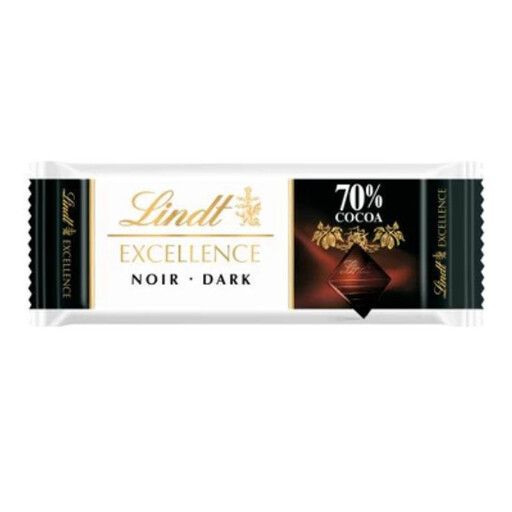 Image unavailable
Worth considering if you want to hand out a whole bar with a known weight, subject to your nursery’s guidelines. According to Lindt France’s product listing for this mini bar, it contains 30 g of sugars per 100 g, which works out at 10.5 g for the whole 35 g bar. The listing warns that it may contain milk, soya and nuts, so check the packaging you buy. If each piece needs to be individually wrapped, confirm this before you buy too.
No. The DGCCRF describes Nutri-Score as a voluntary labelling scheme in France. When comparing two bars, also check their ingredients, allergens and nutritional information, as well as the amount you plan to serve.
Check the pack you buy for its ingredients list, allergens, any ‘may contain’ warnings, net weight and nutritional information. Also ask the nursery whether it accepts food brought in and what guidelines apply to the children concerned.
No: you need to know both the sugar content per 100 g and the weight served. Lindt France’s product listing for its EXCELLENCE Noir 70 % mini bar states that it contains 30 g of sugars per 100 g, so the whole 35 g bar contains 10.5 g of sugars, by calculation. For another product, use the figures on its packaging to work it out again.
Article 1613 ter of the French General Tax Code, published on Légifrance, appears in the section on non-alcoholic drinks. It isn’t a factor when choosing a chocolate bar. For this snack, focus your comparison on the format, ingredients and amount being handed out.