People preparing snacks for long outings
If you’re planning what to take for a training session or marathon, you need to know how many carbohydrates are in the portion you’ll actually eat, and try the product during training.


If you’re sharing nougat, a bag works if you can portion it yourself; for a lunchbox, check that it really contains individually wrapped portions. For a marathon, compare the carbohydrates per portion and check the allergens, then try the product during training: nougat alone isn’t a fuelling plan.
If you’re planning what to take for a training session or marathon, you need to know how many carbohydrates are in the portion you’ll actually eat, and try the product during training.
The number of pieces, how they’re packaged and the allergens matter more than the bag’s total weight. For example, Auchan’s listing for a 200 g Chabert et Guillot product states that it doesn’t contain individual packs.
You can compare the recipe, format and nutritional information without requiring a Nutri-Score label: the DGCCRF states that this logo is voluntary in France.
Start by checking how the product is actually packaged, then read the nutritional information and allergen details for the specific product you’re considering.
| What to check | Look for | Who this matters to |
|---|---|---|
| Format and portions | Look for a statement confirming individual packs, then check the number and weight of the pieces. The total weight alone doesn’t tell you whether it’s a multipack. | If I’m packing lunchboxes, I want to be able to hand out the pieces without cutting them up on the spot; around 33% of consumers make portion size a priority. |
| Carbohydrates and use during training | Check the carbohydrates per 100 g and work out how much is in the portion you plan to eat. Also try the texture during a similar training session. | When planning a snack for a long outing, I want to know how much I’m taking and whether it suits me; around 42% of consumers prioritise this planned intake. |
| Allergens and labelling | Check the ingredients and allergens for the exact product. To compare nutritional values, use the figures per 100 g; according to the DGCCRF, Nutri-Score is voluntary in France. | When I’m sharing nougat, I need to check the ingredients for anyone with relevant allergies; around 25% of consumers put this ahead of other criteria. |
A bag doesn’t guarantee that the pieces are individually wrapped. Auchan states “Individual packs: No” for a 200 g Chabert et Guillot product.
If your lunchboxes need portions that are ready to hand out, check the number, weight and packaging of the pieces before buying.
Cutting and wrapping the portions yourself adds an extra preparation step.
According to the DGCCRF, Nutri-Score is voluntary in France, whereas nutritional information is compulsory for prepacked foods. The absence of a score doesn’t, by itself, tell you what the nougat contains.
Compare the carbohydrates, sugars and fat per 100 g, then work out the figures for your portion. Check the ingredients and allergens too.
The amount of carbohydrates you consume depends on the portion you actually eat. The products listed by Monoprix and Auchan also show that nutritional values vary between recipes.
Before considering this product for a long outing, weigh the portion you plan to take and try its texture during training. Don’t assume it can replace all your other fuelling.
The nougat products described by Monoprix and Auchan list almonds and egg among their allergens; some also warn that they may contain other nuts.
For a lunchbox or shared snack, check the label for the exact recipe before offering it to anyone affected by these allergens.
The Montélimar nougat products listed by Auchan include 200 g and 300 g bags.
Monoprix lists a 200 g pack of soft Montélimar nougat, with a Nutri-Score E shown on its product page.
Carrefour lists this soft nougat in a 200 g bag.
Carrefour lists Céline Robert soft nougat in a 400 g bag, a format worth considering for sharing.
This 250 g nougat could work for sharing, provided you check how it’s packaged if you’re planning to use it in lunchboxes.
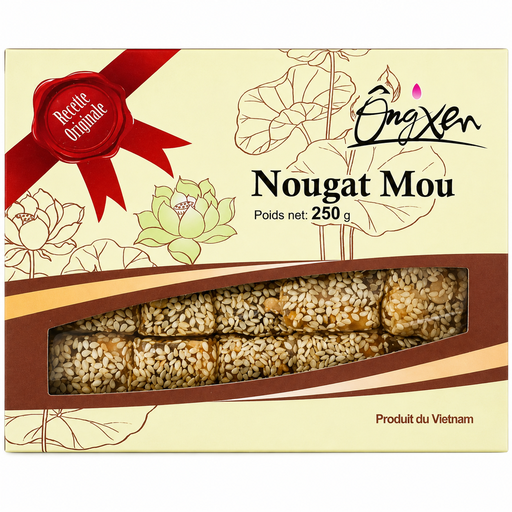 Image unavailable
This size could work for sharing if you’re happy to portion it yourself. The 250 g weight doesn’t confirm that the pieces are individually wrapped or say how many there are, so check these details if you’re using it for lunchboxes. The information for this product lists peanuts and sesame, and warns that it may contain cereals containing gluten; check the label before sharing.
No. The DGCCRF states that Nutri-Score is voluntary in France, while nutritional information is compulsory for prepacked foods. To compare two nougat products, check the nutritional information and allergens, whether or not a score is shown.
No: the total weight doesn’t tell you whether the pieces are individually wrapped. Auchan even states “Individual packs: No” for a 200 g Chabert et Guillot product. If you’re looking for a multipack that’s ready to hand out, check the number, weight and packaging of the pieces.
Only consider it after working out how many carbohydrates are in your portion and trying the product during a similar training session. A confectionery product’s ingredients, texture and portion size don’t mean you can assume it will provide all the fuel you need for a race.
Read the label for the exact product. The products described by Monoprix and Auchan list almonds and egg among their allergens; some also warn that they may contain other nuts. Ingredients can vary from one recipe to another.
Follow the storage instructions on the packaging. For a 300 g Chabert et Guillot product, Auchan advises storing it between 18 and 22 °C, away from moisture. If you portion it out, put the pieces in a clean, resealable container, without changing the product’s stated shelf life.