If a child or their school needs to avoid certain allergens, check the exact ingredients and any relevant guidance before considering nougat: smaller portions make no difference to the allergens it contains. Once you’ve checked this, look for individually wrapped portions for a lunchbox, or a bag to serve at home. Compare the ingredients and nutritional values per 100 g too; in France, the DGCCRF says that Nutri-Score is optional.
Who are these formats for?
Families managing allergens
For a snack intended for a child or a group who need to avoid certain allergens, ingredients matter more than format. Read the ingredients, check which allergens are highlighted and look for precautionary statements about traces. Then follow the school’s guidance and, where applicable, the child’s individual care plan (PAI). The French Ministry of National Education says a PAI can set out arrangements for a pupil with a food allergy.
Parents preparing a lunchbox
If each child needs to take their own portion, look for a statement that the product is individually wrapped. A bite-sized piece or mini bar isn’t necessarily wrapped separately, so check the allergens in the specific product too.
Families serving snacks at home
A bag of soft nougat or bite-sized pieces makes it easy to serve portions at the table. Compare the ingredients and nutritional values per 100 g across similar products, rather than assuming what a product contains from its format alone.
What should you check before choosing?
For a children’s snack, check allergens and any school guidance first. Packaging, nutritional information and texture can then help you choose between suitable products.
| What matters |
What to check |
Who it matters to |
| Allergens and school guidance |
Read the ingredients, check which allergens are highlighted and look for precautionary statements about traces on the exact product. Check the school’s guidance or the PAI, if there is one. |
If a child or group needs to avoid an allergen, the ingredients determine whether the product can be brought in. Around 33% of consumers put this compatibility first. |
| Portions to take with you |
Check the number of pieces and whether the product is individually wrapped; “bites” or “mini” aren’t enough to tell you. |
To fill a lunchbox or share snacks between several children, you’ll need to know whether each portion is already wrapped. Around 27% of consumers prioritise ease of transport and serving. |
| Nutritional information |
Compare the sugars and fat per 100 g in similar products, then consider the portion you’ll serve. |
If what’s inside matters more than the packaging, the nutrition declaration can help you compare products. Around 27% of consumers prioritise checking this information. |
| Texture and sharing |
Check whether it’s soft or crunchy nougat, or bite-sized pieces, and how the bag should be served and stored. |
At home, some families prefer to serve nougat to share themselves rather than hand out ready-to-go portions. Around 13% of consumers put texture and sharing first. |
Common misunderstandings to avoid
-
Assuming nougat is suitable when avoiding tree nuts
Recipes vary: the products described by Auchan and Carrefour include almonds or hazelnuts, among other ingredients, and some carry precautionary statements about traces. A smaller portion doesn’t change what’s in the product.
Check the label of the exact product and follow the guidance for the child or school.
-
Assuming that no Nutri-Score means a poor rating
The DGCCRF says that Nutri-Score is voluntary in France. Its absence doesn’t tell you whether a product is good or bad; the nutrition declaration on prepacked foods is the starting point for comparison.
Read the ingredients and values per 100 g, whether or not the logo is shown.
-
Confusing bite-sized pieces with individually wrapped portions
The bag of Confiserie du Roy René bite-sized pieces described by Auchan does not contain individually wrapped portions. This affects how you prepare a lunchbox or hand out snacks.
Before choosing a multipack to take with you, look for a clear statement that the portions are individually wrapped.
Brands to compare
Confiserie du Roy René
Auchan describes a 380 g bag of bite-sized pieces, better suited to sharing at home than handing out individually wrapped portions.
- The product information lists almonds among the ingredients in the white nougat.
- It also warns that the product may contain traces of tree nuts, milk and soya. These details apply to this specific product.
Suprem'Nougat
Carrefour describes a 200 g bag of soft nougat, better served at home than packed as it is into several lunchboxes as individually wrapped portions.
- The ingredients list for this product includes sugar, glucose syrup, almonds, honey and egg whites.
- Carrefour’s product information does not show a calculated Nutri-Score for this product. Check its ingredients and nutritional information rather than assuming a rating.
Côte d'Or
One product described by Carrefour comes as a bag of 14 mini chocolate bars with nougat, weighing 180 g. These are chocolate bars, not traditional nougat bites.
- The number of mini bars gives you an idea of the format before you plan how to hand them out.
- The ingredients list for this product includes hazelnuts and states that it may contain egg, peanuts, wheat and other tree nuts. Check that the product is available before planning a group snack.
Nougat to share from Joybuy
These two Ong Xen nougat products are suited to a snack served and shared at home, provided their ingredients are suitable for the children concerned. If you need individually wrapped portions for a lunchbox, check the product packaging before you buy.
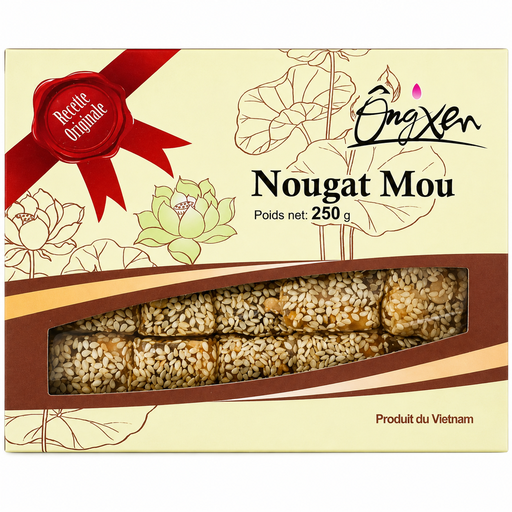 Image unavailable
Ong Xen Vietnamese soft nougat 250 g
Worth considering for serving nougat at home, once you’ve checked any relevant guidance. This product contains peanuts and sesame, so it isn’t suitable if these need to be avoided. Its firm, sticky texture calls for caution with young children. Check the packaging if you need individually wrapped portions.
View on Joybuy
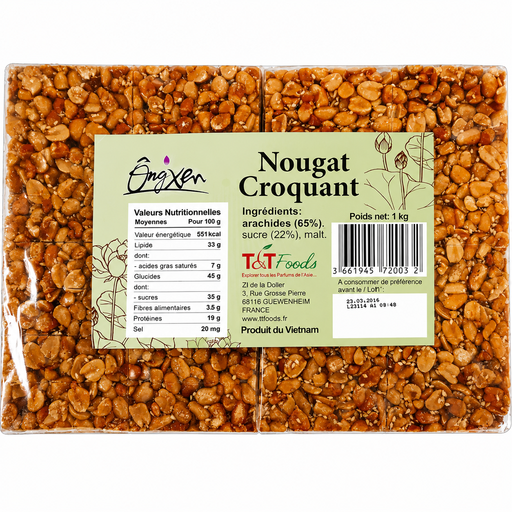 Image unavailable
Ong Xen Vietnamese crunchy nougat 1 kg
This 1 kg bag of crunchy nougat is worth considering for a snack to share, with portions served individually. It contains peanuts and sesame, so it isn’t suitable if these need to be avoided. Its hard, brittle texture calls for caution with young children; check the packaging if you need individually wrapped portions.
View on Joybuy
Frequently asked questions
Is Nutri-Score compulsory on nougat sold in France?
No. The DGCCRF says that Nutri-Score is voluntary, while a nutrition declaration is one of the mandatory pieces of information for prepacked foods. If the logo isn’t shown, check the ingredients and nutritional values per 100 g rather than assuming a rating.
Can you put almond nougat in a child’s school lunchbox?
First, check the school’s guidance and any arrangements in place for the child: the French Ministry of National Education says a PAI can set out arrangements for a pupil with a food allergy. Then read the ingredients and check for any precautionary statements about traces on the product you’ve chosen. If almonds need to be avoided, don’t choose nougat that contains them.
What should you look for on the label to identify allergens?
For prepacked food, check the ingredients list and look for allergens highlighted in it. Also read statements such as “may contain” if traces matter for the child concerned, and follow any guidance specific to them.
How should you store a bag of nougat?
Follow the storage instructions on the packaging of the product you’ve bought. For the Confiserie du Roy René bag described by Auchan, the product information says to store it in a dry place. Also check the date and any other conditions shown on your product.


