Long-distance cyclists
You want to know how many carbohydrates you’re consuming on your ride and be able to count your servings, rather than relying on the product format alone.


A box of nougat or chocolates is better suited to a gift or a treat when you’re not exercising than to planned cycling fuel. If you’re taking it on a long ride, check the carbohydrates per serving, allergens and how easy it is to eat, then try it during training. The fact that it comes in a box doesn’t tell you how many pieces to eat per hour.
You want to know how many carbohydrates you’re consuming on your ride and be able to count your servings, rather than relying on the product format alone.
You’re looking for a snack that’s easy to carry and eat. A review published in Nutrients in 2023 recommends trying carbohydrate-rich foods during training before using them in competition.
Your first priority is choosing confectionery to give as a gift or share. If it’s also meant to be eaten while cycling, its ingredients and format need to be assessed separately.
First, distinguish between a gift and fuel for exercise: the deciding factors are different.
| What matters | What to check | Who is it for? |
|---|---|---|
| Carbohydrates during your ride | Carbohydrates per serving and how many pieces you could take with you. | For a long ride, I want to be able to count my portions rather than choose pieces at random. Around 33% of consumers put this focus on carbohydrate intake first. |
| Eating while cycling | How easy it is to carry and the texture, which you should try during training. | If I eat while riding, I need to be able to carry and chew my snack comfortably. Around 25% of consumers prioritise ease of eating. |
| Gifting and sharing | The box format, ingredients and the recipient’s tastes. | When I’m buying a gift, I first look for confectionery to share, without assuming it can also serve as cycling fuel. This is the main priority for around 25% of consumers. |
| Allergens and labelling | Allergens and nutritional information for the exact product; check the Nutri-Score if it appears on the packaging. | If I need to avoid certain ingredients, the exact composition comes before the gift or sports format. This check is the top priority for around 17% of consumers. |
Santé publique France explains that displaying it is voluntary for producers. Its absence is therefore not enough to conclude that a product is non-compliant, and its presence does not confirm that it’s suitable to eat while exercising.
Also check the nutrition information, ingredients and allergens. If the Nutri-Score is shown, use it as additional information when comparing similar products.
An assortment to share doesn’t necessarily state the carbohydrate content of each piece. A 2015 article in Nederlands Tijdschrift voor Geneeskunde cites a guideline of 30 to 60 g of carbohydrates per hour for 1 to 2.5 hours of exercise. You can’t work out how many sweets that means from the weight of the box.
Check the carbohydrates per serving for the product you choose, then try your planned portions during a similar training session.
Carrefour product listings for the Chabert & Guillot assortment and Côte d'Or bars give different ingredient and allergen warnings, including for nuts, eggs, milk or soya, depending on the product.
Read the ingredients and allergen information on the exact packaging before eating, including when choosing a different flavour or format.
The choice of shop and collection or delivery method can affect which products are available.
Check whether the exact product is available locally before planning a gift or ride around it.
A brand featured in a 250 g assortment of chocolates and Montélimar nougat described by Carrefour.
The brand behind a nougat chocolate bar product listed by Carrefour as nine 30 g bars.
A retailer whose listings here feature assortments of nougat and chocolate, as well as chocolate bars.
A retailer offering ordering, collection and delivery options that vary by area and shop.
These nougat chocolate bars are better suited to a treat on the go than to a gift box. If you’re thinking of taking them on a ride, check the carbohydrates per bar and try them during training.
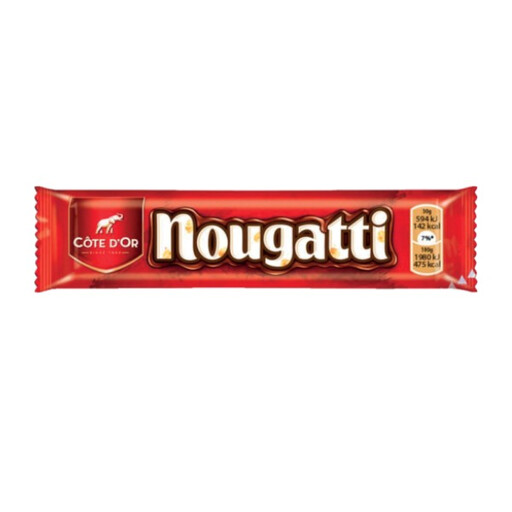 Image unavailable
This 30 g format may appeal if you want to take a sweet treat with you for a break. If you plan to use it as cycling fuel, check the carbohydrates per bar and try the texture during training. If you have an allergy, check the information on the packaging you receive, particularly for milk and hazelnuts.
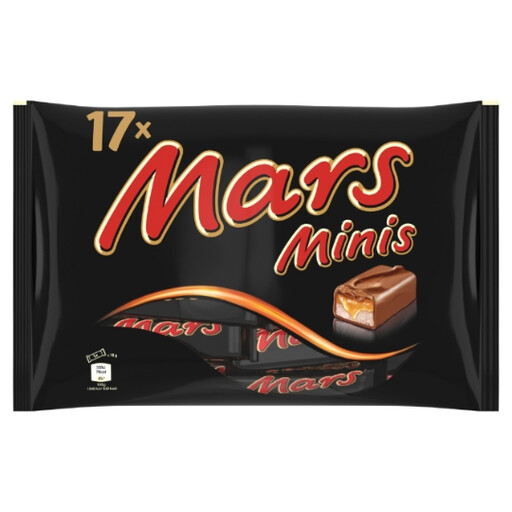 Image unavailable
These mini bars could make a handy treat or something to share when you’re not exercising. The bag weighs 333 g; if you want to count portions for cycling, check the weight and carbohydrate content of each mini bar, then try one during training. Also check the allergen information on the packaging you receive.
No. Santé publique France says that displaying the Nutri-Score is voluntary. It supplements the labelling information required under the EU INCO Regulation; its absence alone does not mean that a product is non-compliant.
Not without knowing the carbohydrates per serving and trying the product during training. The 2015 article in Nederlands Tijdschrift voor Geneeskunde cites 30 to 60 g of carbohydrates per hour for 1 to 2.5 hours of exercise; you can’t automatically convert this guideline into a number of pieces of nougat. A review published in Nutrients in 2023 recommends trying carbohydrate-rich foods before using them in competition.
Check the information for the exact product. Carrefour’s listing for the Chabert & Guillot assortment mentions almonds, pistachios and egg albumen, among other ingredients; its listing for Côte d'Or bars flags information relating to eggs, peanuts, wheat and other nuts. Read the packaging you receive, as ingredients and warnings can vary between products.
Yes, if you choose it as confectionery to give or share, taking the recipient’s tastes and any allergies into account. If it’s meant to be used on rides, choose a product with a clear carbohydrate content per serving that they can try during training.