
Livraison le jour même ou le lendemain

Qualité garantie

Débloquez vos offres de bienvenue: Livraison GRATUITE | Jusqu'à -80 % | 30 jours d'essai gratuits à JoyPlus
Téléchargez l'application
Choosing a notebook seems simple… until the cover warps, the ink bleeds through the pages, or the size won’t fit in your bag. Whether you’re a student, a professional, a writer, an artist or a journaling enthusiast, the right choice depends above all on how you’ll actually use it.
Here are the main pitfalls to avoid and the criteria to consider before buying a notebook or writing pad.
A floral, textured or art-inspired cover will naturally catch your eye. However, it tells you nothing about the durability of the binding or the quality of the paper. A hard cover will protect the pages better, while a soft-cover notebook is generally lighter and easier to carry.
So take the time to check the cover material, the type of binding and the presence of practical extras like an elastic closure, a bookmark or a pen loop.
Manufacturers sometimes list the number of sheets, sometimes the number of pages. A notebook advertised as having 96 sheets will therefore typically have 192 pages (written on both sides). It’s a difference worth keeping in mind when comparing a notebook, a school exercise book or a diary.
If you write often, also pay attention to the paper weight. A 100 gsm paper will generally be denser and more pleasant to write on than a very thin paper, although the type of pen you use is still a key factor.
A standard diary can leave many pages blank if you buy it partway through the year. An undated 18-month diary lets you start whenever you like, whether that’s to organise a semester, manage a professional project or set up a new bullet journal routine.
On the flip side, the lack of pre-printed dates requires a bit more discipline to fill in the months and weeks yourself.
XXL formats, available in some Moleskine collections, offer more room for sketches, mind maps or large projects. However, they are less easy to carry around.
A lined notebook makes continuous writing easier, as well as drafting reports and taking notes in class. Grid pages are better for tables, calculations and structured lists. For a sketchbook, it’s best to go for blank pages and a binding that opens completely flat.
Paper weight is a good indicator, but it alone doesn’t guarantee no show-through with all writing instruments. If you use a fountain pen or a felt-tip pen, also consider the nib size and the amount of ink deposited.
The models featured here include papers of 70, 80, 90 and 100 gsm. The Clairefontaine Koverbook uses 90 gsm Vélin Velouté paper, while some Moleskine models use 70 or 100 gsm ivory paper, depending on the reference.
A spiral binding often allows you to fold the pages back and write more easily on a flat surface. It’s practical for a class notebook or a notepad you use one-handed. A hard cover will protect the contents better in a bag and offer greater stability on a desk.
For everyday use, also check for an elastic closure, a bookmark and, for smaller formats, a pen loop.

Why this choice suits this profile: These four small A7 notebooks let you separate lists, classes, ideas and tasks without investing in one large notebook.
The compact size and pack of four keep bulk to a minimum and stop you paying for unnecessary features when you just need to jot down a few notes.
Grid paper, spiral binding with top opening, soft cover and four matching colours.
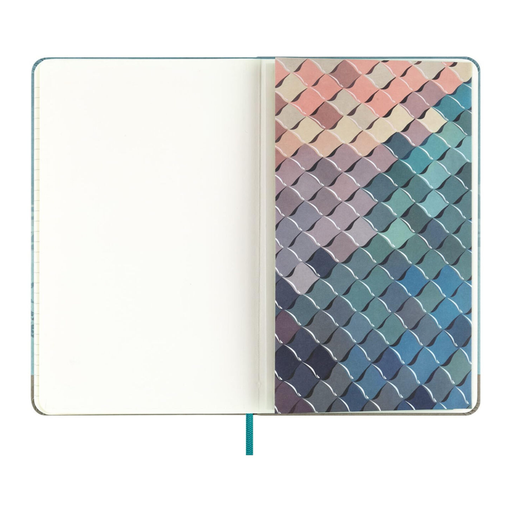
Why this choice suits this profile: This large A5 notebook combines a hard fabric cover inspired by Casa Batlló with well-thought-out details for writing or gifting.
The product page clearly states the 100 gsm paper weight, lay-flat binding, elastic closure and inner pocket.
100 gsm acid-free lined ivory paper, bookmark, expandable pocket and decorative fabric cover.
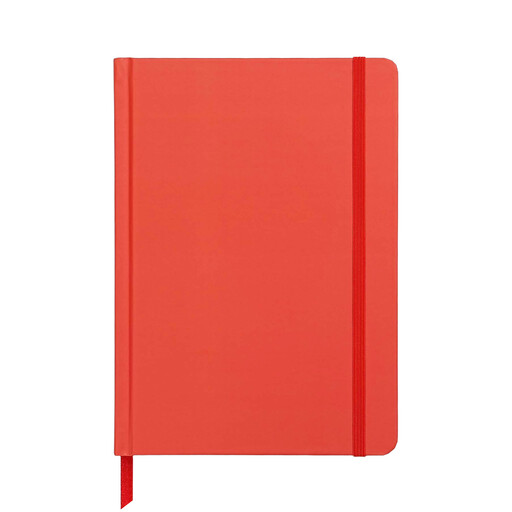
Why this choice suits this profile: Students, freelancers and professionals juggling multiple projects will find monthly and weekly views, plus dedicated note-taking space.
Its undated system means you won’t waste pages when a project starts outside the usual calendar.
224 pages, 100 gsm lined paper, hard cover, bookmark and elastic closure.
We’ve put together a complete, real-time updated selection of products that meet these exacting criteria as well as European safety standards.
A5 is the best size for most everyday uses. It offers enough space to write while still being easy to carry. A6 is better suited to short notes, lists and ideas jotted down throughout the day.
A lined notebook guides your writing and works well for reports, diaries and class notes. A sketchbook typically has blank pages, giving you more freedom for sketches, diagrams and compositions.
It all depends on how often you use it, where you store it and the quality of the binding. Keep it in a dry place, away from damp and direct sunlight. A hard cover, an elastic closure and careful handling of the binding will all help preserve the pages and the notebook’s structure.