
Livraison le jour même ou le lendemain

Qualité garantie

Débloquez vos offres de bienvenue: Livraison GRATUITE | Jusqu'à -80 % | 30 jours d'essai gratuits à JoyPlus
Téléchargez l'application
A notebook that does not fit in your bag, pages that come loose or a planner that is too rigid to fill in can quickly turn a practical purchase into wasted money. To make the right choice from the many notebooks and writing pads available, it is best to look beyond the cover and patterns.
Three pitfalls come up time and again:
The A5 format, measuring approximately 14.8 × 21 cm, is an excellent compromise for studying, office work and journaling. It provides enough writing space while remaining easy to carry. An A6 notebook, measuring around 10.5 × 14.8 cm, is better suited to lists, quickly jotted-down ideas and notes taken on public transport.
For homework, lessons and documents containing tables, a large-format notebook measuring around 24 × 32 cm provides a more generous writing area. The more compact 17 × 22 cm format slips easily into a school bag or ring binder.
Before ordering, check the external dimensions, especially if the notebook needs to fit inside a cover, rucksack or desk drawer.
The ruling should match the way you write:
A squared notebook is therefore not necessarily more versatile than a ruled notebook: it all depends on what you plan to write in it.
Paper weight indicates the thickness of the paper, but it is not enough to guarantee that ink will not show through with every type of pen. 80 g/m² paper is generally suitable for everyday writing. At 100 g/m², paper feels denser and may be better suited to liquid-ink pens, depending on the nib and the amount of ink applied.
A hard cover protects the pages better inside a bag. It is particularly suitable for an office notebook, a personal journal or a gift. A soft cover reduces weight and is easier to store.
A spiral notebook opens easily and lies flat, and can even be used with one hand. Sewn or stapled binding is more discreet and makes it easier to store the notebook in a stack of documents. For regular school use, a multipack of notebooks can also help avoid repeated purchases, provided you check the number of pages per notebook.
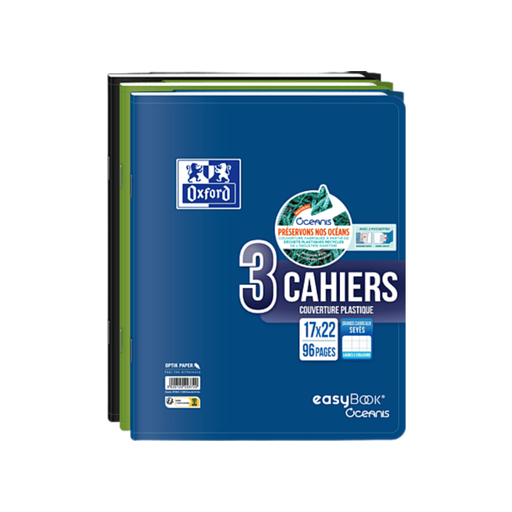
Why this choice suits this profile : This pack of three notebooks lets you separate subjects or keep a spare to hand. Their 17 × 22 cm format slips easily into a school bag.
The Seyès ruling and 96 pages per notebook are clearly stated, making it easier to compare this product with other school exercise books.
Three notebooks, French Seyès ruling, a 17 × 22 cm format and stapled binding.
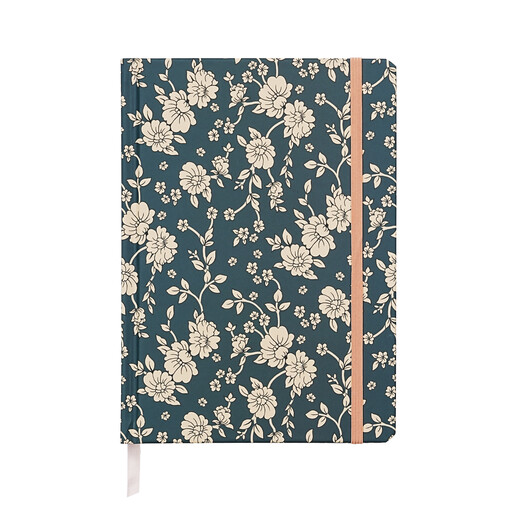
Why this choice suits this profile : Its hard cover, 100 g/m² cream paper, elastic closure and bookmark make it a refined companion for the office or journaling.
The product details specify the A5 format, number of sheets and paper weight. This allows you to judge the notebook by its features, rather than simply by the decorative appearance of its cover.
192 pages, 100 g/m² cream offset paper, hard cover, elastic closure and ribbon bookmark.
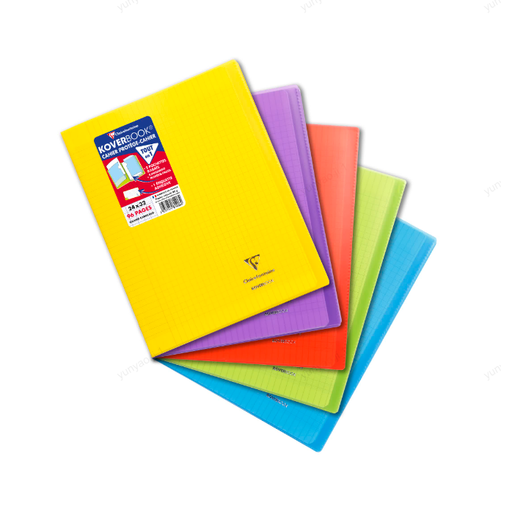
Why this choice suits this profile : The large 24 × 32 cm format and integrated pockets are ideal for lessons, folders and anyone who keeps a large number of documents.
The polypropylene cover and two pocket flaps help prevent wear and reduce the risk of loose sheets going missing.
Five notebooks, 96 pages per notebook, 90 g/m² paper, protective cover and personalisation labels.
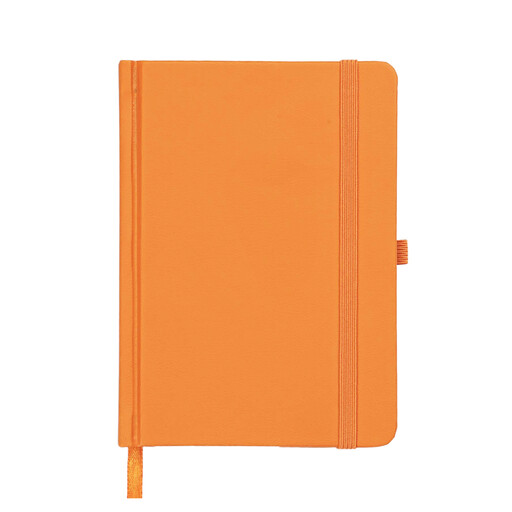
Why this choice suits this profile : Its compact format is ideal for lists, sketches, ideas and quick reminders. Its pen loop keeps your pen close at hand.
The dimensions and capacity are specified before purchase: 160 pages in A6 format, rather than a vague promise of long-lasting use.
100 g/m² ruled paper, PU cover, ribbon bookmark, elastic closure and pen loop.
We have put together a complete, real-time updated list of products that fully meet these strict selection criteria and European safety regulations.
A weekly or academic planner is suitable for keeping track of appointments, homework and deadlines. Its dated layout provides useful structure when you fill in its pages regularly.
An undated planner offers greater flexibility: you can start whenever you like and take a break without wasting pages. A5 models with monthly and weekly views are suitable for tracking goals, studying and professional organisation.
A notebook, on the other hand, is much more flexible. It can be used for minutes, ideas, meeting notes or personal journaling, without a predefined layout. For the office, choose a binding that opens easily and a format suited to your workspace.
The 17 × 22 cm format is well suited to school exercise books and is easy to carry. For lessons that require tables, diagrams or lengthy texts, the 24 × 32 cm format provides more room. An A5 notebook is a good compromise for students and professionals.
It all depends on how often you write, the number of pages and the quality of the binding. A 160-page notebook can last several months when used for occasional notes, while an exercise book used every day will fill up much more quickly. Check the number of sheets rather than relying solely on the marketing statement about its capacity.
If you use a liquid-ink pen, choose 90 to 100 g/m² paper and check the manufacturer's specifications. The result varies depending on the nib size, the pressure applied and the drying time. With felt-tip pens or markers, place a protective sheet between the pages, even in a notebook made with thick paper.