
Livraison le jour même ou le lendemain

Qualité garantie

Débloquez vos offres de bienvenue: Livraison GRATUITE | Jusqu'à -80 % | 30 jours d'essai gratuits à JoyPlus
Téléchargez l'application
Choosing the right notebook or note pad seems simple… until the cover becomes misshapen, the pages come loose or the ink bleeds through the paper. Whether you need one for school, university, the office, revision or personal journalling, a few key criteria can help you avoid disappointing purchases.
A notebook with a large number of pages is not necessarily the most practical choice. First check whether it refers to pages or sheets: one sheet has two sides. Paper weight also matters. A very thick notebook made from thin paper may be less pleasant to use than a more compact model with 90 or 100 g/m² paper.
An attractive cover does not necessarily guarantee good durability. If the notebook will be carried regularly between home, school and the office, a hard cover, polypropylene notebook cover or laminated finish can help minimise scratches and creases. By contrast, a soft cover is sufficient for occasional use or for a notebook that you replace frequently.
Spiral binding generally allows the notebook to open completely flat, but it can take up more space in a bag and catch on certain objects. A stapled or glued notebook is often more compact. For a personal journal or a notebook used every day, an elastic closure can also prevent the pages from opening while it is being carried.
The A5 notebook, measuring approximately 14.8 × 21 cm, slips easily into a bag and is suitable for everyday notes, lists, personal journalling or meetings. The trade-off is that its writing surface is more limited for diagrams and detailed lessons.
A4 is better suited to structured note-taking, professional files and revision notes. The 24 × 32 cm large-format notebook provides more space than an A4, which can be useful for lessons, exercises, plans and documents you want to keep.
Lined paper is suitable for everyday writing, including letters, reports and journals. A large-square notebook, often associated with Séyès ruling in France, makes schoolwork easier and helps maintain consistent alignment.
Small squares are better suited to tables, calculations, diagrams and technical note-taking. For revision, lined revision cards or pages arranged into sections can help you organise definitions and key concepts. However, they are no substitute for a suitable study method.
Paper weight refers to the weight of the paper per square metre. 90 g/m² paper offers a good balance between writing comfort and weight. At 100 g/m², thicker paper feels denser and may reduce the visibility of ink on the reverse side, depending on the pen used. However, heavily inked felt-tip pens can still bleed through some types of paper.
The Clairefontaine name refers here to a range of papers whose product details specify, among other things, the Vélin Velouté type, paper weight and place of manufacture. It is better to check the specifications for each product rather than assume that the same properties apply to the entire brand.
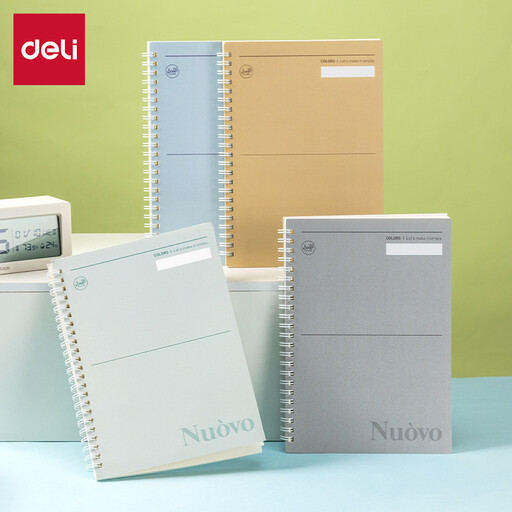
Why this choice suits this profile : This pack of four A5 notebooks lets you separate subjects, lists or projects without having to buy several notebooks individually.
The size and quantity are clearly stated, making it easier to manage a school or professional stationery budget.
A5 size, spiral binding, 60 sheets per notebook and a pack of four.
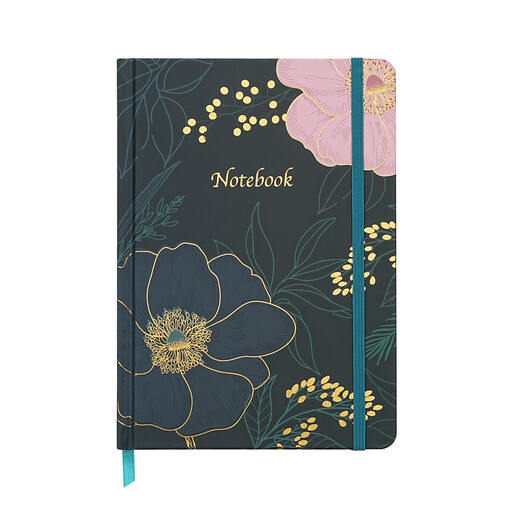
Why this choice suits this profile : This notebook combines a decorated hard cover, bookmark and elastic closure for a particularly polished personal or professional experience.
The product details specify the number of sheets, 100 g/m² paper weight and included accessories, going beyond simple aesthetics.
A5 size, 96 sheets, cream 100 g/m² offset paper, bookmark and elastic band.
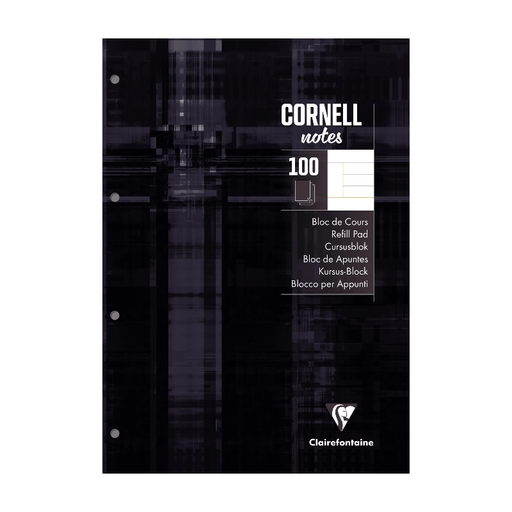
Why this choice suits this profile : Its A4 size and Cornell layout are designed for students, teachers and professionals who need to organise a large amount of information.
Micro-perforated tear-out pages and four punched holes make filing easier, instead of letting notes build up without any organisation.
200 pages, Clairefontaine Vélin Velouté 90 g/m² paper, 8 mm ruling and a rigid board back.
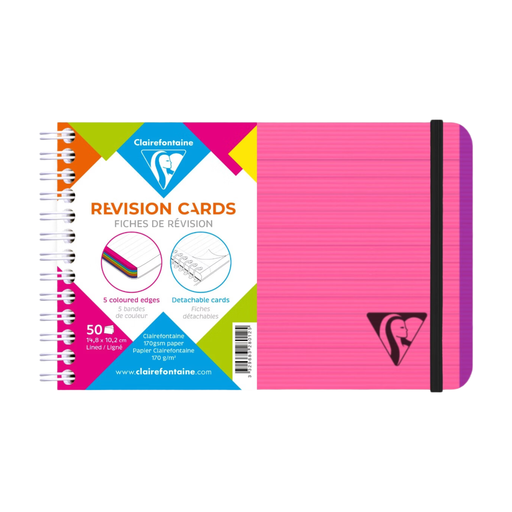
Why this choice suits this profile : Compact and practical, this notebook is ideal for revising definitions, dates, formulae and questions that need to be reviewed quickly.
The five coloured bands divide the notebook into distinct sections, helping you avoid mixing up subjects or topics.
50 lined cards, Clairefontaine 170 g/m² paper, opens to 180 degrees and compact 15.2 × 10.2 cm size.
We have brought together a complete, real-time updated selection of products that meet these demanding criteria and European safety standards.
To extend the life of your notebook, store it away from moisture and avoid filling the pockets of a transparent cover with documents that are too thick. When carrying it in a bag, also take care not to catch the spiral binding on anything. If the notebook has an elastic band, close it without pulling too tightly, to prevent the band from becoming stretched.
A notebook intended for school or the office can be labelled with the name, subject or project. This is particularly useful when several notebooks of the same size are being used at the same time.
A5 is suitable for short lecture notes, meetings and travelling. For detailed lessons, diagrams or documents to be filed, an A4 or 24 × 32 cm large-format notebook offers more room. You should also consider the size of your bag and your filing requirements.
Paper weighing 90 to 100 g/m² is a comfortable choice for a ballpoint pen, rollerball or pencil. With a felt-tip pen or very runny ink, no paper thickness can guarantee complete freedom from show-through. Check the manufacturer’s recommendations and place a sheet of paper between the pages if necessary.
It depends entirely on how it is handled, carried and used. A metal spiral or twin-wire binding makes it easy to open the notebook flat, while sewn, stapled or glued binding is often more compact. For intensive use, pay particular attention to the strength of the cover, the quality of the binding and the solutions provided to protect the pages.