
Livraison le jour même ou le lendemain

Qualité garantie

Débloquez vos offres de bienvenue: Livraison GRATUITE | Jusqu'à -80 % | 30 jours d'essai gratuits à JoyPlus
Téléchargez l'application
A notebook or sketchbook can help you organise your studies, prepare for a meeting, keep a personal journal or create sketches. But choosing one based on looks or price alone can quickly lead to disappointment. Ink that bleeds through, an awkward binding, a format that’s too bulky or a flimsy cover: several details really matter in everyday use.
Here are the points to consider before you buy, along with a selection of models for different needs.
Product listings sometimes give the number of pages, and sometimes the number of sheets. A notebook with 96 sheets usually contains 192 pages, printed on both sides, whereas a 96-page model has only around 48 sheets. This makes a real difference to the notebook’s capacity and thickness.
A high paper weight isn’t essential for pencil, but it matters when you use a fountain pen, felt-tip pen or light washes. For everyday note-taking, paper weighing 80 to 100 g/m² is usually suitable. For a versatile sketchbook, it’s better to choose 140 g/m² paper, which is more suitable for dry techniques and light watercolour.
However, claims such as ‘smudge-resistant’ or ‘low show-through’ should be taken with a pinch of salt: the result also depends on the ink, how much pressure you apply and how long it takes to dry.
A decorative cover can turn a notebook into a gift notebook, but it doesn’t guarantee that it will open comfortably. For taking notes in class or meetings, check the type of binding, whether the notebook opens flat and whether it has an elastic closure or bookmark.
The A5 notebook, measuring around 14.8 × 21 cm, is a great compromise for your bag, desk and journalling. A6 is easier to carry, but leaves less room for diagrams and longer pieces of writing. A3, on the other hand, is better suited to drawing and compositions that need a larger working area.
For school, the 17 × 22 cm format is still common in France, particularly for a Seyès-ruled school exercise book. The larger 24 × 32 cm format is especially practical for homework, lessons involving diagrams or filing sheets.
If you switch between writing and drawing, a blank or squared notebook generally gives you more freedom than a ruled one.
A spiral-bound notebook opens wide and can lie flat. It’s handy for writing with one hand or making full use of the page width. On the downside, the spiral can take up more room in your bag and catch on other items.
A hardback cover offers better protection for your pages when you’re out and about, and can act as a writing surface when there’s no table available. A soft cover is lighter and easier to store. Finally, a notebook with an elastic closure helps prevent it opening accidentally and can hold a few loose sheets in place, though it’s no substitute for a proper pocket.
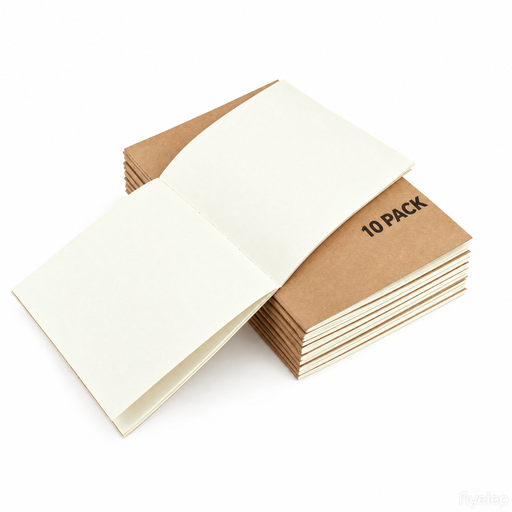
Why it suits this profile : This set of blank A5 notebooks is ideal for students, families and anyone who wants separate notebooks for notes, lists, projects and sketches without buying several different types.
Blank pages mean you’re not paying for ruling that doesn’t suit your needs. The binding lets the notebook lie flat, making it easier to write or draw right up to the edges.
Set of 10 notebooks, A5 format, 30 sheets per notebook, 80 g/m² cream paper and a recyclable kraft cover, according to the product listing.
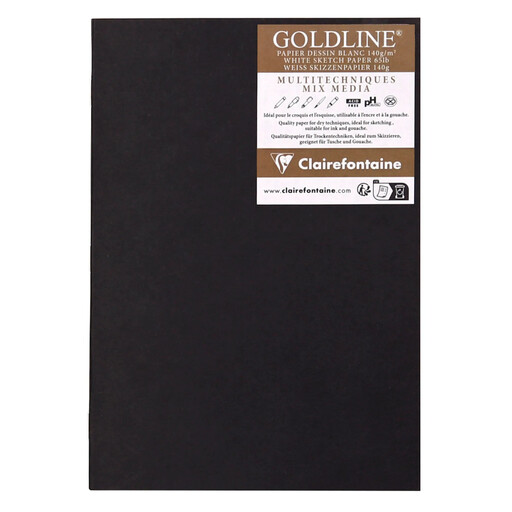
Why it suits this profile : This A3 sketchbook is designed for artists and hobbyists looking for a large working area for studies, compositions and creative projects.
The 140 g/m² paper weight is clearly stated, and the sewn binding makes this a better choice for art techniques than a basic writing notebook.
A3 format, 20 white sheets, 140 g/m² multi-technique paper, soft black cover and easy opening thanks to the sewn binding.
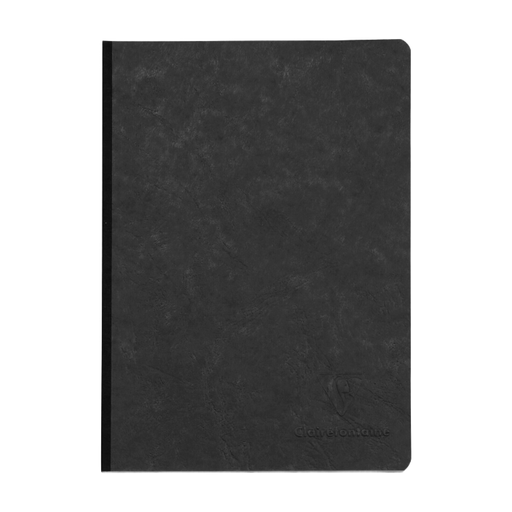
Why it suits this profile : With its A5 format and 192 pages, this notebook is ideal for professionals, writers and anyone who writes regularly, whether at a desk or on the go.
The micro-perforated ruled pages tear out neatly, helping you avoid building up a pile of unnecessary notes and making it easier to file them away.
90 g/m² Clairefontaine Velin Velouté paper, 192 pages, soft cover with a leather-grain effect and a textile spine that lets the notebook lie flat.
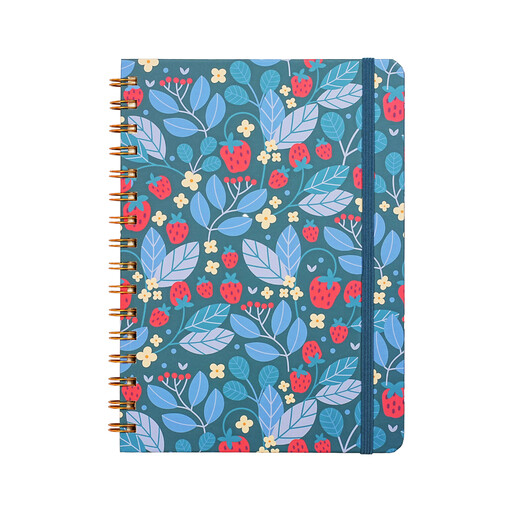
Why it suits this profile : This notebook for work and journalling combines classic ruling and a flat-opening design with several handy details for studying or working.
The double spiral lets you fold the pages back, while the elastic keeps the notebook closed in your bag. Its features are clearly specified, so you’re not relying on looks alone.
A5 format, 96 ruled sheets, 100 g/m² cream offset paper, hardback cover and elastic closure.
We’ve put together a comprehensive, real-time updated list of products that meet these strict selection criteria and comply with European safety regulations.
An A5 notebook with ruled pages and a paper weight of 90 to 100 g/m² suits most everyday needs. A hardback cover offers better protection, while spiral binding makes it easier to write with the notebook open flat.
For pencil, charcoal or pastels, blank 80 g/m² paper may be suitable, depending on how much pressure you apply and the texture you’re looking for. To combine dry techniques with light watercolour, choose multi-technique paper of at least 140 g/m². Very wet inks can still make the paper buckle, so test a page before starting your project.
How long you use it for depends on how often you write, how it’s stored and how sturdy the binding is. Keep it away from damp, heat and direct sunlight. For important notes, tear-out pages or built-in pockets make it easier to file and store documents separately.