
Livraison le jour même ou le lendemain

Qualité garantie

Débloquez vos offres de bienvenue: Livraison GRATUITE | Jusqu'à -80 % | 30 jours d'essai gratuits à JoyPlus
Téléchargez l'application
Between an A6 notebook you can slip into a pocket, a French-ruled school exercise book and an undated diary, the differences go far beyond the colour of the cover. Ruling, paper weight, binding, format and quantity all have a direct impact on writing comfort and how long the product lasts.
Yet some purchases disappoint for reasons that are easy to anticipate: paper that’s too thin, letting ink show through on the reverse, a bulky spiral binding, or a format that doesn’t fit properly in your bag. This selection of notebooks and exercise books helps you compare the criteria that really matter before you place your order.
A product advertised as having “160 pages” may actually contain 80 sheets that can be written on both sides. To compare two notebooks, always check both pieces of information. The number of sheets gives you a more concrete idea of the notebook’s actual capacity.
70 gsm paper is generally fine for a ballpoint pen or pencil. A weight of 90 to 100 gsm offers more substance for heavy-handed writing, fine-tip felt pens or writing on both sides of the page. However, paper weight isn’t everything – the texture of the paper and the ruling also matter.
A spiral-bound notebook opens flat easily, but its binding can take up more space in your bag and snag on other stationery. A hard cover protects the pages better, but adds extra weight. The best compromise therefore depends on your everyday use.
A lined exercise book makes note-taking and writing easier. The French-ruled (Seyès) exercise book, with its distinctive small squares and line spacing, remains particularly well suited to learning to write and for school exercises in France. Small squares are practical for tables, calculations and structured plans. For drawing, it’s best to go for blank pages to give your creativity free rein.
Look for a precise description of the paper: weight, colour, finish and any certifications. Clairefontaine paper features in several products with clearly stated characteristics, such as Vélin Velouté 90 gsm paper or 80 gsm recycled paper.
A hard cover protects the pages in your bag and sometimes allows you to write without a support. A soft cover is lighter and easier to carry. Sewn or glued binding gives a compact notebook, while spiral binding allows it to open flat and makes turning pages easy.
Finally, buying an exercise book in a multipack can bring the unit price down, provided you really do have several subjects, projects or users to equip.
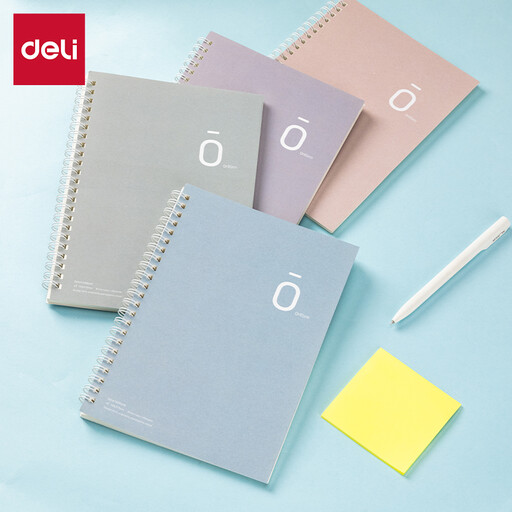
Why this choice suits this profile: The A5 format and the pack of four notebooks let you separate subjects, projects or personal notes without having to buy individual ones each time.
The multipack reduces the risk of running out of notebooks quickly and avoids paying for a fancy cover for everyday school or office use.
A5 format, spiral binding and 60 sheets per notebook, according to the product description.
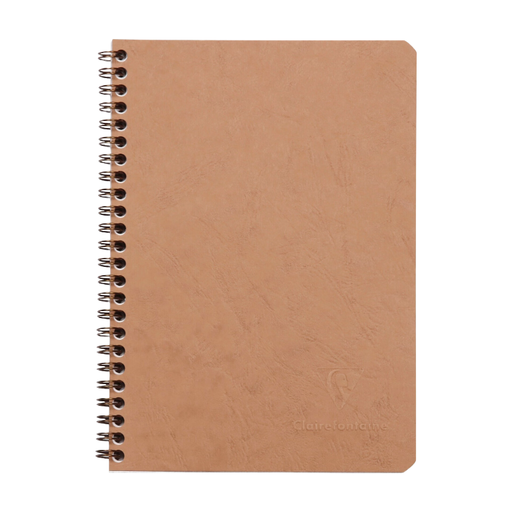
Why this choice suits this profile: This A5 notebook combines a textured cardboard cover, lay-flat opening and Clairefontaine 90 gsm paper. A set well suited to professional notes, journaling and creative projects.
The product description details the format, small-square ruling, 90 gsm paper and 180° opening, rather than relying solely on the notebook’s appearance.
100 pages, Vélin Velouté 90 gsm paper, made in France and PEFC certified as stated.
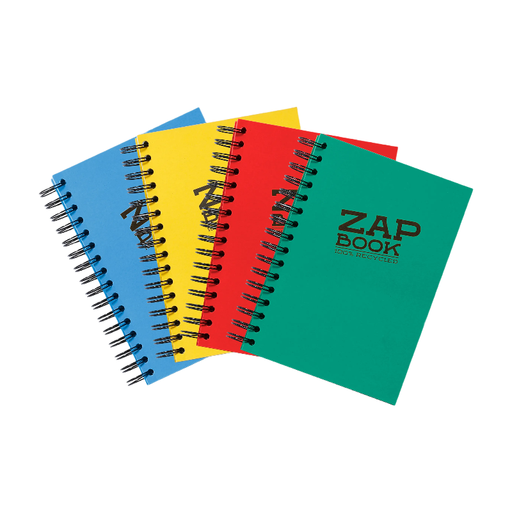
Why this choice suits this profile: Its large format is ideal for artists, architects, students and remote workers who need space for diagrams, drafts and long-form notes.
The blank pages mean you’re not paying for a ruling that wouldn’t suit drawing or free layouts. The spiral binding lets you work comfortably with the notebook lying flat.
A4 format, 160 sheets, 80 gsm recycled paper, acid-free and pH neutral according to the product description.
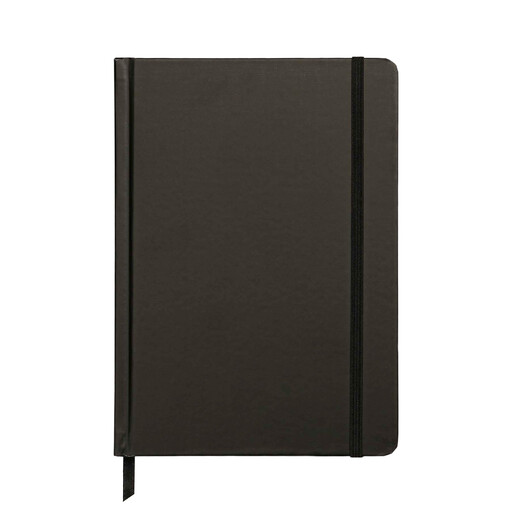
Why this choice suits this profile: This undated diary is aimed at students, freelancers and remote workers who want to start organising themselves without waiting for a specific date.
The undated monthly and weekly pages prevent blank pages being left when your habits or work periods change.
A5 format, hard cover, 112 sheets of 100 gsm offset paper and monthly, weekly and notes sections.
We’ve put together a comprehensive, real-time updated selection of products that meet these exacting criteria, while complying with European safety regulations.
The A5 format offers a good balance between writing surface and portability. For very short notes, an A6 notebook is more discreet. For lectures, drawings and tables, a large-format exercise book gives you more space.
A notebook is generally designed to be carried around and kept as a personal item, with a more elaborate cover or a few extras. A school exercise book focuses more on ruling, capacity and organising by subject. The French-ruled (Seyès) exercise book in particular matches the writing habits used in French schools.
It all depends on how often you use it, the storage conditions and how sturdy the binding is. Keep your exercise books away from damp and avoid forcing a spiral binding that’s too full. A hard cover, paper suited to your pen and opening the book without straining it will help the pages stay in good condition for longer.