
Livraison le jour même ou le lendemain

Qualité garantie

Débloquez vos offres de bienvenue: Livraison GRATUITE | Jusqu'à -80 % | 30 jours d'essai gratuits à JoyPlus
Téléchargez l'application
A notebook fits just as easily into a school bag as it does on a desk, in a meeting room or beside an armchair when you want to jot down a few lines. Yet choosing one based solely on its cover or page count can lead to unpleasant surprises: ink showing through the paper, an impractical binding or a format that is difficult to carry.
This selection from the Joybuy Product Recommendation Officer is based on concrete, verifiable features: dimensions, paper weight, binding type, ruling and accessories. That makes it easier to compare models without being swayed by marketing claims alone.
A notebook advertised as having “160 pages” may actually contain 80 sheets that can be written on both sides. This distinction matters if you write extensively or want to keep your notes for the long term. Always check whether the product listing refers to pages or sheets.
Paper weight is also worth checking. Paper measuring 70 to 80 g/m² is generally suitable for ballpoint pens, pencils and everyday note-taking. For more liquid ink, felt-tip pens or fountain pens, it is better to look for 90 to 100 g/m². This improves the writing experience, although it does not guarantee that no ink will show through.
An A4 notebook provides plenty of space for diagrams, lessons and drawings, but it naturally takes up more room in a bag. The A5 notebook, measuring approximately 14.8 × 21 cm, remains the most versatile format for school, work and personal journaling. The A6 notebook, at around 10.5 × 14.8 cm, is easy to carry in a pocket or small bag.
A compact format is not necessarily the best choice for writing several pages. Conversely, a large notebook may end up staying at home if its weight makes daily travel inconvenient.
A hardcover offers better protection for the pages in a bag, but it also makes the notebook heavier. A softcover is lighter, folds easily and is simple to store. Spiral binding generally allows the notebook to lie flat and may even let you fold the pages behind it.
Accessories are worth considering too: an elastic closure, bookmark, inner pocket or perforated pages can prove extremely useful. They do not, however, replace a binding suited to your needs. For children under 3, small elements such as ribbons and elastic bands should be kept out of reach.
The binding also has a significant impact on the experience. A spiral notebook opens flat and can be folded back on itself. Glued or sewn binding offers a more traditional presentation. Microperforated pages are convenient for sharing or archiving individual sheets, but they can sometimes reduce the usable writing area near the margin.
Blank paper is ideal for a sketchbook, freehand drawings and diagrams. A lined notebook makes writing and taking minutes easier. A grid notebook is especially useful for tables, diagrams, calculations and plans.
Paper weight provides an initial indication, but it is not enough to assess writing quality. Texture, colour and compatibility with your pen also matter. Some models use Clairefontaine Velin Velouté paper, valued for its smooth surface. Environmental claims should also be distinguished: recycled paper, PEFC certification and FSC sourcing do not represent the same thing.
For professional use or a journal, a hardcover with an elastic closure provides effective protection for the pages. An inner pocket keeps receipts, loose sheets and cards close at hand. If you carry your notebook every day, choose a binding that can withstand twisting and store it away from moisture.
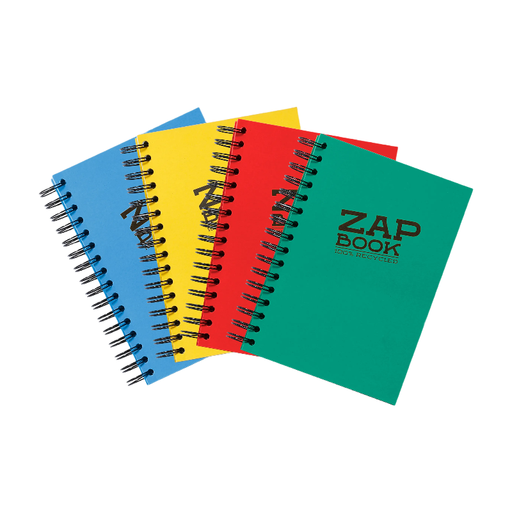
Why this choice suits this profile : its A6 format is ideal for lists, quick notes and ideas jotted down on public transport or between classes.
The listing clearly specifies 160 sheets of blank 80 g/m² paper, rather than simply quoting a page count. The spiral binding allows the notebook to open flat.
100 % recycled, acid-free, pH-neutral paper; approximately 10.5 × 14.8 cm.
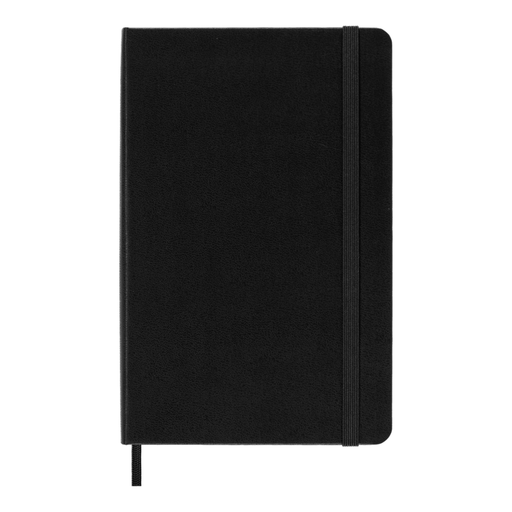
Why this choice suits this profile : it is designed for professionals, writers and anyone who values understated presentation and thoughtfully designed accessories.
The listing specifies a paper weight of 70 g/m² and ivory lined paper, so you can choose your pen with a clear idea of what to expect.
Hardcover, elastic closure, bookmark, expandable inner pocket and 180° opening.
Why this choice suits this profile : its generous surface area is ideal for students, illustrators and professionals who alternate between writing, plans and sketches.
The A4 format is listed with its approximate dimensions, while the spiral along the long edge makes it easier to write with the notebook flat.
160 blank sheets, 80 g/m² paper that is 100 % recycled, acid-free and pH-neutral.
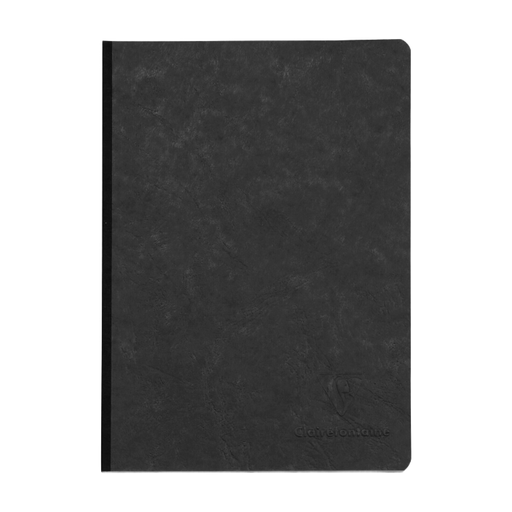
Why this choice suits this profile : the 5 × 5 grid helps structure projects, tables, technical sketches and travel notes.
The listing specifies the ruling, A5 format and total of 192 pages — three useful details for comparing models.
Clairefontaine Velin Velouté 90 g/m² paper, cloth spine and leather-grain finish cover.
We have brought together an updated selection of exercise books, notebooks and notepads suited to different uses and formats.
The A5 format is generally easy to carry while offering enough room for lessons, meetings and lists. For large diagrams or assignments, A4 is more comfortable. An A6 notebook is better suited to reminders and brief notes.
Paper weighing 90 to 100 g/m² is often more comfortable with liquid ink than 70 g/m² paper. The result also depends on the nib and ink you use. Test it on one page before filling the entire notebook.
Store it in a dry place, avoid leaving it in direct sunlight or in a damp bag, and do not overfill the inner pocket. For intensive daily use, a hardcover or spiral binding that allows the notebook to open flat will make handling easier and help prevent creasing.