
Livraison le jour même ou le lendemain

Qualité garantie

Débloquez vos offres de bienvenue: Livraison GRATUITE | Jusqu'à -80 % | 30 jours d'essai gratuits à JoyPlus
Téléchargez l'application
A notebook can be used for taking notes in class, tracking a project, organising your week or keeping sketches. Yet choosing notebooks and notepads too often comes down to colour or price. In practice, some turn out to be impractical: paper that’s too thin, poorly suited ruling, a binding that gets in the way of writing, or a format that’s awkward to carry.
To avoid unpleasant surprises, it’s worth comparing a few concrete criteria before you order. Here are the points to check, along with a selection suited to different types of users in the UK.
A product advertised as “120 pages” may contain 60 sheets printed on both sides. This difference matters when you’re assessing the notebook’s actual capacity. So remember to check both details when they’re available.
A lined notebook works well for text and general note-taking. For tables, calculations or diagrams, a squared notepad will usually be more practical. At school, the French Seyès ruled exercise book remains ideal for handwriting exercises and classroom habits in France.
A blank page offers more freedom for drawing, but provides fewer guides for writing quickly. The ruling should therefore match your main use, rather than the look of the cover.
A spiral binding generally lets you turn pages easily and lay the notebook flat. On the downside, the spiral can take up space in a bag or catch on things. A stapled binding is slimmer, but less suited to very thick notebooks.
The card cover also deserves your attention if you often write without a desk, on the go or outdoors. A soft cover stays lightweight, while a hardcover notebook protects the pages better inside a bag.
An A5 diary offers enough space to organise your weeks while remaining easy to carry. For irregular use, an undated 18-month diary avoids wasting pages if you start partway through the year or have quieter periods.
Expressed in g/m², the paper weight indicates its substance and gives a good idea of its quality. Paper of 70 to 80 g/m² generally works well with pencil and ballpoint pen. At 100 g/m², the paper feels nicer for regular writing or using light felt-tips, though it doesn’t guarantee no show-through with all inks.
For an A4 sketchbook, check above all whether the sheets are white, their weight, and their stated compatibility with the tools you plan to use. Paper intended for sketching won’t necessarily meet the demands of watercolour or markers.
For a meeting or a class, the number of pages should match the intended period of use. Micro-perforated sheets can be torn out cleanly and then filed in a ring binder. An inner pocket, an elastic closure or a bookmark can also be very handy for quickly finding a section.
If you need to separate several subjects or projects, a set of notebooks and notepads can simplify organisation. Four A5 notebooks, for example, can be assigned to different courses, clients or task categories.
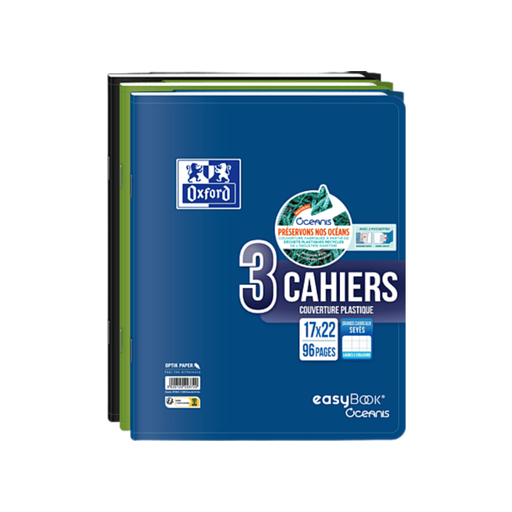
Why this choice suits this profile: This pack of three exercise books in the 17 × 22 cm format is ideal for schoolchildren and students who want to split their subjects without buying multiple items.
The format, Seyès ruling and number of pages per exercise book are clearly stated, making it easy to compare with standard school supplies.
Three exercise books of 96 pages each, with Seyès ruling and stapled binding.
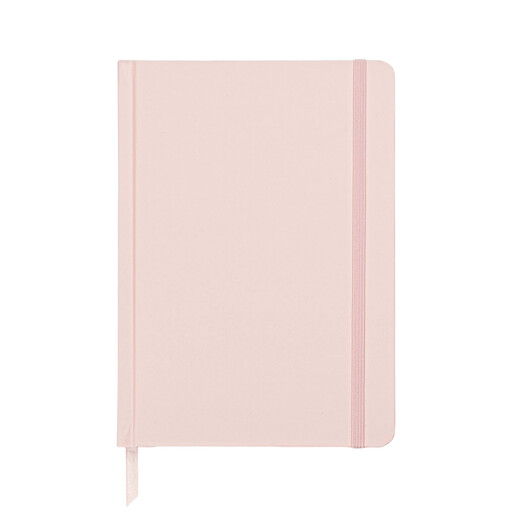
Why this choice suits this profile: This A5 planner is designed for those who want to centralise their goals, appointments and notes in one customisable format.
The undated format prevents unused periods. Monthly and weekly views are separated to better distinguish planning from notes.
Hardcover, 112 sheets of 100 g/m² offset paper, elastic closure and ribbon bookmark.
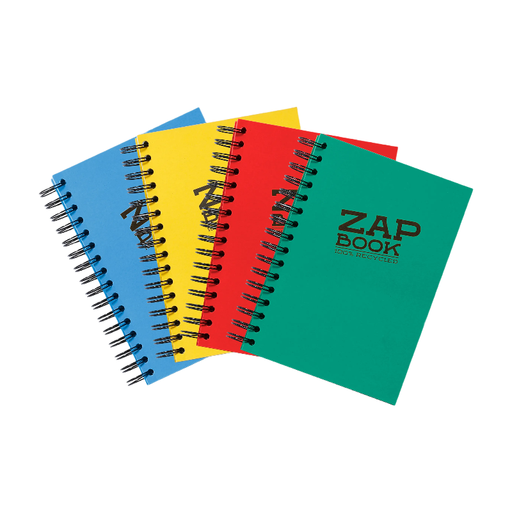
Why this choice suits this profile: This A4 notebook is aimed at creatives, sketchers and anyone who needs a large continuous surface to work on.
The A4 format is clearly stated and the spiral binding allows it to lie flat, unlike notebooks whose cover hinders access to the centre pages.
160 blank sheets of 80 g/m² recycled paper, acid-free and pH neutral.
We’ve put together a comprehensive, real-time updated list of products that meet these demanding selection criteria and European safety regulations.
The A5 format offers a good balance between writing surface and portability. For lessons that require large diagrams, plans or drawing, an A4 provides more space. The 17 × 22 cm format remains very common for school exercise books.
Lifespan depends mainly on how the notebook is handled and the paper weight. A spiral binding makes it easy to open flat and flip through, while a stapled binding is slimmer and often easier to store. Check the sturdiness of the covers and avoid overfilling the pages.
The price varies according to the format, number of sheets, cover and included accessories. For school or professional needs, a pack can reduce the unit cost. With a diary, compare above all the number of genuinely useful pages, the presence of note sections, and whether it’s dated or undated.