
Livraison le jour même ou le lendemain

Qualité garantie

Débloquez vos offres de bienvenue: Livraison GRATUITE | Jusqu'à -80 % | 30 jours d'essai gratuits à JoyPlus
Téléchargez l'application
Whether for back-to-school, office organisation, or a simple creative impulse, choosing a notebook or notepad can seem trivial. Yet, behind an eye-catching cover often lie details that turn a good deal into a disappointment. Paper that bleeds ink, a binding that falls apart after a few weeks... these setbacks are easy to avoid. This guide breaks down the essential criteria for finding the ideal writing companion, without falling for marketing traps.
Before you choose, it's best to know the most common pitfalls that can ruin your writing or drawing experience.
To make an informed choice, focus on these three characteristics. They determine 90% of your satisfaction.
Paper weight, or grammage, is the weight of a sheet of paper for a surface area of one square metre. Here are a few benchmarks to guide you:
The ruling (the type of printed lines) should match your needs.
The way the pages are held together is crucial for usability and durability.
Here are some options that meet specific needs, taking into account quality and practicality.
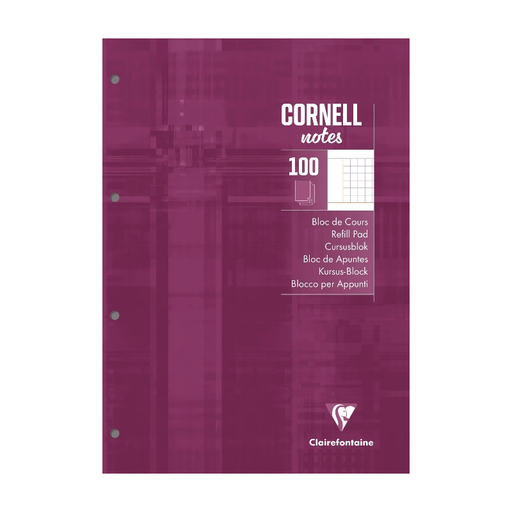
Why this choice: The perfect companion for students who want to optimise their note-taking and revision. The A4 format, detachable pages, and integrated Cornell method make it a formidable organisational tool.
Its 90 gsm Clairefontaine Vélin Velouté paper ensures perfect opacity, preventing ink bleed-through. The ultra-rigid cardboard back and perfect-bound spine guarantee excellent durability, even with heavy use.
Integrated Cornell note-taking system for better memorisation. Perforated, detachable sheets (4-hole) for simplified filing.
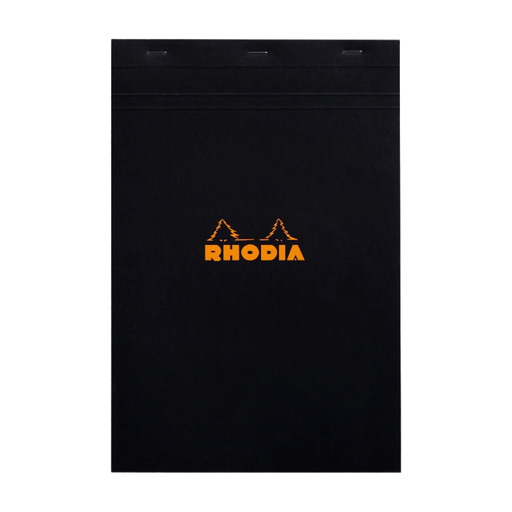
Why this choice: The quintessential minimalist and functional tool for taking notes in meetings or on the go. Its large format and rigid back allow for comfortable writing, even without a surface.
Its rigid cardboard back makes it stable and practical in all circumstances, a far cry from a flimsy, unusable gadget. The vellum 80 gsm Clairefontaine paper is a reliable choice that ensures a perfect glide and ideal opacity for office use.
Rigid back for writing anywhere. Micro-perforated sheets for clean and neat tearing. Understated yet structuring violet 5x5 graph ruling.
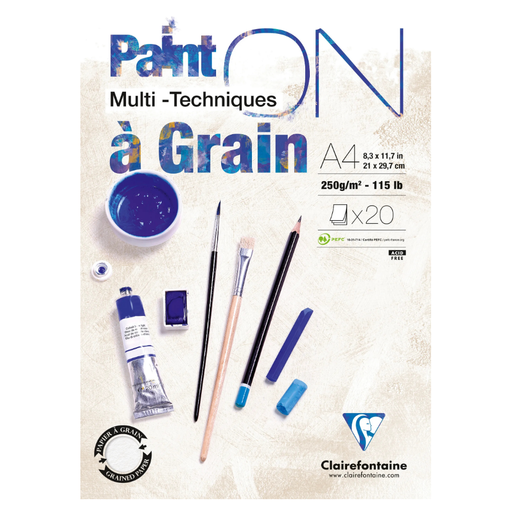
Why this choice: The multi-media paper designed for creatives who love to experiment. It is suitable for both dry media (pencil, marker) and wet media (ink, gouache, acrylic).
It solves the paper weight dilemma by offering a thick 250 gsm paper specifically designed for artistic use. It presents itself not as a simple notepad, but as a true creative medium.
Ultra-versatile multi-media paper. Dual-grain surface (one textured side, one finer side) for varied effects. Good absorption capacity and is forgiving of corrections.
If these models don't check all your boxes, or if you're simply curious to explore other formats, we've compiled a broader selection.
1. What is the difference between Seyès ruling and a 5x5 graph ruling?Seyès ruling is a specific feature of the French school system, designed for learning handwriting. It consists of large 8x8?mm squares, with intermediate horizontal lines every 2?mm to guide the height of the letters. The 5x5 graph (5x5?mm) ruling is more versatile. It is popular in higher education and the professional world for note-taking, diagrams, and tables.
2. Is 90 gsm paper really necessary for everyday use? Not necessarily. For quick notes with a pencil or ballpoint pen, an 80?gsm paper is more than sufficient and lighter. However, if you use a fountain pen, a liquid ink rollerball, or fine-tip markers, the comfort of a 90 gsm paper is unparalleled: the ink doesn't feather or bleed through the page, and the pen glides much more smoothly. It's a true choice for comfort.
3. How do I choose a sketchbook for watercolour and wet media? The number one criterion is a high paper weight: aim for a minimum of 250?gsm, and ideally 300?gsm or more. This prevents the paper from warping when it comes into contact with water—every artist's nightmare. Also, look for terms like "100% cellulose" or, for higher quality, "100% cotton." The term "cold press" indicates a texture that grips pigments well. The CLAIREFONTAINE Aquapad block is an excellent entry point for beginners.