
Livraison le jour même ou le lendemain

Qualité garantie

Débloquez vos offres de bienvenue: Livraison GRATUITE | Jusqu'à -80 % | 30 jours d'essai gratuits à JoyPlus
Téléchargez l'application
A notebook or planner can be your companion in class, at meetings, on the train or during a personal reflection session. But a pretty design doesn't guarantee a pleasant daily experience. Beneath an attractive cover, you might find an impractical size, paper that's too thin, or a layout that's hard to stick with over time.
Before you place your order, three common mistakes keep cropping up:
The A6 notebook, measuring roughly 10.5 × 14.8 cm, slips easily into a small bag or a large enough pocket. It's ideal for lists, quick notes, a personal diary and ideas scribbled during a journey. However, the lines and boxes offer less room to work with.
At around 14.8 × 21 cm, the A5 notebook gives you more space to organise your week, detail a project or track your goals. It's particularly well suited to students, professionals and anyone who wants to combine several uses in one notebook. If you plan to carry it every day, do check its weight and thickness.
100 g/m² paper generally feels more substantial than very lightweight paper. But paper weight isn't everything: also look at the shade and finish. An off-white paper is often gentler on the eyes and can be pleasant to write on day after day.
In a lined notebook, check the spacing between the lines. Ruling that's too tight can be awkward for larger handwriting, while generous spacing reduces the number of usable pages. For a weekly or daily planner, pay particular attention to the space given to appointments, tasks and free notes.
A hard cover protects the pages better inside a bag. Faux leather offers a soft, pleasant feel, but doesn't cope well with humidity and heat. The binding should also allow the notebook to open wide enough for comfortable writing, without you having to hold the pages down all the time.
A notebook with an elastic closure stays securely shut during travel. A notebook with a bookmark lets you find your page quickly, while a notebook with a pen loop saves you hunting for a separate pen. These details can make all the difference in daily use, even if they sometimes add a bit of thickness or include small parts that children could access.
In a family setting, keep the notebook out of reach of children under 3 if it has an elastic band, ribbon, stickers or other small items. For cleaning, a soft, dry or slightly damp cloth is usually enough for the cover. Avoid harsh cleaning products.
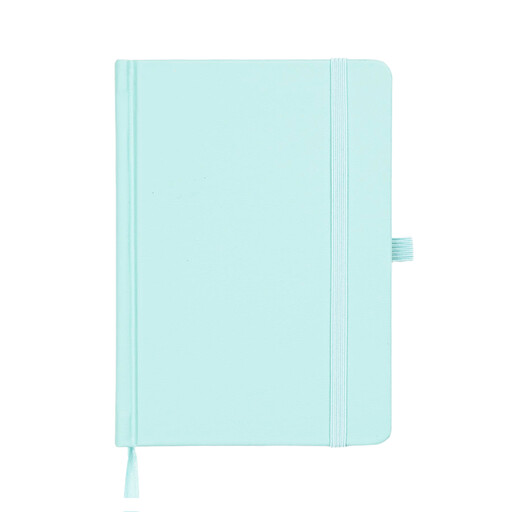
Why this choice suits this profile: Its compact size is ideal for quick notes, lists and a personal diary, without imposing a complicated structure from the start.
It doesn't rely on any pre-printed dates: the pages can be used for note-taking, sketching or making lists, without leaving blank periods.
160 pages, 100 g/m² lined paper, PU hard cover, ribbon bookmark, elastic closure and pen loop.
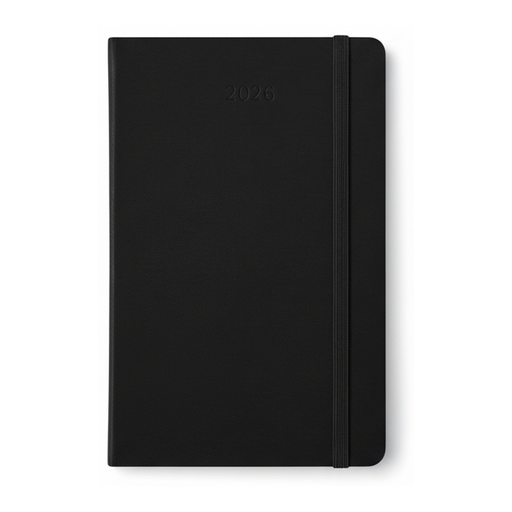
Why this choice suits this profile: Its structured layout is ideal for professionals, creatives and travellers who want to combine a calendar, projects and notes in one place.
The weekly double-page spread makes the days visible at a glance and sets aside space for ideas, goals, travel and notes.
Faux leather cover, 70 g/m² ivory paper from FSC-certified sources, elastic closure, bookmark, inner pocket and 180° lay-flat opening.
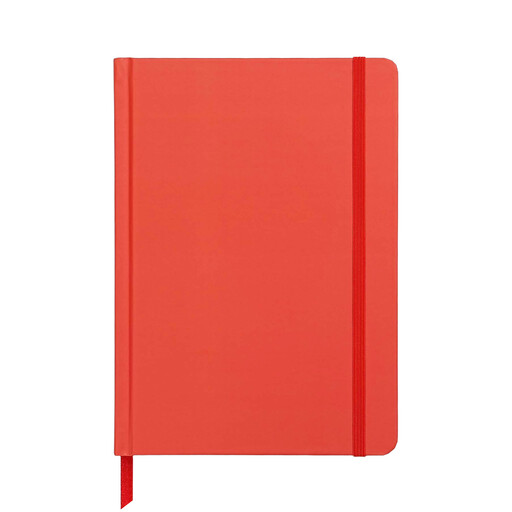
Why this choice suits this profile: Students, freelancers and regular users get more room to plan, write and track their goals.
The undated monthly and weekly views let you start whenever you like and avoid wasting pages after a break.
A5 format, 224 pages, 100 g/m² lined paper, hard cover, bookmark, elastic closure and a structure designed for up to 18 months of use.
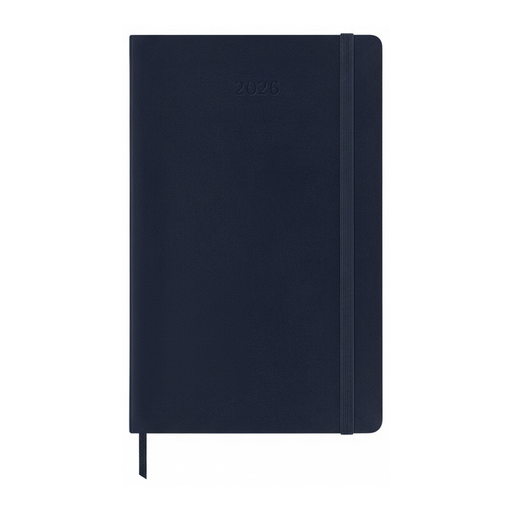
Why this choice suits this profile: One page per day is ideal for anyone who records lots of appointments, tasks, meeting notes or memories.
Its daily layout and extra sections stop you from having to squeeze several appointments into a tiny box.
Blue soft cover, 70 g/m² ivory paper, elastic closure, ribbon bookmark, inner pocket and pages dedicated to ideas, goals and travel.
We've put together a full selection, updated in real time, of products that meet these demanding criteria and European safety regulations.
An undated diary can be started at any time. It suits irregular routines, one-off projects and goal tracking. A dated diary follows the calendar directly and requires more regular use. So the choice really depends on your habits, rather than the product's appearance.
The A6 size is more discreet and lighter for commuting, errands or business travel. The A5 size offers a more comfortable writing surface for personal organisation, studies and projects. Before you order, measure your bag and consider how much space you need for writing.
It all depends on how often you use it, the quality of the binding and how you store it. A hard cover, an elastic closure and keeping it away from moisture can help limit wear. However, avoid water, direct heat and harsh cleaning products: both paper and synthetic coverings are sensitive to them.