
Livraison le jour même ou le lendemain

Qualité garantie

Débloquez vos offres de bienvenue: Livraison GRATUITE | Jusqu'à -80 % | 30 jours d'essai gratuits à JoyPlus
Téléchargez l'application
A notebook and sketchbook should adapt to how you use it, not the other way round. Yet disappointing purchases are often made based on a pretty cover or a vague promise of versatility, without any real detail about the paper, binding or size.
For everyday note-taking, start by looking at the paper weight and texture. Clairefontaine 90 gsm paper, like that in the Clairefontaine Nomaddict, offers a smooth surface that's pleasant for writing, pencil work and small sketches. In some A6 notebooks, 100 gsm offset paper also gives a denser feel under the pen.
With heavily inked felt-tip pens, always test a page towards the back of the notebook. Show-through and the risk of bleeding vary depending on the nib you use and the amount of ink deposited.
For watercolour, look for paper specifically designed for wet techniques. A 300 gsm watercolour paper generally handles washes much better than standard notebook paper. However, paper weight isn't everything: the grain, sizing and absorbency also come into play. A 140 gsm sheet can work for light washes, but it will buckle more if you use a lot of water.
An architect or engineer will often appreciate small squares, whereas an illustrator will lean towards a sketchbook without lines. For documents you want to archive, micro-perforated and pre-punched sheets can prove more practical than a sewn notebook.
The A5 notebook offers a very appealing compromise between writing surface and portability. The A6 pocket notebook slips into a jacket or small bag, but its surface limits larger diagrams. The A4 notebook is better suited to the desk, plans and drawings that need space.
Also remember to check:
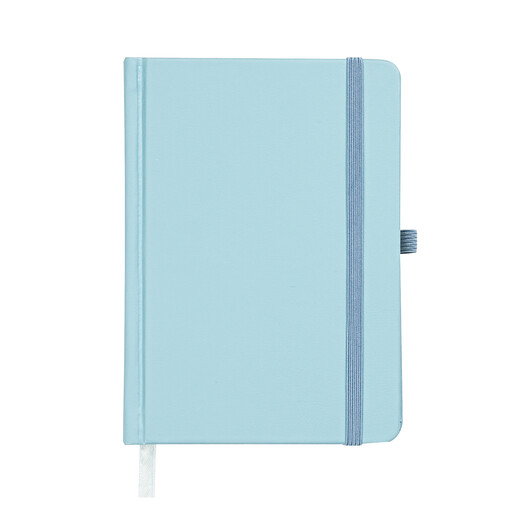
Why this choice suits this profile: Its A6 format is ideal for students, travellers and anyone who wants to quickly jot down an idea, a list or a piece of information on the go or in everyday life.
Its 100 gsm lined pages are clearly stated: there's no mistaking this notebook for something suitable for watercolour.
PU cover, 160 pages, elastic closure, ribbon bookmark and pen loop.
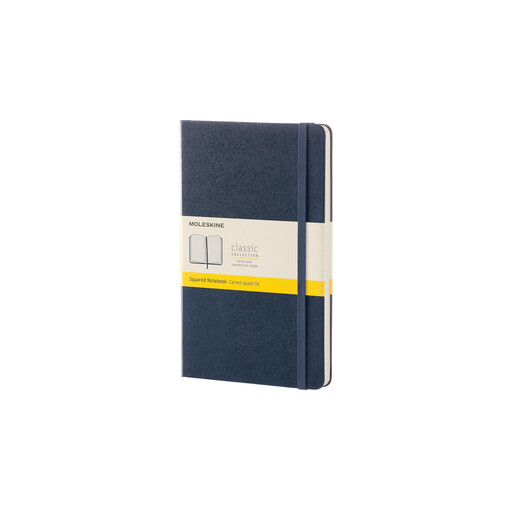
Why this choice suits this profile: It's aimed at professionals, writers and creatives who want a durable notebook for switching between notes, journaling and sketching.
The product page clearly states it has blank pages on 70 gsm ivory paper – so the product is upfront about its suitability for uses that require an unlined surface.
Hard cover, lays flat at 180°, elastic closure, bookmark and expandable inner pocket.
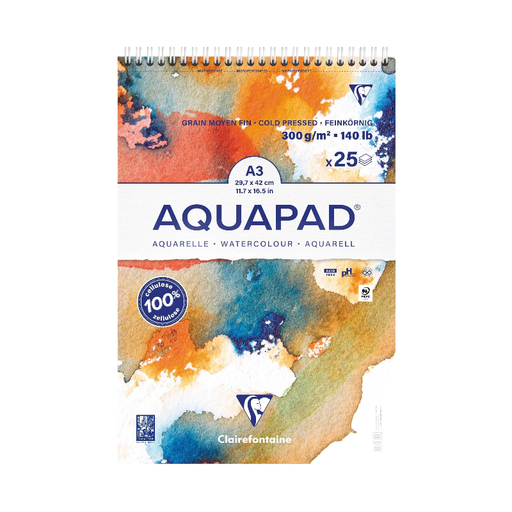
Why this choice suits this profile: This watercolour pad is designed for artists, designers and students who work with washes, gouache or liquid ink on a large surface.
Its 300 gsm watercolour paper is designed for wet techniques, unlike a lined notebook or standard writing paper.
A3+ format, 25 sheets, natural white cellulose, medium to fine grain and double-sized paper.
We've put together a comprehensive, real-time updated selection of products that meet these exacting criteria and European safety standards.
The A5 notebook is ideal for classes, meetings and travel. For plans, tables or technical drawings, an A4 notebook or larger format gives you more space. If portability is your top priority, the A6 pocket notebook remains the most discreet option.
A standard notebook isn't always suitable. Check for the words watercolour paper, the paper weight and the sizing. A 300 gsm paper generally handles washes much better than a 70 or 90 gsm paper, although you may still need to stretch or tape down the sheets to minimise buckling.
Store it in a dry place, protect it from moisture and avoid overfilling the inner pocket. Fasten the elastic closure when travelling, clean the cover with a soft cloth, and test your inks on an inconspicuous page before starting an important project.