
Livraison le jour même ou le lendemain

Qualité garantie

Débloquez vos offres de bienvenue: Livraison GRATUITE | Jusqu'à -80 % | 30 jours d'essai gratuits à JoyPlus
Téléchargez l'application
A notebook or planner can accompany you to lessons, meetings, on the train or during a journalling session. Yet behind this seemingly straightforward purchase lie a few potential pitfalls: paper that is too thin, an impractical format, poorly designed binding or a planner that becomes unusable a few months after purchase.
To avoid unnecessary spending, it is better to compare the features that really matter rather than focusing only on the cover, colours or marketing claims.
A product listing may show a high number of pages without specifying whether this refers to single-sided pages or sheets. So check both details. For example, a notebook with 80 sheets generally provides 160 usable pages.
An A5 notebook provides enough room for lessons, meetings and detailed lists, but takes up more space in a bag. By contrast, an A6 or pocket notebook slips easily into almost any space, at the expense of a smaller writing area. The A7 format is best suited to quick notes and short lists.
A higher paper weight can improve writing comfort, but it is not enough on its own to determine how the notebook can be used. Also check the ruling, grid, paper shade and binding strength. A spiral notebook opens easily flat, while a glued or stapled notebook is often more compact in a folder.
The right format therefore depends on how much text you need to write and where you intend to use the notebook. For school or the office, A5 is generally the most comfortable. For occasional note-taking, A6 helps keep things compact.
Ruled paper is suitable for everyday writing and lists. Squared paper makes it easier to create tables, diagrams, graphs or calculations. For a personal journal or creative notebook, ruled pages provide structure for written content, while blank pages are better suited to drawing.
Paper weight should, however, be interpreted with care. The products featured here include notebooks using 70 to 100 g/m² offset paper. 100 g/m² paper is more substantial than 70 g/m² paper, but the result also depends on the ink and the pressure applied to the nib. If you write with a fountain pen, check the manufacturer's information and test it on a page before filling the notebook.
An elastic closure keeps the notebook shut in a bag. A bookmark lets you instantly find the last page you used. A pen loop is also useful for keeping your notebook and writing instrument together.
For an undated planner, examine the internal layout: monthly pages, weekly pages, space for notes and a customisable start page. This type of planner lets you start at any time, but you will need to enter the dates yourself.

Why this choice suits this profile : This pack lets you divide reminders, lists, ideas and lesson notes between several compact notebooks, without having to carry a bulky notebook.
The A7 format and four-pack reduce the risk of ending up with a notebook that is too bulky for simple notes.
4 notebooks, 50 sheets per notebook, squared paper and top-bound spiral binding.
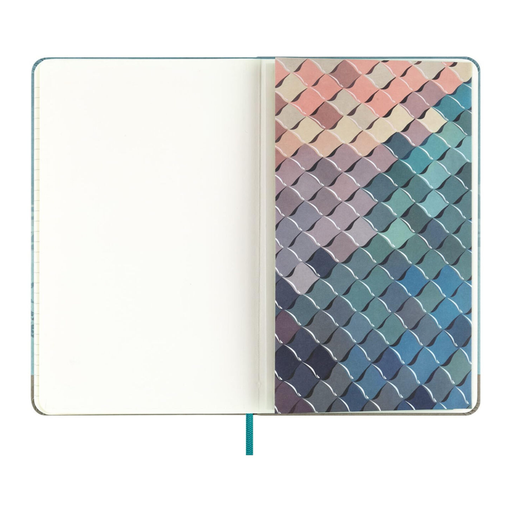
Why this choice suits this profile : Its Casa Batlló-inspired hard cover and thoughtful details are ideal for anyone who wants to keep a work or journalling notebook for the long term.
The elastic closure, bookmark and lie-flat opening prevent the pages from closing or making notes difficult to find.
100 g/m² ivory ruled paper, inner pocket and binding that opens to 180 degrees.
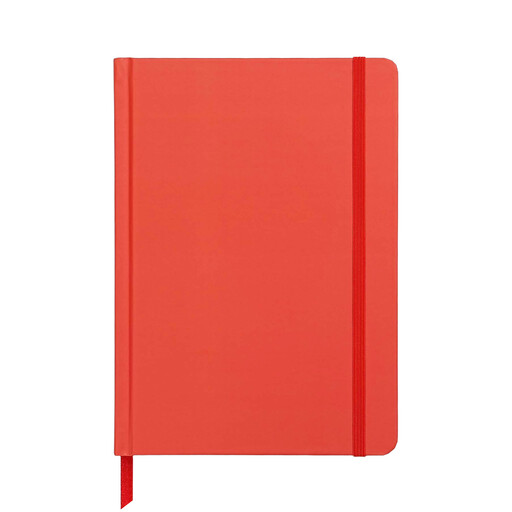
Why this choice suits this profile : Students, freelancers and professionals can start planning their weeks without waiting for the beginning of a new year or term.
The undated monthly and weekly layout prevents pages being wasted when a traditional planner starts part-way through the year.
A5 format, 224 pages, 100 g/m² offset ruled paper, monthly and weekly pages.
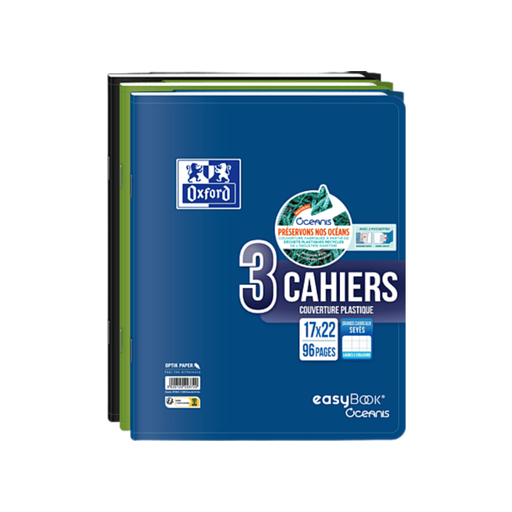
Why this choice suits this profile : With its 17 × 22 cm format and Seyès ruling, this pack is suited to common school use in France, from homework to classroom exercises.
The pack of three notebooks makes it possible to plan for several subjects and reduce separate purchases during the school year.
3 notebooks, 96 pages per notebook, Seyès ruling and 17 × 22 cm format.
A notebook becomes more versatile when paired with the right writing tools. The M&G multicolour ballpoint pen with a 0.7 mm tip lets you distinguish between priorities or subjects without carrying several pens. For diagrams and precise annotations, a 0.5 mm mechanical pencil provides fine, consistent lines.
Pastel highlighters are ideal for lessons, administrative documents and bullet journals. Still, check the tip width and type of ink to help prevent smudging. When buying school supplies, also check the quantity included: a pack can be more convenient when it needs to be shared by several people.
A6 is suitable for reminders, lists and short notes. A5 offers more space for planning a week, writing meeting notes or keeping a personal journal. The A7 format is best reserved for very quick annotations.
The “18 months” description indicates the capacity provided by the layout, not a compulsory period of use. As the pages are not linked to fixed dates, you can start later or leave certain periods unused. The actual duration therefore depends on how often you write.
Store it in a dry place, protect it from moisture and avoid putting strain on the binding. A faux-leather or fabric cover can be cleaned with a soft, slightly damp cloth, without using harsh products. Small components such as elastic bands and bookmarks should be kept out of reach of children under 3 years of age.
We have put together a complete, real-time-updated list of products that fully meet these strict selection criteria and European safety regulations.