
Livraison le jour même ou le lendemain

Qualité garantie

Débloquez vos offres de bienvenue: Livraison GRATUITE | Jusqu'à -80 % | 30 jours d'essai gratuits à JoyPlus
Téléchargez l'application
A notebook or exercise book can accompany you through lessons, help organise a working week, serve as a personal diary or hold your sketches. But a pretty cover or a well-known brand doesn't necessarily guarantee the right choice. The format, paper and binding all have a direct impact on everyday comfort.
Before you place an order, it's worth knowing the most common pitfalls.
A hard cover protects the pages better in a bag, but generally makes the whole thing heavier. Conversely, a soft-cover notebook is easier to carry around, though it risks creasing or warping with heavy use. Gilding, embossing or a fabric cover can give a notebook character, but they aren't enough to judge the strength of the binding.
A lined exercise book is ideal for writing, whereas a blank notebook gives you more freedom for diagrams and drawing. Squared exercise books and Seyès-ruled books meet more specific needs, particularly in a school setting. On the other hand, taking structured notes on blank pages can quickly make your handwriting uneven.
Expressed in g/m², the paper weight tells you how heavy the paper is, but it isn't enough to assess its quality. Texture, shade, opacity and compatibility with a fountain pen or felt-tip pen matter just as much. 70 g/m² paper can work perfectly well with a ballpoint pen, whereas 90 or 100 g/m² paper will be more comfortable for heavy-handed writing or certain instruments.
Also remember to check the exact dimensions of the product: the number of pages alone won't tell you how bulky it is.
For everyday writing, paper of 80 to 100 g/m² is a versatile choice. Blank pages are suitable for sketches, mind maps and drafts. A 5 × 5 grid makes it easy to create tables, diagrams and plans. Seyès ruling, meanwhile, offers the familiar guidance of French school handwriting.
Mentions such as acid-free, pH neutral, PEFC or FSC tell you about certain paper characteristics or its sourcing. They don't replace checking the paper weight and layout.
A spiral binding generally allows you to open the notebook flat and is practical on a shallow desk. A sewn or glued binding often gives a more compact finish. Also check whether there's an elastic closure, bookmark, inner pocket or pen loop.
For a school diary or an undated planner, look carefully at the page layout: monthly views, weekly spreads, note spaces and the period covered. An undated model avoids leaving pages unused if you start organising yourself partway through the year.
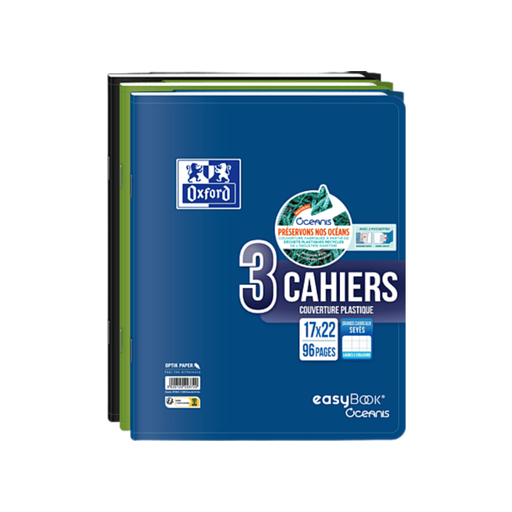
Why this choice suits this profile: This pack of three exercise books in the 17 × 22 cm format is ideal for schoolchildren and students who want to organise their subjects without buying lots of separate books.
The Seyès ruling is clearly stated, and the pack of three lets you test how you use them for different subjects before buying more.
Three exercise books with 96 pages each, 17 × 22 cm format and stapled binding.
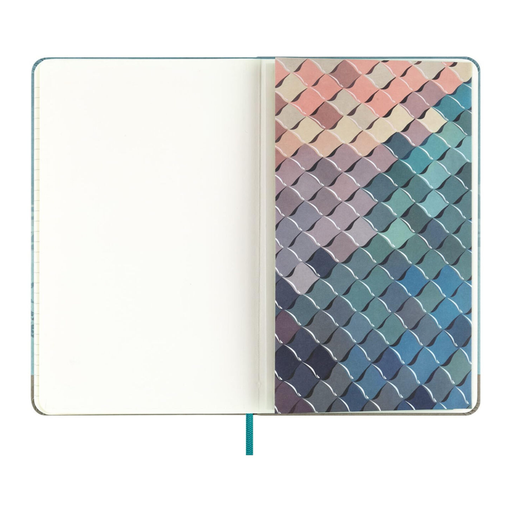
Why this choice suits this profile: With its hard cover inspired by Casa Batlló and its thoughtful details, this notebook is equally suited to professional writing, journaling or as a thoughtful gift.
The product page details the 100 g/m² ivory ruled paper, the 180° lay-flat opening and the accessories included, rather than relying solely on aesthetics.
Acid-free 100 g/m² ruled paper, elastic closure, bookmark, inner pocket and fabric cover.
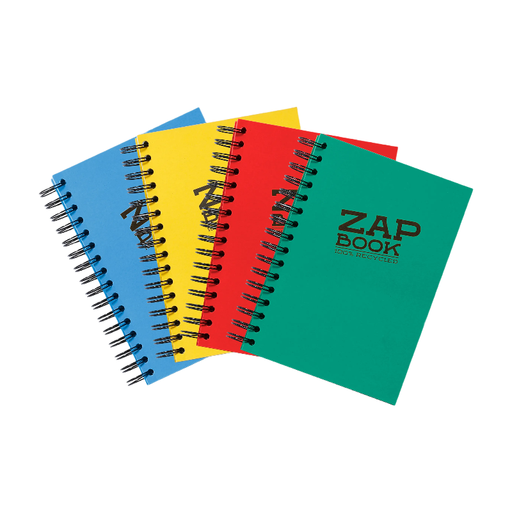
Why this choice suits this profile: This A6 sketchbook is designed for travellers, artists and anyone who wants a compact notebook to hand.
The A6 format and 160 sheets are clearly stated. The blank pages allow for a variety of uses, without imposing a single note-taking method.
Spiral binding for lay-flat opening, 80 g/m² 100% recycled paper, acid-free and pH neutral.
We've put together a complete, real-time updated selection of products that meet these exacting criteria and European safety standards.
For school, go for Seyès ruling, a format that fits in a school bag and a cover that's sturdy enough. In the office, an A5 lined or squared notebook makes it easier to take minutes and write to-do lists. For drawing, a blank notebook or thicker paper gives you more freedom. A journal notebook can combine a hard cover, elastic closure and ivory paper to support a regular practice.
If the environmental impact of materials matters to you, look for an eco-friendly notebook made from recycled paper or with a forest certification. However, take the time to read the exact wording on the product page: "recycled", "certified" and "from controlled sources" don't necessarily mean the same thing.
The A5 format suits most uses: lessons, meetings, lists and personal writing. The A6 format slips more easily into anywhere, but its writing surface is smaller. For homework and diagrams, a larger format will often be more comfortable.
Spiral binding makes it easy to open flat and turn pages. However, its lifespan depends on the quality of the wire, the cover and how it's transported. In particular, avoid overloading the rings with thick documents.
Store it in a dry place, avoid prolonged exposure to sunlight and don't pull too hard on the elastic closure. An inner pocket lets you keep loose sheets without distorting the binding. For heavy use, choose paper and a cover that are genuinely suited to your writing instruments.